A well-chosen mirror can instantly influence the bathroom's look and feel, especially when you’re working with the softer lines of a round design. As you explore different options, you may find yourself wondering whether a round mirror can extend beyond the width of your vanity without feeling too large and still feel intentional. In this article, we’ll guide you through when that choice works, how it shapes the room’s overall character, and what to keep in mind so your bathroom feels balanced, cohesive, and comfortable.

Proportion When Using Large Round Mirrors
Before choosing a round mirror that exceeds the width of your vanity, it’s important to understand how proportion shapes the way a mirror feels in a room. Round designs interact with space differently than rectangular ones, which influences balance and visual comfort once installed.
How Round Shapes Influence Perception
Round mirrors influence perception differently because they lack the corners that typically define visual boundaries, allowing for a more fluid and expansive perception. When your eye follows the curve of a circle, it moves without interruption, which makes the shape feel lighter and less imposing. This quality allows a round mirror to extend beyond the vanity without seeming oversized.
As you consider a larger diameter, notice how the curved edges create a softer transition between the wall and the vanity. Without sharp corners, the mirror blends more naturally with surrounding finishes, helping the size feel intentional rather than abrupt. You may also find that even a wider mirror maintains an open, balanced presence because the circular shape disperses visual weight so effectively.
Balancing Diameter With Vanity Width
To gauge how much wider a round mirror can be, begin by comparing its diameter to the full width of your vanity. A slight size difference usually feels natural, especially when the mirror’s center aligns with the faucet. If the wall offers enough open space, the mirror can extend a few inches past each side without disrupting balance. Evaluating the proportions at eye level is essential, since that is where the mirror’s relationship to the vanity is most noticeable.
In addition, a higher placement can help a larger mirror feel more integrated. To test the scale before committing, outline the mirror’s size with painter’s tape and step back to see how it interacts with the room. This simple exercise helps you quickly determine whether the mirror feels intentional or begins to overpower the wall.
Visual Weight vs Actual Size
Even when two mirrors measure the same, they can feel very different depending on their frame thickness, color, and finish. Visual weight determines how a piece stands out in a room and often shapes your perception more than its actual dimensions. A thin-framed or frameless round mirror feels lighter, which makes a larger diameter easier to integrate into the space.
In contrast, a thicker frame adds more presence and may require a size closer to the vanity’s width. Before making a decision, take a moment to see how the mirror interacts with nearby elements such as the wall color, tile pattern, and vanity material. Observing these relationships helps you understand whether the mirror will enhance the room or begin to overshadow it.

Design Intent and Style Direction With Oversized Mirrors
When a round mirror extends beyond the vanity, it shifts from a simple functional piece to a defining design feature. Understanding how this influences the room’s character helps you choose a size and placement that supports the style you want to achieve.
Creating a Focal Point
A mirror that extends beyond the vanity often becomes an immediate focal point, giving it a natural role in anchoring the room. If you want a single feature to guide the eye, a larger round mirror accomplishes this by drawing attention to its clean, continuous curve. In spaces with strong architectural details or patterned tile, it helps to choose a mirror that supports these elements rather than competes with them. When selected thoughtfully, the larger diameter establishes a clear visual center that shapes the rest of the room’s design. This effect is especially valuable in bathrooms with minimal decor, where the mirror plays a key role in defining the space’s overall character.
Softening Linear or Angular Spaces
In bathrooms dominated by straight lines, sharp angles, or geometric tile patterns, a round mirror introduces a welcome sense of softness. Many spaces rely heavily on rectangular cabinetry, flooring, and fixtures, so the curve of a larger round mirror helps balance that structure and ease the visual rigidity.
A great example of this effect is shown in the photo displayed above, where Edward Martin’s Tristan Round Mirror in Polished Brass brings gentle contrast to the strong lines around it and creates a more fluid rhythm throughout the room. Its circular shape breaks up repetitive patterns and encourages a smoother visual flow. Even a slightly oversized diameter can offset the angular feel of a structured vanity or tall vertical tile, making the space more approachable and visually calm, especially in smaller rooms where linear elements tend to feel more concentrated.
Supporting Minimal or Maximal Styles
An oversized round mirror suits both minimal and maximal styles, though it plays a distinct role in each. In a minimal space, for example, a large mirror can act as additional decor, providing scale and purpose without introducing visual clutter. By contrast, in a maximal environment, a larger mirror anchors the room by grounding layers of color, pattern, and texture. Its curved shape helps unify varied elements and prevents the design from feeling scattered. Once you know which style direction feels right for your space, choosing a mirror size becomes much easier.

Practical Installation Considerations
Large round mirrors require more planning than standard sizes, especially when the diameter is wider than the vanity. Understanding structural support, height placement, and nearby fixtures helps you install a mirror that feels secure, functional, and visually balanced.
Stud Placement and Weight Support
Supporting a larger mirror safely starts with locating the studs behind the wall. While lightweight mirrors can sometimes be secured with hollow-wall anchors, heavier pieces benefit from direct attachment to studs, which prevents shifting and reduces strain on the wall. It helps to check both vertical and horizontal stud positions so you know exactly where reliable mounting points are available. If the studs do not align with the mirror’s hardware, a cleat system can distribute the weight more evenly. By planning, you can install the mirror securely and avoid compromising stability, which becomes even more important as the diameter and weight increase.
Height Positioning for Daily Use
The mirror’s height should support comfortable use for everyone in your home. When the diameter extends beyond the vanity, the upper and lower portions may reach areas you wouldn’t typically consider, so keeping the center of the mirror near natural eye level is essential for clear visibility and visual balance. In spaces like the one pictured above, Edward Martin’s Esmeralda Round Mirror in Iron Matte Black demonstrates how a well-placed mirror can align beautifully with the faucet height, backsplash, and overall composition. Positioning the mirror too low can result in frequent water spots, while setting it too high can make the reflection feel disconnected from the sink area. Taking time to plan the height ensures the mirror looks intentional, functions comfortably, and feels truly integrated into the space.
Accounting for Faucets, Lighting, and Splash Zones
The mirror’s relationship to nearby fixtures plays a significant role in everyday comfort. When the diameter is larger, it has a higher chance of overlapping with faucets or lighting, which can make the area feel crowded. To prevent this, measure the distance of the faucet from the wall and confirm that the mirror can sit comfortably above or behind it. Lighting matters as well, since sconces may need to shift outward so they don’t press against the mirror’s edge.
It’s also useful to consider splash zones, especially in bathrooms where water often reaches the wall behind the faucet. Positioning the mirror slightly higher can minimize cleaning and help protect the surface over time. When these considerations align, the oversized mirror feels intentional, practical, and easy to maintain.

Lighting Strategies
Lighting plays a key role when a mirror is wider than the vanity, as the larger reflective surface changes how brightness spreads throughout the room. Understanding how to adjust your lighting around a bigger diameter helps you create a balanced, comfortable, and functional environment.
Wall Sconces vs Integrated Lighting
Choosing between wall sconces and integrated lighting depends on how you want light to interact with a wider mirror. Wall sconces offer focused illumination that can frame the mirror and emphasize its shape, though a larger diameter may require spacing them farther apart to avoid crowding. Integrated lighting, often built into the mirror’s edge, spreads brightness more evenly and works well when you want consistent illumination without adjusting fixture placement. As you weigh the two options, consider how you use the space each day and how much control you prefer over the lighting.
Adjusting Sconce Placement Around a Larger Diameter
If you choose sconces, their placement becomes especially important when the mirror is wider than the vanity. You may need to raise the fixtures or shift them outward so the mirror’s edge doesn’t interfere with the light source. In spaces like the one pictured above, Edward Martin’s Prudence 2-Light Wall Sconce in Polished Nickel illustrates how thoughtful positioning keeps the lighting visible and effective alongside a large round mirror. These adjustments help reduce shadows and maintain a well-proportioned look, ensuring the sconces remain visually present rather than disappearing behind the mirror’s curve. By taking the time to refine the placement, you create a clearer and more comfortable experience at the sink and prevent the oversized mirror from overwhelming the vanity area.
Using Ambient and Overhead Light To Maintain Balance
Ambient lighting enhances the overall brightness around the mirror and helps soften shadows in the corner of the room. A wider mirror often reflects more light, which can make the space feel brighter and more even. Overhead fixtures can enhance this effect by adding consistent illumination across the upper part of the room. When these layers work together, they can create a clear, comfortable environment for everyday tasks. Pairing ambient light with sconces or integrated lighting can also produce a softer, more flattering glow, helping the larger mirror feel intentional and well-balanced.

Space Planning for Different Bathroom Sizes and Layouts
The size and layout of your bathroom play a major role in how an oversized round mirror will look and function. By understanding how different spaces respond to scale, you can choose a diameter that enhances openness, symmetry, or depth in a way that feels natural to the room.
Small Bathrooms and Powder Rooms
In a small bathroom, a round mirror that reaches beyond the vanity can make the room feel noticeably wider. Its curved shape reflects more of the surroundings without creating defined edges, which helps the wall appear more open. The added height naturally draws the eye upward, giving the space a taller and airier feel.
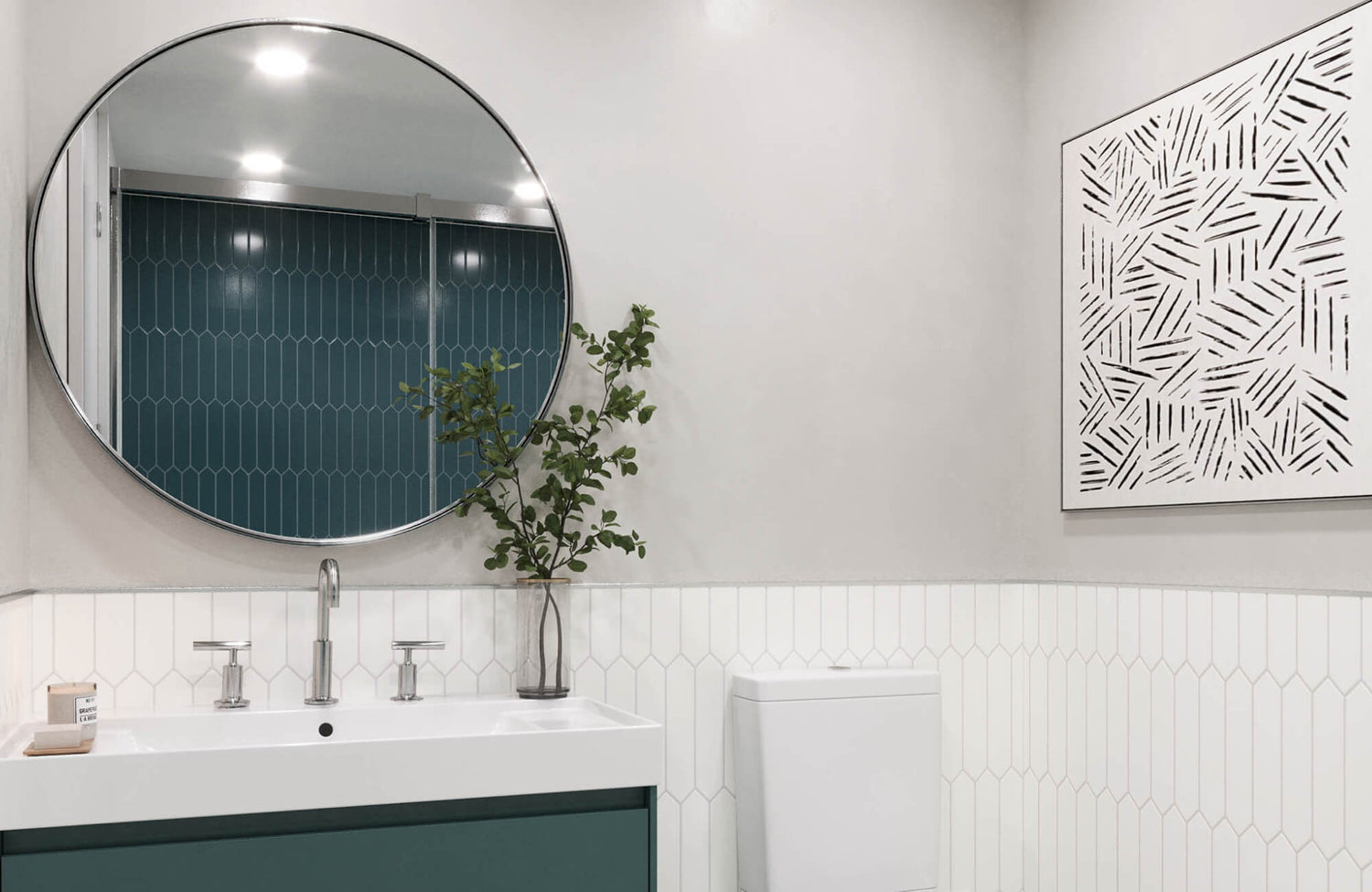
In compact layouts like the one pictured above, Edward Maritn’s Fitz Mirror in Antique Silver demonstrates how a larger round mirror can double as a standout design feature while still keeping the room visually light. By reflecting more light and surface area, it brightens the room and creates a more inviting atmosphere. Even with a larger diameter, the round shape stays proportionate and avoids feeling heavy, which is especially valuable in tight powder rooms.
Medium Baths With Single Vanities
Medium-sized bathrooms often benefit from a slightly oversized mirror, especially when you want the space to feel balanced and centered. With a single vanity acting as the main feature, a larger round mirror can help anchor the room and create a smoother visual transition along the wall. When the mirror extends just beyond the vanity, it draws the eye toward the sink area and reinforces symmetry across the space. It can also reflect light more evenly, helping the room feel cohesive and well-connected. By choosing a diameter that is only moderately wider than the vanity, you establish a strong focal point without overwhelming the layout.
Large or Double-Vanity Spaces
In larger bathrooms or those with double vanities, your approach depends on how you want the space to function. A single oversized round mirror can unify both sinks, creating a calm, open feel and giving the wall a clean, uninterrupted look. If you prefer more separation, using two large round mirrors offers defined zones for each sink while still maintaining a cohesive style. The key is selecting diameters that suit the scale of the room and the distance between the vanities. With thoughtful planning, the mirrors can highlight the room’s width while maintaining a comfortable and visually balanced layout, giving you the flexibility to shape the space in a way that feels both intentional and practical.

Material, Frame, and Finish Choices for Oversized Round Mirrors
The materials, frame style, and finish of a round mirror significantly affect how its size is perceived and how well it complements the vanity. Understanding these elements helps you choose an oversized mirror that feels cohesive, durable, and visually balanced in your bathroom.
Choosing Minimal or Bold Frames
The frame you choose has a noticeable impact on how substantial a round mirror appears on the wall. For example, a thin frame creates a lighter look and helps a larger diameter blend more easily with the surrounding space, which is helpful when you want the mirror to stand out without overwhelming the room. As shown in the photo above, Edward Martin’s Tristan Round Mirror in Polished Brass illustrates this effect beautifully, pairing its minimal, durable stainless steel frame with a generous size that still feels refined.
In contrast, a thicker frame adds definition and gives the mirror a stronger presence, making it a natural focal point. As you consider frame style, think about how the mirror’s scale relates to the vanity. A heavier frame often works best when the mirror is closer in size to the vanity, while a lighter frame gives you more flexibility with diameter.
Moisture-Resistant Materials for Bathrooms
Bathrooms naturally experience higher humidity levels, so choosing a mirror with moisture-resistant construction is essential for long-term durability. Features, such as sealed backing, coated frames, and materials designed to withstand moisture, help prevent warping or discoloration. These protections matter even more with a larger mirror because the increased surface area is more exposed. As you compare options, consider how frequently the bathroom is used and how close the mirror will be to areas prone to splashing. Prioritizing durability ensures that an oversized mirror maintains its appearance and performance over time.
Coordinating Finishes With the Vanity and Fixtures
The mirror’s finish should work seamlessly with the surrounding fixtures and vanity to create a cohesive look. You can match the finish to your faucet or hardware for a unified feel, or choose a contrasting tone to introduce more visual interest. For instance, a light wood frame can warm up a darker vanity, while a polished metal frame suits contemporary spaces with sleek fixtures. The goal is to choose a finish that complements the room’s palette and helps the mirror feel naturally integrated, even when its size extends beyond the vanity.
Using a Round Mirror Larger Than a Vanity
A round mirror can certainly be larger than a vanity when selected with care. By understanding proportion, planning for proper lighting, and preparing for installation, a larger mirror can open up the room and create a more balanced look. When you also consider style direction and material choices, the mirror feels both integrated and functional. With the right approach, an oversized round mirror becomes a thoughtful design choice that enhances the overall design. If you’d like guidance choosing the right mirror for your bathroom, feel free to contact us or explore our design services for personalized support.