
)
)
)
)
)
)
)
)
Can A Paver Tile Be Combined With Grass Or Gravel For A Stylish Look?
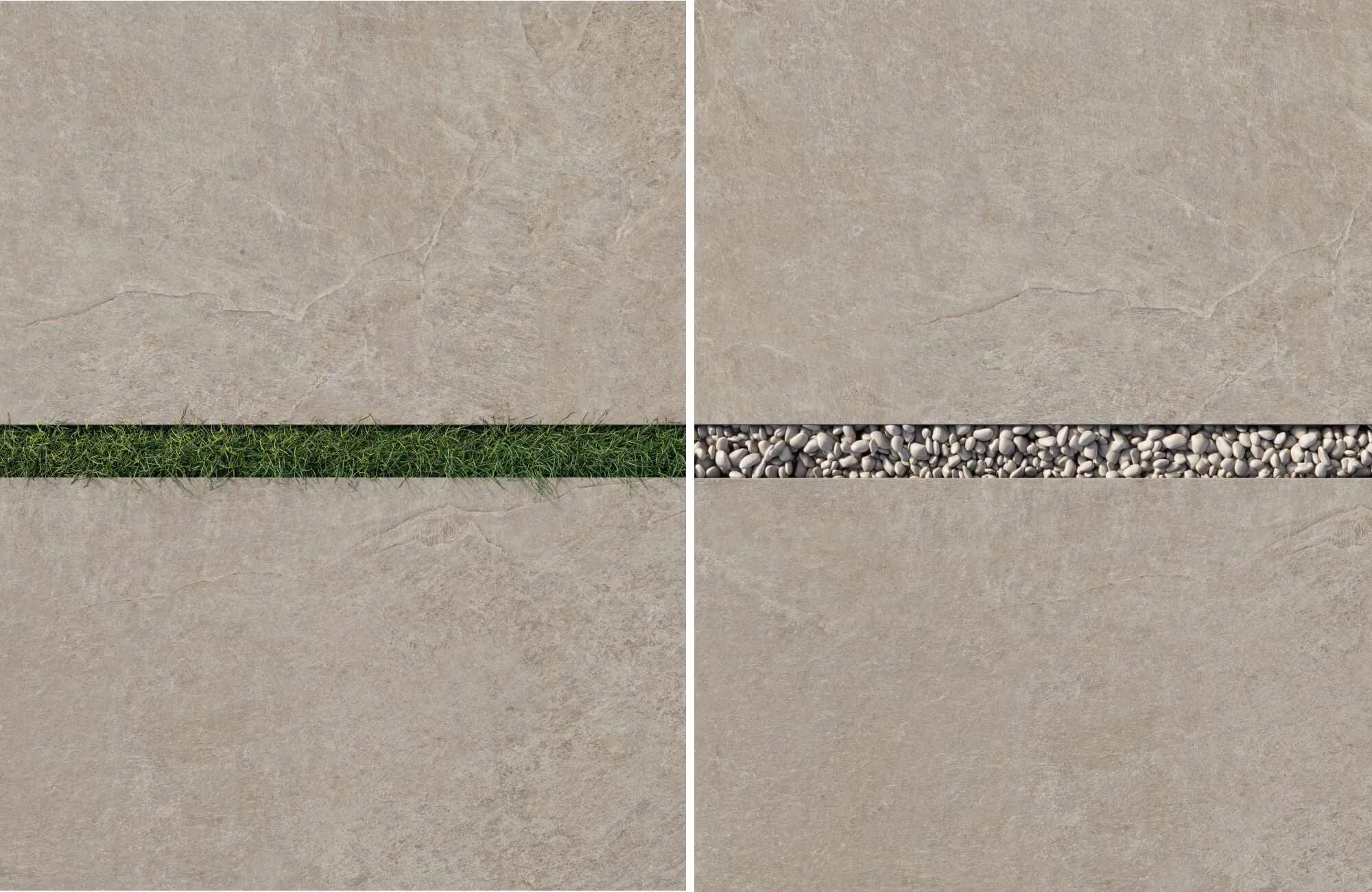
Outdoor spaces are no longer just backdrops; they have become extensions of how you live and experience your space. The combination of paver tiles with grass or gravel introduces a fresh, versatile way to elevate these areas, bringing together structure, texture, and natural beauty. Rather than choosing between hardscape precision and organic softness, you can embrace both, creating landscapes that are practical yet filled with character.
What makes this design approach especially appealing is its adaptability. Whether you imagine a contemporary courtyard defined by clean lines or a rustic patio softened by earth tones and greenery, blending pavers with natural elements provides countless possibilities. This article explores how these hybrid designs work, guiding you toward outdoor spaces that feel both stylish and enduring.
Aesthetic Value and Timeless Appeal
The fusion of pavers with grass or gravel introduces a dynamic visual language into the landscape, balancing structure with softness. These combinations evoke both order and organic movement, allowing for spaces that are refined yet welcoming.
Enhancing Visual Depth through Textural Variance
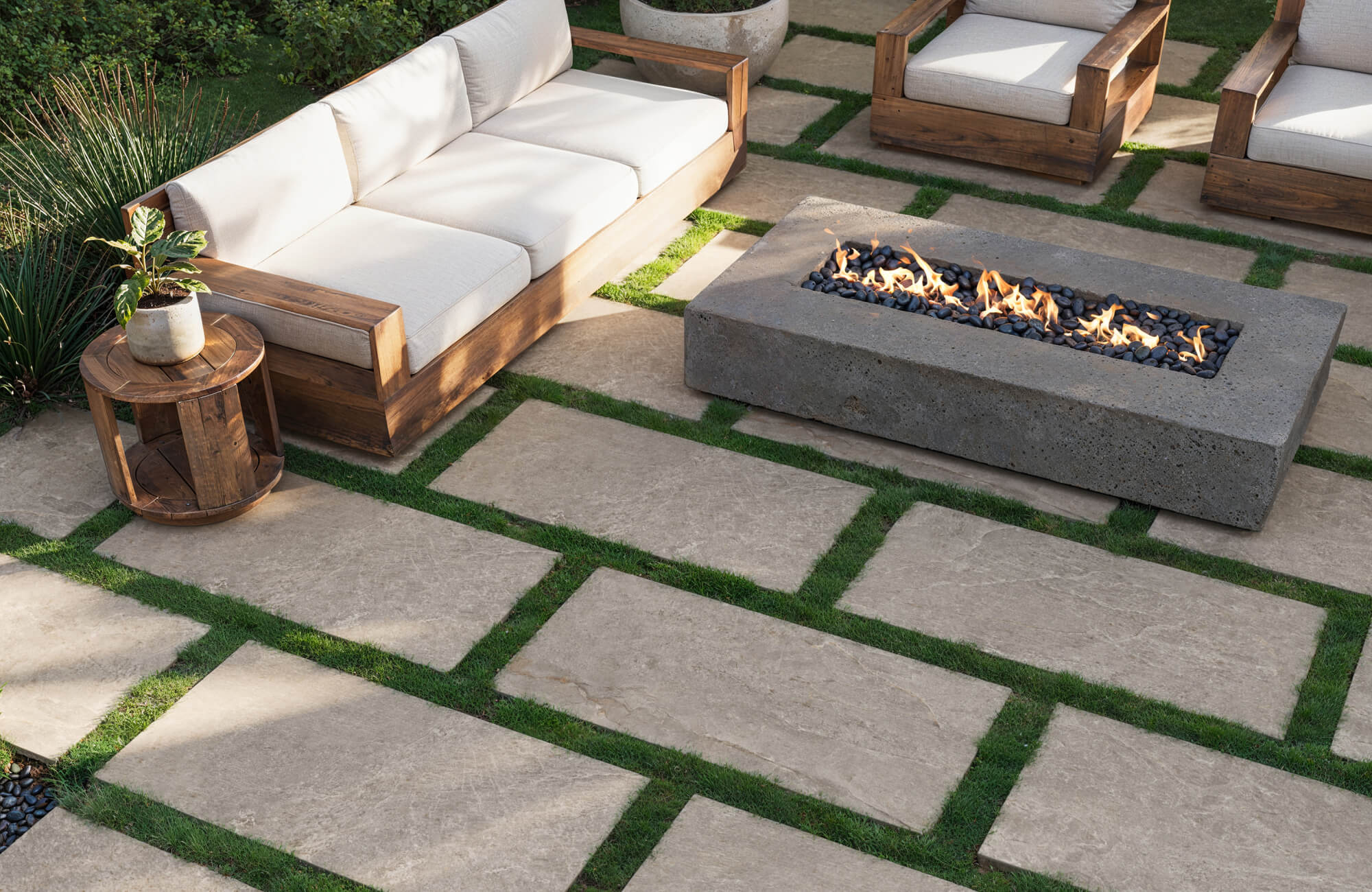
Visual interest often arises from contrast, and when you bring together the solidity of pavers with the natural irregularity of grass or gravel, the effect is instantly captivating. Pavers contribute a sense of uniformity and durability, grounding the space in order, while the softness of grass or the crunch of gravel introduces an element of unpredictability. What makes this approach so engaging is how it plays with scale and rhythm. Gravel tucked between larger pavers can break up expanses of stone, softening hard lines and preventing the design from becoming monotonous. Grass weaving through joints also gives the impression of movement, hinting at nature reclaiming a place, yet in a controlled, thoughtful way. This layering of textures creates visual depth that shifts with perspective, drawing the eye across the landscape and encouraging you to slow down and notice subtle details.
A perfect example of this interplay can be seen in the photo above, featuring our Dawson 24x48 Grip Porcelain 2cm Paver Tile in Dune. With its warm beige tones and subtle surface texture, this paver establishes a strong foundation while blending effortlessly with natural elements. Its neutral yet inviting color palette also makes it highly versatile, anchoring the design with stability while allowing surrounding greenery and gravel to take center stage.
Creating a Focal Point with Deliberate Asymmetry
Although symmetry offers predictability, deliberate asymmetry adds character and keeps the eye curious. By choosing not to mirror every element, you allow the outdoor space to feel dynamic and lived-in. For example, offset pathways of irregular flagstones placed within a groundcover lawn lead you on a more organic journey, inviting exploration instead of directing a rigid march from one point to another. These slightly unbalanced choices also tell a story, making the design feel both intentional and approachable.
Moreover, asymmetry works beautifully when paired with standout features. In a paved courtyard where the tiles are neatly aligned, a sculptural tree set just off-center and framed by gravel, for instance, immediately draws the eye. The placement also disrupts uniformity in the best way, creating a focal point that commands attention while allowing the rest of the space to remain calm and cohesive. Such features anchor the design emotionally as well as visually, offering you a sense of discovery and artistry every time you step outside.
Functional and Ecological Benefits of Hybrid Landscapes
A well-executed hybrid landscape starts with thoughtful design, and that design must consider not only aesthetics but also long-term ecological impact. Blending pavers with grass or gravel is more than a stylistic choice—it’s a strategy rooted in both contrast and sustainability, where beauty and function work together seamlessly.
Guiding Movement and Defining Zones
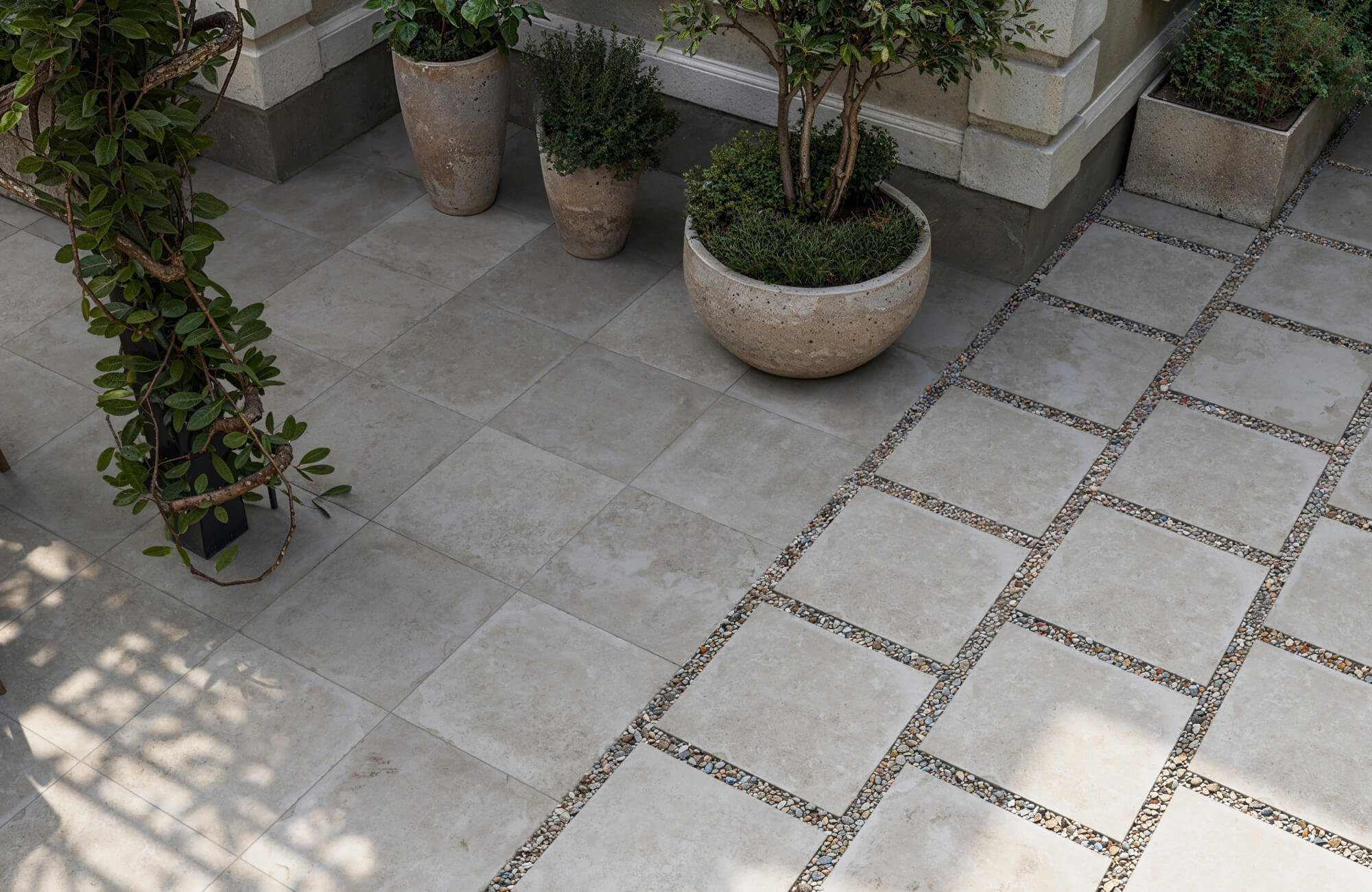
The way you arrange pavers, grass, and gravel directly shapes how people move through your outdoor space. Pavers act as anchors, creating clear pathways and solid surfaces, while grass and gravel soften boundaries and introduce natural transitions. Together, these elements establish zones that feel purposeful without the need for walls or fences, and they create a flow that encourages you to experience the landscape as a series of unfolding moments rather than one static setting.
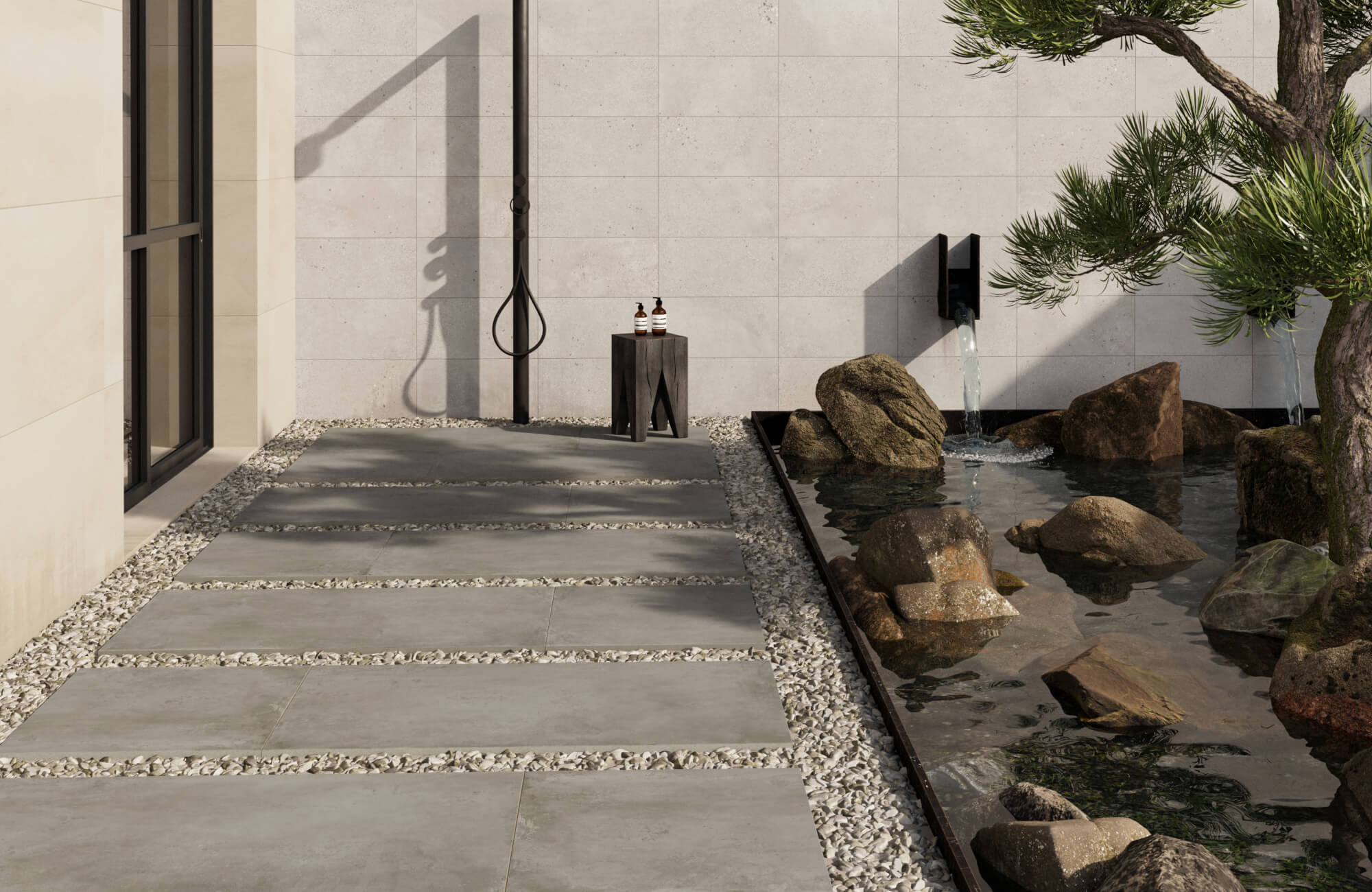
In the courtyard image shown above, this effect comes to life with our Bowden 24x24 Grip Porcelain 2cm Paver Tile in Oat. Its light beige surface provides a warm, grounding foundation, while gravel insets between each piece introduce rhythm and continuity, guiding both the eye and the footstep. The result is a layout that feels structured yet welcoming, with each zone clearly defined while still visually connected to the whole.
Urban Heat Island Effect
Dense, concrete-heavy environments often trap and radiate heat, making outdoor areas uncomfortable during warmer months. When you incorporate grass or gravel between pavers, you interrupt that heat retention and allow the space to regulate itself more naturally. Grass also provides cooling through evapotranspiration, while gravel disperses heat more effectively than solid slabs. Together, they create an outdoor environment that feels noticeably cooler and more breathable.
This strategy becomes especially valuable in urban or suburban settings where buildings and pavement dominate. By mixing permeable, natural materials into your design, you help counter the harsh effects of heat buildup. As a result, your patio, walkway, or courtyard becomes a refuge rather than a heat trap, proving that thoughtful design choices can improve comfort while still delivering strong visual appeal.
Water Infiltration and Reducing Runoff
Beyond cooling benefits, hybrid ground covers play a vital role in water management. Solid concrete or asphalt tends to block water from reaching the soil, leading to runoff, erosion, and strain on drainage systems. In contrast, pavers set with gravel joints or grass strips allow rainwater to seep naturally into the ground. The layered base beneath the pavers also acts as a filtration system, ensuring that water moves slowly and replenishes the soil rather than overwhelming storm drains.
Designs that incorporate large format porcelain pavers, such as our Wren 24x48 Grip Porcelain 2cm Paver Tile in Charcoal, demonstrate how function and style can align. Its grey surface adds striking visual depth, while gravel or grass-filled joints support permeability, reduce runoff, and promote long-term sustainability. The result is a paved area that manages water responsibly without sacrificing durability or contemporary appeal.
Adding vegetation or drought-tolerant grasses in the joints further improves this effect. These living filters trap debris and absorb excess nutrients, turning your outdoor space into a small but effective environmental ally. By designing with infiltration in mind, you create a yard that is not only resilient during heavy rains but also more sustainable year-round; an approach that benefits both you and the larger ecosystem.
Crafting Blended Designs
Hybrid landscapes work best when they serve your needs while complementing the character of your space. By blending materials with intention, you create outdoor spaces that are safe, versatile, and visually in tune with their surroundings.
Safe and Versatile
Pairing pavers with gravel or grass creates a surface that balances durability with comfort. Patios built with layered bases and gravel infill remain stable even under heavy furniture or frequent gatherings, while their permeable structure encourages natural drainage and reduces pooling after rain. Borders of pavers also anchor the loose stone, giving the design a crisp, finished edge that holds everything in place. The result is a patio that feels secure, functional, and low-maintenance, yet never loses its natural charm.
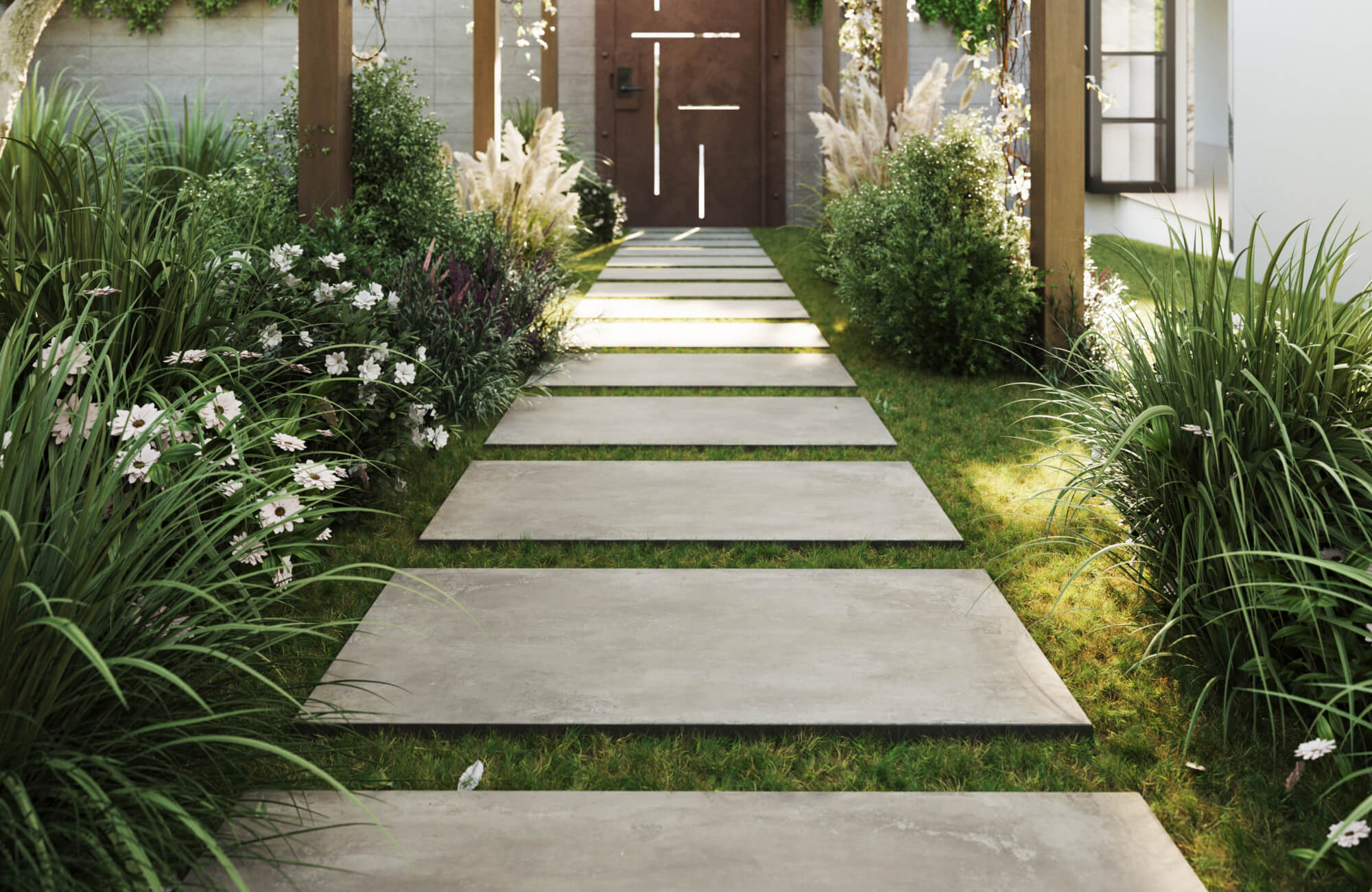
In addition to patios, pathways designed with stepping pavers set in grass bring a softer, more inviting quality to your yard. By spacing the pavers to match your natural stride, you create a walkway that feels intuitive and comfortable to use. The grass also softens the hardscape visually, while durable turf varieties such as fescue or Bermuda stand up to frequent use without wearing thin. Our Ramsey 24x48 Grip Porcelain 2cm Paver Tile in Putty demonstrates this balance beautifully. As seen in the picture above, with its soft gray tones and expansive format, it establishes a clean, grounding surface that contrasts with the greenery around it. Set in wide grass joints, it creates a natural rhythm that guides each step, offering stability underfoot while maintaining an inviting, organic feel.
Material Choices
The beauty of blended design lies in how well it reflects the architecture of your space. If your house leans toward modern or contemporary style, large format pavers arranged in clean, geometric patterns complement the crisp lines of the structure. Fine gravel or manicured turf joints also enhance the minimalist aesthetic, adding subtle texture without breaking the sleek continuity. This restrained approach emphasizes negative space and creates outdoor areas that feel calm, elegant, and effortlessly aligned with modern living.
For rustic or Mediterranean-inspired spaces, character comes from texture and warmth. Irregular flagstones, reclaimed bricks, and earthy tones echo the handmade charm of these architectural traditions. Filling joints with creeping thyme, moss, or decomposed granite softens the edges, adding layers of color and fragrance while grounding the design in nature. With this approach, every path or patio feels as though it has grown organically over time, creating a relaxed and timeless outdoor atmosphere.
Practical Installation and Long-Term Care Strategies
Creating a hybrid surface that truly lasts requires more than creative design. It also calls for careful preparation beneath the surface and a consistent approach to upkeep. When you combine pavers with grass or gravel, much of the success depends on the foundation you build. A compacted sub-base of gravel or crushed stone not only keeps pavers level but also prevents shifting as the ground naturally moves. Adding a sand or soil layer on top also allows grass to take root or gives gravel the flexibility it needs to settle evenly. Incorporating landscape fabric between layers further strengthens the installation by preventing soil from mixing with aggregate and by reducing unwanted weed growth. These invisible steps ensure the structure beneath your outdoor space is as solid as the finish you see on top.
However, installation is only the first half of the equation. Long-term beauty relies on regular maintenance. Grass pathways need mowing to stay tidy and may require occasional reseeding where wear occurs, while gravel paths benefit from light raking to redistribute stones and occasional replenishing to maintain their depth and permeability. Pavers themselves also need attention; keeping the joints free from weeds and regularly sweeping away dirt or debris helps maintain both their appearance and stability. By blending these practices, you not only safeguard the durability of your hybrid design but also preserve its harmony and charm.
To further ensure success, professional installation and manufacturer-approved maintenance practices are strongly recommended for best results. Every type of paver comes with its own specifications, and following the guidance provided by the supplier ensures structural integrity, safety, and long-term performance. By consulting professionals and adhering to these approved methods, you can also avoid common issues and enjoy a hybrid surface that remains both functional and beautiful for years to come.
Bringing Nature and Structure into Perfect Balance
Blending paver tiles with grass or gravel proves that beauty and function can coexist effortlessly. By layering strong surfaces with natural textures, you create spaces that are visually captivating, environmentally thoughtful, and suited to your daily life. From modern patios to rustic pathways, these combinations provide timeless appeal while offering long-term practicality. With careful design and consistent care, this balance of nature and structure transforms ordinary outdoor areas into landscapes that are not only stylish but also deeply connected to the way you live.
If you are ready to explore how blended designs can work in your own outdoor space, professional design services can help translate your vision into a tailored plan. You can even take the guesswork out of material selection by using our augmented reality (AR) tool to preview how different pavers will look in your yard. These resources also make it easier to experiment with patterns, textures, and colors, giving you the confidence that your final design will feel both personal and perfectly balanced.
Follow us on Instagram
@EDWARD.MARTIN
)
)
)
)
)
)
)
)
)
)
)
)
)
)
)
)