In modern kitchen design, where every detail is curated for both utility and impact, pendant lighting stands out as a high-functioning design asset. More than mere illumination, these suspended fixtures bring structure, character, and precision to the heart of the home, whether accentuating a quartz island or casting clarity over a prep zone.
With their sculptural appeal and directional light output, pendants offer a refined balance of form and function. They not only serve as task lighting for high-use areas like countertops and sinks but also help define spatial zones in open-concept layouts, all while integrating seamlessly with today’s energy-efficient, dimmable technologies. In this article, we’ll explore how the right pendant lights can add clarity, cohesion, and personality to your kitchen design.

The Transformative Power of Pendant Lighting
To truly understand the impact of pendant lighting, it’s important to look beyond its visual appeal and consider how it shapes the kitchen experience on multiple levels. From setting the mood to improving visibility where it matters most, these fixtures offer far more than meets the eye.
Elevating Kitchen Aesthetics and Ambiance
To begin, pendant lights act as sculptural focal points, defining a kitchen’s visual rhythm and reinforcing its architectural flow. Their suspended placement draws the eye and creates vertical dimension, helping to visually anchor areas like islands or dining nooks. Unlike recessed fixtures that blend into the ceiling, pendants add depth and character, enhancing the overall ambiance through layered lighting.
Furthermore, designers often use pendant styles to echo a kitchen’s design language. Matte black domes suit minimalist spaces, while hand-blown glass or antique metals complement traditional or transitional aesthetics. Materials matter, brushed nickel or aged brass offers an industrial edge, while rattan or ceramic brings organic warmth.
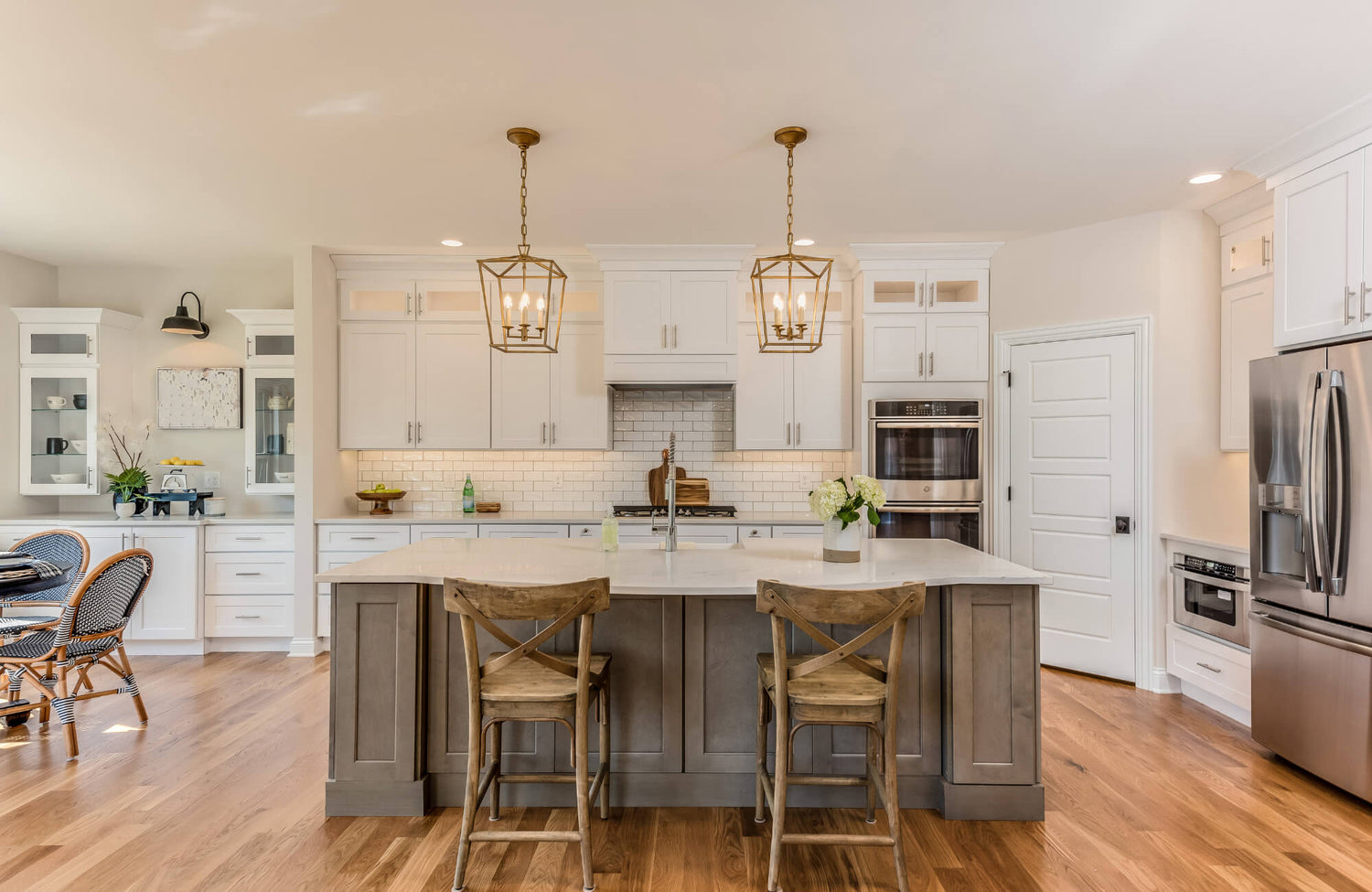
A compelling example of this thoughtful integration is Edward Martin’s Barnes 14" Pendant in Aged Antique Distressed Bronze, which, as illustrated in the image above, pairs a bronze-brass finish with a frosted globe to deliver soft, ambient light and a refined statement. It not only anchors the island visually but also harmonizes with wood tones and mixed finishes for a cohesive look.
Additionally, light temperature has a major influence on the overall mood and atmosphere. Warm LEDs (2700K–3000K) create a cozy, inviting atmosphere, while cooler tones (4000K+) invigorate prep areas. Notably, dimmable systems allow for smooth transitions between functions, essential for open-concept kitchens that must shift from productive to relaxed settings.
Enhancing Functionality and Task Lighting
While style enhances the look, the true strength of pendant lighting lies in its performance. Specifically, over islands, sinks, and counters, pendants deliver directional illumination that minimizes shadows, improving visibility and making food prep safer and more efficient.
To achieve this, consider both beam angle and lumen output. Narrow beams (25°–40°) concentrate light for detailed tasks, while wider spreads (60°–90°) offer general coverage. In addition, high CRI LEDs (90+) are crucial for accurate color rendering, especially in culinary settings where true-to-color visuals matter.
Equally important are mounting height and spacing. Fixtures typically hang 30–36 inches above countertops, with 24–30 inches between multiples, depending on size and light spread. For added control and adaptability, smart dimmers and zoned lighting systems let users fine-tune brightness to suit the task or mood.
In combination with under-cabinet and ceiling lights, pendants complete a layered lighting plan, one that enhances both utility and comfort without glare or visual clutter. Altogether, they help ensure the kitchen remains both a high-performance workspace and an inviting gathering spot.

Choosing the Perfect Pendant Lights for Your Kitchen
Choosing the right pendant lights isn’t just about style; it’s about finding the perfect balance between proportion, design intent, and light quality. To make a confident, well-informed selection, it helps to break down what truly matters most in both form and function.
Sizing and Scale Considerations
To start, scale is essential to achieving visual balance. Undersized fixtures can feel insignificant, while oversized pendants may overwhelm the space or block sightlines. As a general rule, designers recommend adding the room’s length and width in feet, then converting that number to inches to estimate the ideal fixture diameter. For instance, a 12' x 10' kitchen would suggest a 22-inch-wide pendant.
In multi-pendant installations, spacing is just as important. Aim for 24–30 inches between fixture centers, and position pendants 30–36 inches above the countertop to ensure even lighting and clear sightlines. For taller ceilings, consider more dramatic pendant designs or staggered arrangements. Adjustable cords or downrods also provide needed flexibility for custom installations.
Style and Material Harmony
Once the scale is addressed, the next step is aligning your pendant’s visual style with the rest of your kitchen. Sleek designs in matte black or polished chrome pair well with minimalist kitchens, while brushed nickel or antique brass enhances more traditional or transitional spaces. Meanwhile, rustic kitchens benefit from natural materials like ceramic or woven textures that add warmth and personality.
For example, Edward Martin’s Kaley 16" Pendant in Aged Brass, as featured in the photo above, pairs a soft opal globe with a clean, streamlined brass stem. This combination of form and finish bridges modern cabinetry with organic materials, resulting in a cohesive and balanced look.
Material selection also directly impacts how the fixture performs. Opaque shades, such as metal or wood, direct light downward for focused tasks, while translucent materials like glass or linen diffuse light to create a softer, ambient glow. In hybrid-style kitchens, mixed-material pendants can elegantly connect diverse finishes and textures.
To complete the visual flow, coordinating your pendant finish with nearby elements, such as cabinet hardware, faucets, or appliances, can unify the space. Alternatively, using subtle contrast (e.g., oil-rubbed bronze against white cabinetry) introduces visual interest without disrupting the design language.
Lighting Temperature and Brightness
Finally, beyond form and finish, technical lighting qualities also shape the kitchen experience. Color temperature, measured in Kelvins (K), helps establish mood: warm white light (2700K–3000K) is ideal for cozy, social settings, while neutral white (around 3500K) provides clarity for focused tasks.
Equally important is brightness, measured in lumens. Islands and prep zones typically benefit from 300–800 lumens per fixture. For decorative pendants that support layered lighting schemes, lower outputs may be sufficient. Regardless of placement, prioritize high CRI (Color Rendering Index) bulbs, ideally 90+, to ensure that food, finishes, and fabrics appear accurate and vibrant.
To maximize flexibility, choose pendants that are compatible with dimmable drivers or smart lighting systems. This allows for seamless adjustments based on time of day or activity, whether you need bright task lighting for meal prep or a softer glow for evening ambiance.

Strategic Placement and Installation Tips
Once you’ve chosen the right pendant lights, where and how you install them can make all the difference. Thoughtful placement not only ensures effective lighting but also enhances the overall flow and design of your kitchen space.
Over Kitchen Islands and Peninsulas
To begin with, islands and peninsulas serve as both visual anchors and high-activity work zones, making them prime candidates for pendant lighting. Fixtures in these areas should be well-scaled and carefully spaced to provide sufficient task lighting without overwhelming the design.
Generally, leave 24–30 inches between fixture centers, and hang pendants 30–36 inches above the countertop for balanced, glare-free illumination. For compact islands (4–5 feet), two pendants may suffice; in contrast, larger islands often benefit from three or more. When working with taller ceilings, longer downrods or staggered heights help maintain proportion and impact.
For example, Edward Martin’s Hilda 12" Pendant in Distressed Bronze, as shown in the photo above, offers both style and function. Its aged finish and tapered silhouette provide focused illumination while harmonizing with wood accents and open shelving. Well-scaled and softly textured, it also adds architectural interest and utility in equal measure.
During construction or renovation, it's important to coordinate with ceiling joists and plan junction box placement carefully. This ensures proper alignment and prevents layout issues, especially for linear, multi-fixture installations.
Finally, for safety and optimal performance, electrical installation should be handled by licensed professionals. This ensures compliance with building codes and a polished, secure result.
Above Sinks and Prep Areas
Moving to more compact zones, pendant lighting above sinks and prep areas provides both targeted visibility and a decorative accent. In most cases, a single centered pendant or a pair of compact fixtures is all that’s needed.
As a rule of thumb, install pendants directly above the sink or work surface at a height of 30–36 inches above the counter. Choose fixtures 6–10 inches in diameter to maintain proportion and avoid overpowering the space, especially when upper cabinetry is nearby.
For optimal light quality, opt for clear or frosted glass shades that diffuse illumination evenly and create an airy effect. Given the higher humidity around sinks, it’s also essential to select damp-rated fixtures constructed from corrosion-resistant materials such as stainless steel, treated brass, or powder-coated finishes. Be sure that all electrical connections are sealed properly to support long-term durability.
In Open Concept Spaces
Finally, in open-concept layouts where the kitchen flows into dining and living areas, pendant lighting must deliver both function and visual harmony across multiple zones.
Here, pendants help define the kitchen area without the need for walls or barriers. A consistent fixture palette, such as matching island pendants with a complementary dining chandelier, establishes design continuity from one space to the next.
To preserve sightlines and circulation, choose low-profile or transparent designs, especially near walkways. Oversized pendants should be avoided in narrow corridors where they may feel intrusive or obstruct movement.
To round out the lighting plan, layer pendants with recessed lighting, under-cabinet LEDs, and dimmable controls. Smart zoning systems make it easy to adjust brightness throughout the day, whether for focused cooking tasks or relaxed evening entertaining, while maintaining a cohesive and welcoming atmosphere.

Beyond the Basics Creative Pendant Lighting Ideas
With the fundamentals in place, there’s room to push creative boundaries. Pendant lighting doesn’t have to follow convention; when thoughtfully applied, it can introduce unexpected beauty, define zones, and add personality that elevates your space beyond the ordinary.
Grouping and Layering Pendants
Strategically grouping pendants creates visual rhythm and depth, elevating them from mere task lighting to curated design features. This method works particularly well in kitchens that emphasize architectural symmetry or embrace open layouts enhanced by layered lighting.
Rather than defaulting to a straight row, try suspending pendants at varying heights from a central canopy. This technique adds sculptural interest, especially suited for tall ceilings or cozy areas like breakfast nooks. For example, glass orbs or mixed-shape pendants can offer chandelier-like elegance with added flexibility.
Additionally, mixing pendant sizes and drop lengths introduces a sense of organic movement, which works beautifully in eclectic or contemporary designs. To maintain visual cohesion, use a consistent finish or material across fixtures, even as their shapes differ.
An excellent illustration of this approach is Edward Martin’s Carly 34" Pendant in Vintage Brass, as featured above. Its wide, shallow dome makes a striking statement when arranged in a group above a kitchen island. The warm metallic finish and bold form enhance both the vertical dimension and spatial flow in open-concept layouts.
As mentioned, pendants function best when integrated into a layered lighting strategy. Pair them with recessed or track fixtures to ensure balanced light coverage that adapts to different tasks or times of day. This holistic approach enhances both comfort and versatility throughout the space.
Unexpected Placement and Applications
Moving beyond conventional placement opens up fresh opportunities to use pendants as both design accents and functional lighting in overlooked areas.
For example, small-scale pendants above buffets or shelving units add a warm accent glow while highlighting decorative cabinetry and curated displays.
Similarly, corners, often neglected in lighting plans, can be revitalized with a compact pendant or adjustable arm, ideal for reading nooks or auxiliary prep stations.
In addition, flanking a decorative range hood with pendants introduces symmetry and visual drama. Just be sure to consider ventilation needs and maintain finish consistency with nearby fixtures.
Finally, in open-plan spaces, placing pendants over floor transitions, such as thresholds between kitchen and dining areas, subtly defines zones without erecting physical dividers. This helps guide movement and maintain flow between connected living areas.
Incorporating Smart Lighting Features
As technology continues to shape the modern home, pendant lighting has embraced smart features that offer greater control, efficiency, and personalization.
Many fixtures are now compatible with platforms like Amazon Alexa, Google Home, or Apple HomeKit, allowing users to adjust brightness and color temperature via voice or mobile app.
Even more versatile are tunable white and RGB options, which let you shift from warm (2700K) to cool white (5000K+) depending on task or mood. RGB settings further enhance customization, adding playful or seasonal effects for gatherings and special occasions.
For added convenience, automated schedules and motion sensors can activate lighting based on daily routines or occupancy. This is especially helpful in prep zones or during late-night kitchen visits when hands-free operation enhances comfort and safety.
Energy monitoring features available through connected apps also give users real-time insights, helping to optimize lighting usage and align with sustainability goals.
To make the most of these capabilities, Edward Martin’s personalized design consultation offers one-on-one guidance through every step of the process, from understanding smart tech compatibility to coordinating style and placement. Our designers provide tailored support and thoughtful follow-ups to ensure your lighting plan feels as intuitive as it looks.
And if you need expert recommendations or help pairing your pendants with complementary tiles or rugs, our team is ready to assist. Reach out through Edward Martin’s Contact Us page for professional, design-driven support tailored to your home.

Maintenance and Longevity of Your Pendant Lights
To keep your pendant lights looking great and working their best, a little routine care goes a long way. From simple upkeep to addressing common hiccups, knowing how to maintain these fixtures ensures they stay as reliable as they are stylish.
Cleaning and Care Tips
Regular cleaning is essential, especially in kitchens where grease, dust, and humidity tend to accumulate. These elements can quickly impact both light quality and surface finishes. To avoid accidental damage and preserve long-term performance, always refer to the manufacturer’s care guidelines.
Dusting and surface cleaning should be done weekly. Use a microfiber cloth or electrostatic duster to gently remove everyday buildup. For textured or detailed fixtures, a soft-bristle brush or compressed air works well to dislodge debris from crevices.
When it comes to deeper cleaning, particularly for pendants near cooking zones, wipe them down with a mild solution of warm water and dish soap. Follow with a clean, lint-free cloth to avoid water spots. For glass shades, a 50/50 mix of distilled water and white vinegar can restore clarity without streaks.
To protect the finish, steer clear of abrasive cleaners and harsh chemicals, especially on lacquered or specialty finishes like matte black, antique brass, or oil-rubbed bronze. Instead, stick with pH-neutral products designed for delicate surfaces.
For bulb and housing maintenance, always turn off power at the switch or breaker for added safety before touching any components. Wipe halogen and incandescent bulbs with a dry cloth to prevent oil or residue buildup. For LED-integrated pendants, avoid touching the chip directly; clean only the surrounding housing or lens.
Every six months, take a moment to inspect the fixture. Look for loose screws, frayed cords, or signs of corrosion, especially if your kitchen is in a coastal or high-humidity environment. Tighten hardware as needed to keep the fixture secure and properly aligned.
As an example, fixtures like Edward Martin’s Phineas Pendant in Historic Bronze, with its bold silhouette and suspended glass bowl, benefit significantly from routine maintenance. Proper care ensures it retains both its refined aesthetic and optimal lighting performance over time.
Troubleshooting Common Issues
Even high-quality pendant lights can occasionally present issues. Identifying and resolving them early helps prevent long-term complications or the need for premature replacement.
Flickering lights are a common concern and often stem from incompatible dimmer switches or loosely fitted bulbs. Make sure you’re using dimmable LEDs that match your system, and double-check all connections. If flickering persists, it may point to deeper wiring issues, which are best evaluated by a licensed electrician.
Misalignment can result from twisted cords or improper mounting. To fix this, adjust the cord length or resecure the canopy to bring the fixture back to level.
Buzzing or humming sounds are typically linked to dimmer incompatibility or loosely assembled components. Switching to an ELV (Electronic Low Voltage) dimmer and tightening screws usually resolves the issue effectively.
Color shifting or dimming over time is often seen in lower-quality LEDs. If your lighting appears yellowed or inconsistent, replacing the bulbs with high-CRI (90+) and well-matched CCT (Correlated Color Temperature) options can restore uniformity and clarity.
Finally, if a fixture won’t turn on, begin with the basics: check the bulb and switch. Next, inspect the breaker or GFCI outlets, especially in kitchens with dedicated appliance circuits. If the issue remains unresolved, turn off the power and check the wiring behind the canopy, or consult a qualified professional.
Lighting That Works as Hard as Your Kitchen Does
In today’s kitchens, where precision and style must go hand in hand, pendant lighting serves as a key design and functional element. It not only zones light by function but also reinforces layered lighting plans and connects key materials across the space. In short, it does more than illuminate; it shapes how your kitchen feels and performs every day.
At Edward Martin, we believe great design is intentional. Let pendant lighting be the finishing element that unites your kitchen’s form and function with timeless impact!