Narrow spaces tend to magnify every design choice, and mirrors are no exception. The shape you choose can influence how open, balanced, or tight a room feels almost instantly. In long hallways, slim bathrooms, or compact dressing areas, the wrong mirror can unintentionally emphasize narrow proportions, while the right one can soften lines and improve visual flow. In this blog, we’ll compare oval and rectangular mirrors in narrow spaces, look at where each performs best, and explore alternative shapes that may work even better.

When Mirror Shape Matters Most In Narrow Rooms
In narrow rooms, mirror shape carries more visual weight than it does in wider, more forgiving spaces. Because wall width is limited, even small design choices can influence how open or compressed the room feels. Below, we’ll look at why shape matters so much in tight layouts and how curved and straight edges affect visual flow.
How Curved vs Straight Edges Affect Visual Width
Curved and straight mirror edges guide the eye in very different ways, especially in narrow rooms. Rounded shapes, such as oval mirrors, soften long sightlines and help break up rigid lines, which can make a space feel less boxed in. Straight edges, on the other hand, reinforce the room’s existing lines, which may either help or hurt depending on proportions. In tight layouts, strong horizontal or vertical lines can exaggerate narrowness if they aren’t balanced carefully. Because of this, curved mirrors often feel more forgiving in slim spaces.
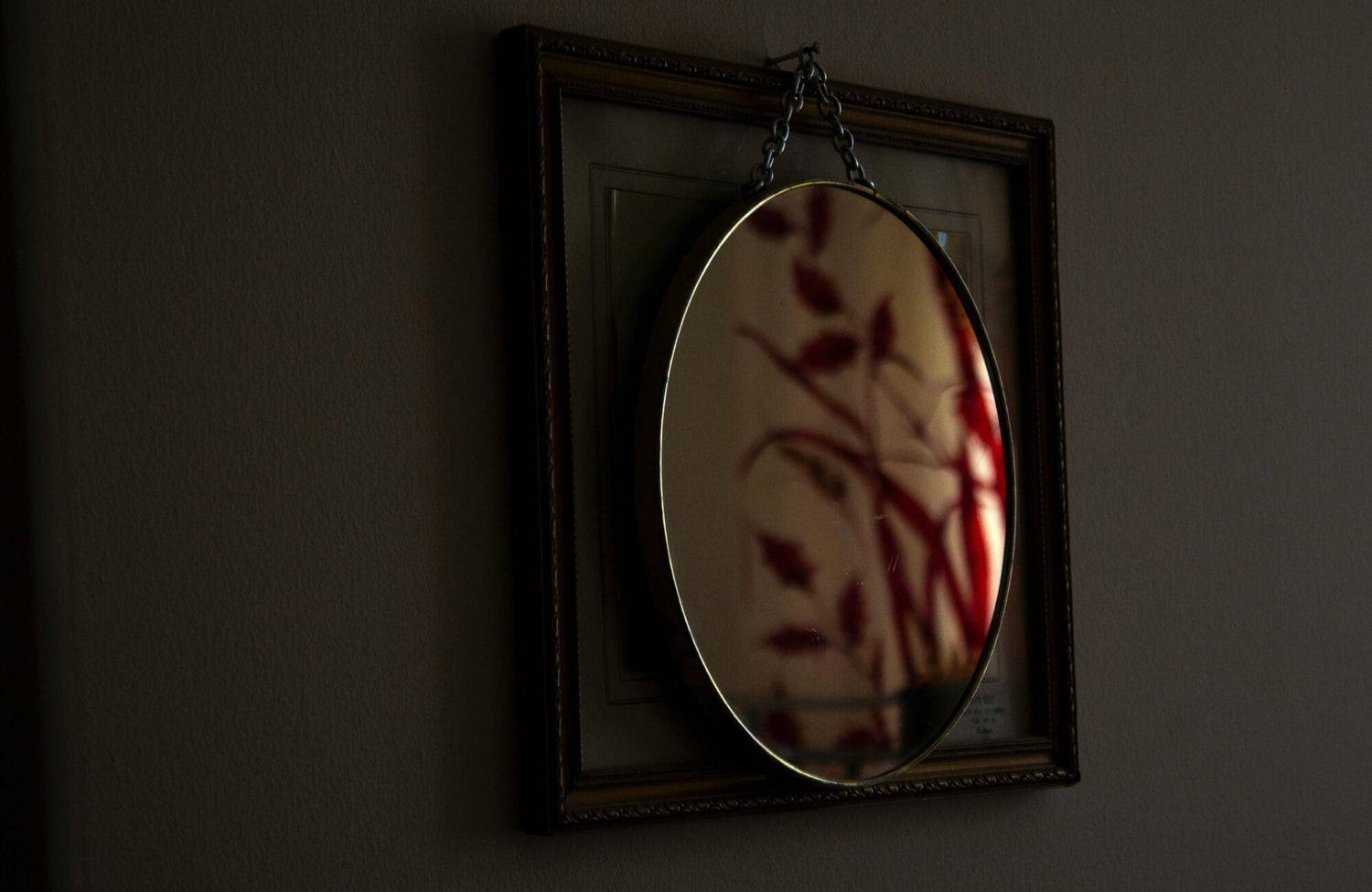
A mirror that illustrates how curved edges can soften narrow layouts is our Shirley Small Mirror in Antique Brass Iron, shown above. Its fluid silhouette breaks up long vertical and horizontal lines, helping tight wall spans feel less rigid and compressed. Rather than reinforcing the room’s narrow proportions, the rounded form redirects the eye and introduces gentle movement. In compact spaces, that subtle shift can make the layout feel more relaxed and visually balanced without relying on scale alone.
Why Narrow Spaces Amplify Mirror Shape Choices
Narrow rooms tend to magnify design decisions because there’s less visual room for error. In wider spaces, mirror shape might feel secondary, but in tighter layouts, it directly affects how the space reads. For instance, a mirror that feels proportionate elsewhere may suddenly look oversized or awkward when wall clearance is limited. Narrow rooms also rely more heavily on visual flow, since movement and sightlines overlap more closely. Because mirrors naturally draw attention, their shape becomes one of the first things the eye registers. That’s why choosing the right shape matters more here than in more open rooms.
How Mirror Shape Can Either Open or Crowd a Tight Layout
In narrow spaces, the mirror shape can subtly change whether the room feels open or cramped. A shape that echoes the room’s tight proportions too closely may unintentionally emphasize narrowness. For example, a tall, rigid mirror in a slim room can make walls feel even closer together. Softer shapes tend to ease that tension by interrupting long, straight lines. This doesn’t mean straight mirrors never work, but they require more careful placement. When a mirror shape works with the room’s proportions, the space feels lighter and more comfortable to move through.

Oval Mirrors In Narrow Spaces: Strengths And Limitations
Oval mirrors are often a natural fit for narrow rooms because they soften the visual edges that make tight layouts feel more restrictive. Their shape can improve flow and ease visual tension, though they aren’t always the right answer in every situation. Below, we’ll look at where oval mirrors tend to shine and where they may need more consideration.
Softening Long Sightlines With Rounded Edges
In narrow spaces, long sightlines can make walls feel closer than they really are. Oval mirrors help ease that effect by interrupting straight lines with softer, rounded edges. Because the eye tends to move more naturally along curves, the room feels less rigid and a bit more relaxed. This can be especially noticeable in spaces filled with sharp corners or strong linear details. Rather than reinforcing the room’s tight geometry, the mirror introduces a subtle sense of flow. That small visual shift often makes the space feel calmer and easier to take in.
When Oval Mirrors Help a Space Feel Wider
Oval mirrors can also help a narrow room feel wider by gently pulling focus away from its edges. Instead of drawing attention along vertical or horizontal lines, their shape encourages the eye to move around the mirror itself. This soft redirection can make the space feel more balanced, particularly when wall space is limited on either side. In some layouts, an oval mirror avoids the boxed-in feeling that straight-edged shapes can create. Because it doesn’t align tightly with the room’s boundaries, it downplays tight clearances rather than highlighting them. When used with intention, this effect helps narrow spaces feel more open without relying on size alone.
Situations Where Oval Mirrors May Feel Undersized
While oval mirrors offer softness, they can sometimes feel visually small in narrow rooms with tall ceilings or long walls. Because they don’t extend fully to the edges, they may leave unused wall space that feels awkward or incomplete. This is especially noticeable when the surrounding elements feel heavier or more structured. In those cases, the mirror may struggle to anchor the wall visually. Scale becomes important here, since an oval that’s too modest can feel lost rather than intentional. Without careful sizing, the softness that usually works in its favor may start to feel underwhelming.

Rectangular Mirrors In Narrow Spaces: When They Still Work
Rectangular mirrors can still be a strong choice in narrow rooms when their proportions and placement are handled with care. While their straight edges are more structured, they offer clarity and alignment that can actually help tight layouts feel more intentional.
Using Vertical Rectangular Mirrors to Add Height
Vertical rectangular mirrors are often effective in narrow rooms because they draw the eye upward rather than across tight side walls. This emphasis on height can make ceilings feel taller, which helps counter the compressed feeling that narrow layouts sometimes create. When placed thoughtfully, vertical mirrors encourage visual movement from floor to ceiling instead of highlighting limited width. They also tend to work well where wall space is tight but vertical clearance is available. In bathrooms or entry areas, this orientation supports a more balanced, upright feel. When height is used intentionally, the room feels less confined and more open.
Horizontal Rectangular Mirrors for Controlled Width
Horizontal rectangular mirrors can work in narrow spaces when the goal is to introduce width without overwhelming the room. Rather than stretching wall to wall, a carefully sized horizontal mirror helps visually expand the space while keeping proportions in check. This approach works best when the mirror is centered and aligned with key elements rather than filling every available inch. Because the edges are straight, placement becomes especially important to avoid emphasizing tight clearances. When done well, the mirror adds structure without making the room feel boxed in. It’s a controlled way to introduce balance without exaggeration.
Aligning Rectangular Mirrors With Furniture and Fixtures
Rectangular mirrors tend to feel most successful in narrow rooms when they align cleanly with furniture, fixtures, or architectural lines. Matching the mirror’s edges with vanities, consoles, or lighting helps the space feel organized rather than crowded. This alignment creates visual order, which is especially helpful in tight layouts where clutter stands out more quickly. Instead of floating without reference, the mirror becomes part of a larger composition. For example, aligning the mirror width with a vanity below helps anchor the wall visually. When everything lines up with intention, rectangular mirrors feel deliberate rather than restrictive.

Room-By-Room Mirror Shape Guidance For Narrow Layouts
Once mirror behavior is clear, the next step is understanding how the shape performs in real rooms. Narrow spaces don’t all function the same way, so the right mirror choice often depends on how the room is used, not just how it looks. Below, we’ll compare oval and rectangular mirrors across common narrow layouts to help you choose what feels most comfortable and intentional.
Narrow Bathrooms and Powder Rooms
In narrow bathrooms and powder rooms, mirror shape plays a direct role in how open the vanity area feels. Oval mirrors tend to soften tight layouts by reducing hard edges, which helps the space feel less boxed in. This can be especially helpful when walls are close together or when the vanity itself already has strong straight lines. Rectangular mirrors, on the other hand, often work best when they align cleanly with the vanity width and lighting. When proportions are right, they create structure without making the room feel rigid. The key is choosing a shape that supports daily use while keeping the space visually calm.
Slim Entryways and Hallways
Entryways and hallways are often narrow by nature, so mirrors here need to support movement rather than interrupt it. Oval mirrors usually work well because their curved edges guide the eye smoothly through the space, which helps soften long, tight sightlines. This can make passing through the area feel more relaxed rather than rushed. Rectangular mirrors can still work, especially when mounted vertically to echo door frames or wall height. In those cases, alignment matters more than size. When the mirror complements circulation instead of competing with it, the space feels easier to move through.
Compact Bedrooms and Dressing Areas
In compact bedrooms or dressing areas, mirrors often serve both visual and functional purposes. Oval mirrors can help these spaces feel more fluid, especially when wall space is limited, and furniture lines are already prominent. Their shape keeps the room from feeling overly structured, which supports a softer, more comfortable atmosphere. Rectangular mirrors tend to work better when they’re tied closely to wardrobes, dressers, or built-ins. When aligned with furniture edges, they feel intentional rather than oversized. Choosing between the two often comes down to whether the space needs softness or clarity.
A mirror that can work especially well in narrow bathrooms is our Everdale Small Mirror in Gunmetal above. Its arched silhouette softens the straight lines created by tight walls, vanities, and tile joints, helping the space feel less confined at eye level. The slim iron frame keeps the mirror visually light, which is important when the wall width is limited, and every element reads more strongly. In compact bath layouts, this balance of curve and restraint allows the mirror to support daily use without making the room feel crowded or overly designed.
Home Offices With Narrow Wall Space
In narrow home offices, mirrors are usually there to improve light and openness rather than serve as focal points. Oval mirrors can help break up straight lines created by desks and shelving, which keeps the space from feeling too rigid. They also reflect light more gently, helping the room feel less compressed. Rectangular mirrors can still work when placed carefully, especially if they align with shelving or wall panels. The goal is to support focus without adding visual tension. When the mirror feels secondary rather than dominant, the office stays balanced.
Closets and Narrow Dressing Passages
Closets and dressing passages benefit most from mirrors that don’t interrupt flow. Oval mirrors often feel more natural here because they soften tight clearances and reduce the sense of confinement. This is especially useful in walk-in closets with narrow walkways. Rectangular mirrors can be effective too, particularly full-length versions that are aligned cleanly with walls or cabinetry. In those cases, keeping edges flush and proportions slim helps avoid visual clutter. When mirrors support movement instead of competing for attention, even the narrowest spaces feel more comfortable.

Finishes And Materials That Work Best In Tight Spaces
In narrow rooms, mirror finishes and materials can matter just as much as the mirror itself. Even when the size is right, a frame that feels too heavy can make the space feel tighter than it needs to. Because these areas already have limited breathing room, it helps to think about how finishes, materials, and frame thickness affect visual balance.
Thin Frames vs Bold Frames in Narrow Rooms
Frame thickness plays a big role in how much visual space a mirror takes up. Thin frames tend to recede into the background, which helps narrow rooms feel more open and less crowded. This can be especially helpful in spaces where walls are already close together or filled with other elements. Bold frames, while eye-catching, can sometimes feel heavy in tight layouts because they draw attention to the mirror’s edges. That doesn’t mean they’re off-limits, but they work best when the rest of the room is kept simple. In narrow spaces, lighter framing usually feels easier to live with day to day.
Metal, Wood, and Frameless Options Compared
Material choice plays a big role in how light or grounded a mirror feels once it’s on the wall. Metal frames, for instance, tend to read as lighter, especially when they’re kept slim, which makes them a strong option for tighter rooms. Wood frames can bring in warmth as well, although heavier tones or thicker profiles may start to feel bulky in narrow spaces. Frameless mirrors sit at the other end of the spectrum, since they visually fade into the wall and help the room feel more open. In very tight layouts, this can be especially helpful because the mirror reflects light without adding extra visual weight. In the end, the right material comes down to how much presence you want the mirror to have within the space.
Finish Choices That Keep Narrow Spaces Feeling Open
Finish selection can quietly influence how open or tight a narrow room feels. Lighter and softer finishes tend to reflect light more gently, which helps keep the space from feeling boxed in. Matte and brushed finishes can also be a good fit, since they soften glare and keep the mirror from feeling too dominant on the wall. Dark or high-contrast finishes can still work, too, although they’re usually best used with restraint so they don’t visually compress the room. Cohesion matters here as well, because finishes that relate to nearby fixtures or hardware feel more intentional. When a finish blends naturally into the space, the mirror supports the room instead of drawing attention for the wrong reasons.

Mirror Shape Alternatives That Work Well In Narrow Spaces
If oval or rectangular mirrors don’t feel quite right for your space, there are other shapes worth considering as well. Different mirror silhouettes can influence how narrow rooms feel, from softening tight lines to guiding the eye more naturally across the wall. In here, we’ll look at mirror shapes that often work surprisingly well in tighter layouts and why they might be a better fit for your space.
Round Mirrors for Soft Balance and Visual Ease
Round mirrors are a strong option in narrow rooms because they remove hard edges altogether. Without vertical or horizontal corners, the eye moves around the mirror more freely, which helps soften tight layouts. This can be especially helpful in spaces that already feel rigid or boxy, such as narrow bathrooms or slim entry walls. Round mirrors also tend to feel centered and calm, which works well when wall space is limited. Because they don’t rely on alignment with furniture edges, they’re easier to place without things feeling off. When the room needs visual relief more than structure, round mirrors often deliver that balance.
Organic-Shaped Mirrors for a Relaxed, Less Structured Feel
Organic mirrors introduce irregular curves that feel more fluid and less predictable than standard shapes. In narrow spaces, this can be a benefit because it keeps the eye from tracking straight lines that emphasize tight dimensions. These mirrors work well in rooms where a softer, more relaxed mood is the priority. They also help break up repetition when the space is filled with linear elements like cabinetry or tile. That said, organic shapes tend to stand out more, so placement matters. When used thoughtfully, they add personality without making the room feel busier.
Arched Mirrors for Height Without Harsh Lines
Arched mirrors combine structure and softness, which makes them a popular middle ground in narrow rooms. The curved top helps draw the eye upward, creating a sense of height, while the straight sides maintain some visual order. This balance works well above vanities, consoles, or slim furniture, where alignment still matters. Arched mirrors also feel less severe than full rectangles, which can help reduce visual tension in tight layouts. Because of their shape, they often feel more architectural without becoming heavy. In narrow spaces that need both clarity and softness, arched mirrors are a reliable choice.
A mirror that shows how arched forms can add height without harsh lines is our Clancy Small Arch Mirror in Antiqued Iron above. Its inverted curve silhouette draws the eye upward while softening the vertical plane, helping narrow walls feel taller without becoming rigid. The slim iron frame keeps the reflective surface visually open, while the linear overhead bar adds a subtle sense of suspension. In tight layouts, that combination introduces structure and lift without reinforcing the room’s narrow proportions.
Capsule and Pill-Shaped Mirrors for Vertical Flow
Capsule or pill-shaped mirrors extend vertically while keeping rounded ends, which helps guide the eye upward without sharp stops. This makes them especially useful in narrow rooms with limited width but decent height. They offer a more reflective surface than round mirrors, yet still avoid the rigidity of rectangles. These shapes often feel well-suited to modern or transitional spaces where clean lines matter, but softness is still welcome. Placement is key, though, since they tend to read taller than expected. When aligned carefully, they can make tight walls feel more open and intentional.
Asymmetrical Mirrors for Breaking Up Tight Geometry
Asymmetrical mirrors work best when the space feels overly structured or repetitive. Their uneven outlines prevent the eye from locking into the room’s narrow proportions. This can be especially effective in spaces with strong linear layouts, where everything feels too precise. Because asymmetrical mirrors draw attention, they’re often better used as a focal point rather than a background element. Balance comes from surrounding simplicity rather than symmetry. When paired with restraint elsewhere, these mirrors add interest without overwhelming the room.
When Mirror Shape, Proportion, and Use Come Together
Choosing between oval and rectangular mirrors in narrow spaces ultimately comes down to how the room needs to feel and function every day. Shape, proportion, finishes, and placement all work together to either soften tight layouts or bring structure where it’s needed. In some rooms, curved edges help ease visual tension, while in others, straight lines provide clarity and balance. When these choices align with how the space is used, narrow rooms start to feel more comfortable and intentional rather than constrained.
If you’re unsure which mirror shape truly works best for your layout, having a second set of eyes can make the decision clearer. Our design consultation helps you evaluate wall proportions, lighting, finishes, and real-world use before committing to a specific mirror. Talking through your space often reveals options you may not have considered at first. With the right guidance, choosing a mirror becomes a confident decision instead of a guess.