Kitchen backsplashes have evolved far beyond their original role as a purely functional surface. Today, they are a defining design element—one that can elevate the entire kitchen from practical to architectural. As homeowners increasingly seek refined, cohesive interiors, large format stone look tiles have emerged as a standout choice. These oversized tiles, often inspired by marble, limestone, or travertine, reflect a broader shift toward seamless surfaces and understated luxury. But are they truly trendy, or are they becoming a lasting design standard?
The growing popularity of large format stone look tiles is rooted in more than aesthetics alone. Their appeal lies in how they balance visual impact with performance, offering the elegance of natural stone alongside the durability and ease of porcelain. For those who value quality, longevity, and a polished look, these tiles represent a smart and forward-thinking backsplash solution.

The Aesthetic Shift Toward Seamless Luxury
Modern kitchen design has moved away from busy patterns and visual fragmentation. Instead, there is a strong preference for continuity, calmness, and materials that feel intentional rather than decorative. Large format stone look tiles align perfectly with this shift, delivering a backsplash that feels integrated into the architecture of the space rather than applied as an afterthought.
The Visual Impact Of Continuous Veining
One of the most compelling reasons large format stone look tiles are trending is their ability to showcase continuous veining. Unlike smaller tiles or mosaics, which break up patterns with frequent grout lines, large slabs allow the veining to flow naturally across the surface. This creates a dramatic yet refined visual effect that mirrors the look of full stone slabs often seen in high-end kitchens, as seen with Edward Martin’s Aniston 12x24 Matte Porcelain Tile in Calacatta Viola in the image above.
Continuous veining adds movement and depth without overwhelming the space. It draws the eye across the backsplash, subtly connecting the countertop, cabinetry, and surrounding finishes. For homeowners who appreciate the elegance of marble or quartzite but want a more practical alternative, large format stone look tiles offer that same sense of artistry with greater control and consistency.
Making Small Kitchens Feel Larger
Large format tiles have a unique spatial advantage. By reducing visual interruptions, they create the illusion of a more expansive surface, which can be especially impactful in smaller kitchens. Fewer grout lines mean fewer breaks in the eye’s line of sight, allowing the backsplash to read as one cohesive plane rather than a collection of individual pieces.
This effect helps compact kitchens feel more open and less cluttered. When paired with light stone tones or subtle veining, large format tiles can reflect light and enhance the sense of airiness. Even in tighter spaces, the backsplash takes on a calm, almost gallery-like presence that supports rather than competes with the rest of the design.
Achieving The Solid Slab Look For Less
Full-height stone slabs have long been associated with luxury kitchens, but they come with significant cost and installation complexity. Large format stone look tiles bridge that gap by delivering a similar visual impact at a more accessible price point. Advances in digital printing and manufacturing now allow porcelain tiles to replicate natural stone with remarkable realism.
The result is a backsplash that captures the grandeur of a slab installation without the expense, weight, or maintenance challenges of natural stone. For those investing thoughtfully in their kitchens, this makes large format stone look tiles an appealing way to achieve a high-end aesthetic while staying within budget.

Practical Benefits Over Traditional Mosaics
While aesthetics often drive design decisions, practicality ultimately determines long-term satisfaction. Large format stone look tiles outperform traditional mosaic backsplashes in several key areas, making them especially well-suited for busy kitchens where performance matters as much as appearance.
The Hygiene Benefit Of Fewer Grout Lines
Grout lines are one of the most vulnerable elements of any backsplash. In mosaic installations, the abundance of grout can trap grease, moisture, and food splatter, making thorough cleaning more difficult over time. Large format tiles significantly reduce the number of grout joints, resulting in a cleaner and more hygienic surface.
With fewer seams, there are fewer places for bacteria and stains to settle. This is particularly important behind sinks and cooktops, where exposure to water and heat is constant. A backsplash with minimal grout not only looks sleeker but also supports a healthier kitchen environment.
Ease Of Cleaning Large Surfaces
Maintenance is a major consideration for homeowners, and large format stone look tiles simplify daily upkeep. Their broad, uninterrupted surfaces are easy to wipe down, requiring less effort than smaller tiles with intricate grout patterns. This is especially evident in kitchens featuring Edward Martin’s Giselle 24x24 Polished Porcelain Tile in Shell, where the expansive surface shown in the image above supports quick, efficient cleaning.
Porcelain’s non-porous nature further enhances this benefit. Unlike natural stone, it does not require sealing and is resistant to staining. This combination of easy cleaning and low maintenance makes large format stone look tiles especially appealing for households that prioritize both beauty and convenience.
Durability Behind High Heat Ranges
The area behind a range or cooktop is one of the most demanding zones in the kitchen. Heat, steam, and grease exposure can quickly take a toll on less resilient materials. Large format porcelain tiles are engineered to withstand high temperatures without warping, cracking, or discoloration.
Their durability makes them an excellent choice for homeowners who cook frequently or use high-powered ranges. When installed correctly, these tiles provide a robust protective barrier that maintains its appearance even under daily stress, reinforcing their suitability for modern, high-performance kitchens.

Material And Finish Considerations
Choosing the right large format stone look tile involves more than selecting a pattern. Material quality, finish, and how the tile interacts with surrounding surfaces are essential to achieving a cohesive and lasting design.
Porcelain As The Superior Stone Alternative
Porcelain has become the material of choice for stone look tiles, and for good reason. It offers exceptional strength, moisture resistance, and dimensional stability, making it ideal for backsplash applications. Modern porcelain tiles are produced with advanced printing techniques that capture the nuances of natural stone, from subtle veining to tonal variation.
Unlike real stone, porcelain is resistant to etching, staining, and water absorption. This makes it particularly well-suited for kitchens, where exposure to acidic foods and moisture is inevitable. For homeowners who want the look of stone without the ongoing maintenance, porcelain provides a reliable and visually convincing solution.
Choosing Between Matte And Polished Finishes
Finish selection has a significant impact on both the look and feel of a backsplash. Polished stone look tiles offer a glossy, reflective surface that enhances veining and adds brightness to the kitchen. This effect is clearly illustrated with Edward Martin’s Julianna 24x24 Polished Porcelain Tile in Carrara, where the luminous finish shown in the image above amplifies light and lends a refined, upscale presence.
Matte finishes, on the other hand, deliver a softer, more contemporary feel. They reduce glare and create a tactile, understated elegance that works well in both modern and transitional kitchens. Matte surfaces are also more forgiving when it comes to fingerprints and smudges, which can be an advantage in high-use areas.
Matching The Tile To Countertop Materials
A successful backsplash design considers how the tile interacts with the countertop. Large format stone look tiles can either complement or contrast with countertop materials, depending on the desired effect. When the backsplash echoes the countertop’s veining or color palette, it creates a cohesive, layered look that feels intentional and refined.
Alternatively, pairing a bold stone look backsplash with a simpler countertop can allow the backsplash to serve as the focal point. The key is balance. Thoughtful coordination ensures that the kitchen feels harmonious rather than visually competing, reinforcing the sense of seamless luxury that large format tiles are known for.

Installation Realities And Design Layouts
While large format stone look tiles offer many advantages, their success ultimately depends on proper planning and installation. Understanding layout options and technical considerations helps ensure a polished final result.
Vertical Versus Horizontal Orientation
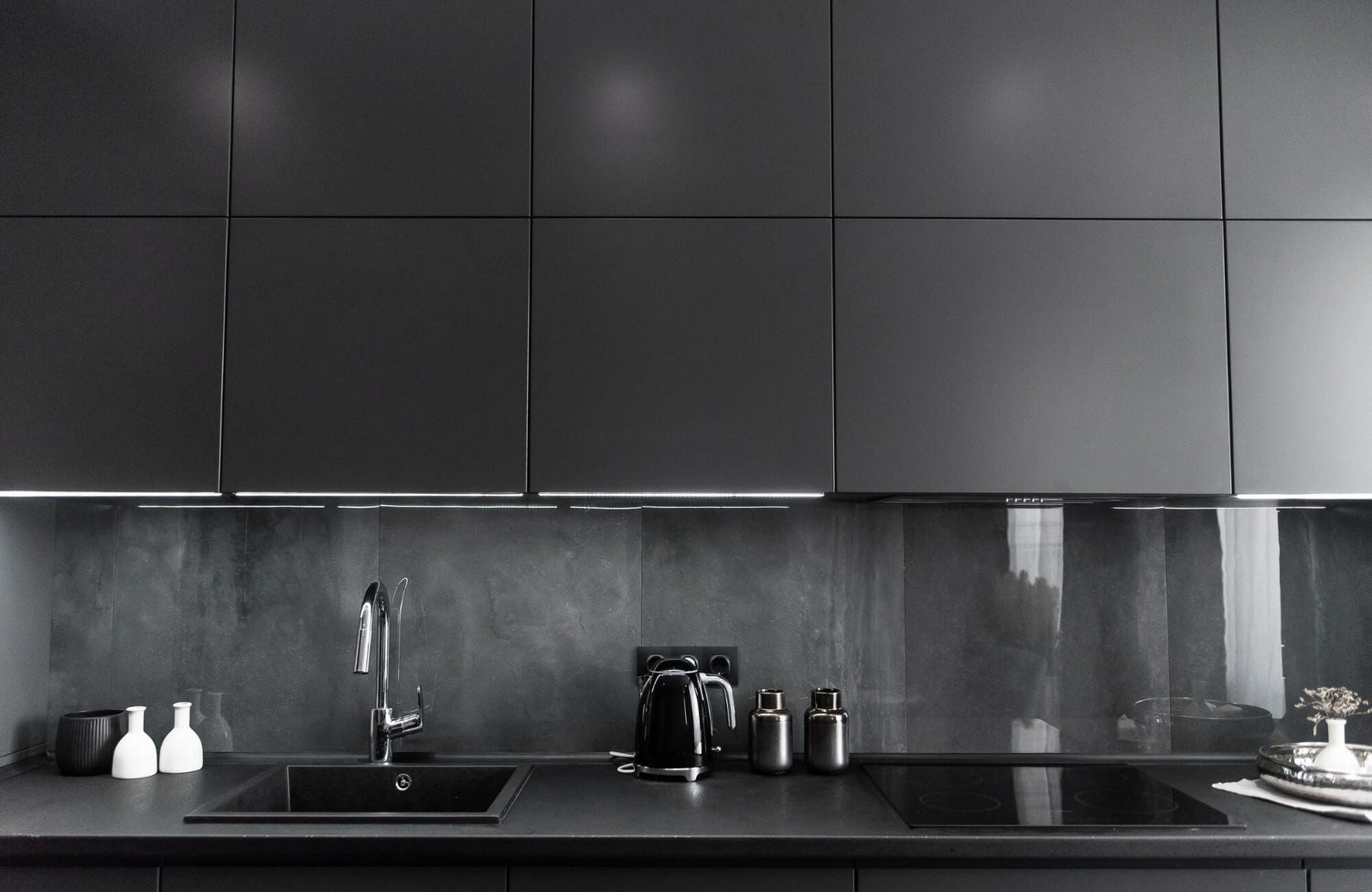
Tile orientation can dramatically influence the perception of space. A vertical layout draws the eye upward, making ceilings feel taller and adding a sense of grandeur to the backsplash. This approach works particularly well in kitchens with full-height backsplashes, such as installations featuring Edward Martin’s Tatum 24x48 Matte Porcelain Tile in Vein-Cut Sand, where the image above highlights the vertical movement of the pattern.
Horizontal orientation emphasizes width and continuity, reinforcing the slab-like appearance of the tile. This layout is often preferred when showcasing veining patterns that flow naturally across the surface. The choice between vertical and horizontal placement should align with both the tile design and the proportions of the kitchen.
Managing Electrical Outlets And Interruptions
Backsplashes are rarely uninterrupted surfaces. Electrical outlets, switches, and fixtures must be carefully integrated into the tile layout. With large format tiles, precision planning is essential to minimize awkward cuts and preserve the integrity of the design.
Professional installers often map out tile placement in advance, ensuring that outlets align cleanly within the tile or along grout lines where possible. This level of planning helps maintain the seamless look that makes large format stone look tiles so appealing, while still meeting functional requirements.
The Importance Of Precision Edge Finishing
Edges and transitions are central to the overall appearance of a backsplash. Clean, well-finished edges elevate the installation from standard to exceptional. Techniques such as mitered edges or slim metal profiles create a refined transition between tile and adjacent surfaces.
Because large format tiles are less forgiving of mistakes, precision is key. Working with experienced professionals ensures accurate cuts, proper alignment, and a flawless finish. This attention to detail not only enhances aesthetics but also supports long-term durability, making professional installation a worthwhile investment.
The Future Of Backsplashes Is Seamless
Large format stone look tiles are more than a passing trend. They reflect a broader movement in kitchen design toward simplicity, cohesion, and materials that balance beauty with performance. To support confident decision-making, tools like Edward Martin’s Augmented Reality (AR) Visualization Tool allow you to preview how these tiles will look in your own kitchens, helping reduce uncertainty before committing.
For those who value timeless elegance and modern functionality, large format stone look tiles represent a forward-looking choice. After visualizing options digitally, ordering Edward Martin tile samples offers a tactile way to confirm color, finish, and scale in real lighting, reinforcing that the future of backsplashes is not just trendy—it is intentionally refined and built to last.