
)
)
)
)
)
)
)
)
Are Hexagon Floor Tiles In Style?
Once seen mainly in historic homes and vintage bathhouses, hexagon floor tiles have found their way back into the spotlight, and this time, they’re making a bold, lasting impression. From trendy cafés and boutique hotels to residential kitchens and bathrooms, these six-sided stunners are redefining what it means to be stylish underfoot. But their appeal goes far beyond surface-level aesthetics. As tile technology improves and many look for character-rich, customizable, and durable flooring solutions, hexagon tiles are also emerging as both a nostalgic nod and a modern design powerhouse.
Throughout this article, you’ll discover why hexagon floor tiles are more than just another visual trend. Their roots reach deep into architectural history, yet they’re now enhanced by innovative manufacturing methods that prioritize sustainability and creativity. Whether you’re designing a minimalist retreat or an eclectic showpiece, hex tiles provide the versatility, function, and timeless style to make your space truly unforgettable.
The Historical Roots Behind the Modern Revival
Although hexagon floor tiles might seem like a modern design choice, their legacy stretches back well over a century. Their geometric charm and balanced shape first gained popularity during the Victorian era, when tiled foyers and bathrooms became symbols of refined taste. Because of their advances in manufacturing during that time, patterned floors with ornate mosaics became more widely accessible, allowing the hexagon tile to move from upper-class estates into everyday homes. Later, in the mid-20th century, these tiles experienced a resurgence with a shift toward minimalism. The intricate flourishes of the Victorian period gave way to small, white, penny-style hex tiles that emphasized cleanliness and efficiency. Their easy maintenance and understated appeal also made them a staple in functional spaces like bathrooms and laundry rooms.
Yet the influence of hexagon floor tiles extends far beyond Western design. Across Mediterranean, Moorish, and Islamic architectural traditions, hexagonal patterns were used to symbolize unity and infinity, echoing forms found in nature such as honeycombs or crystals. These shapes appeared frequently in hammams and bathhouses, where beauty and function were deeply intertwined.
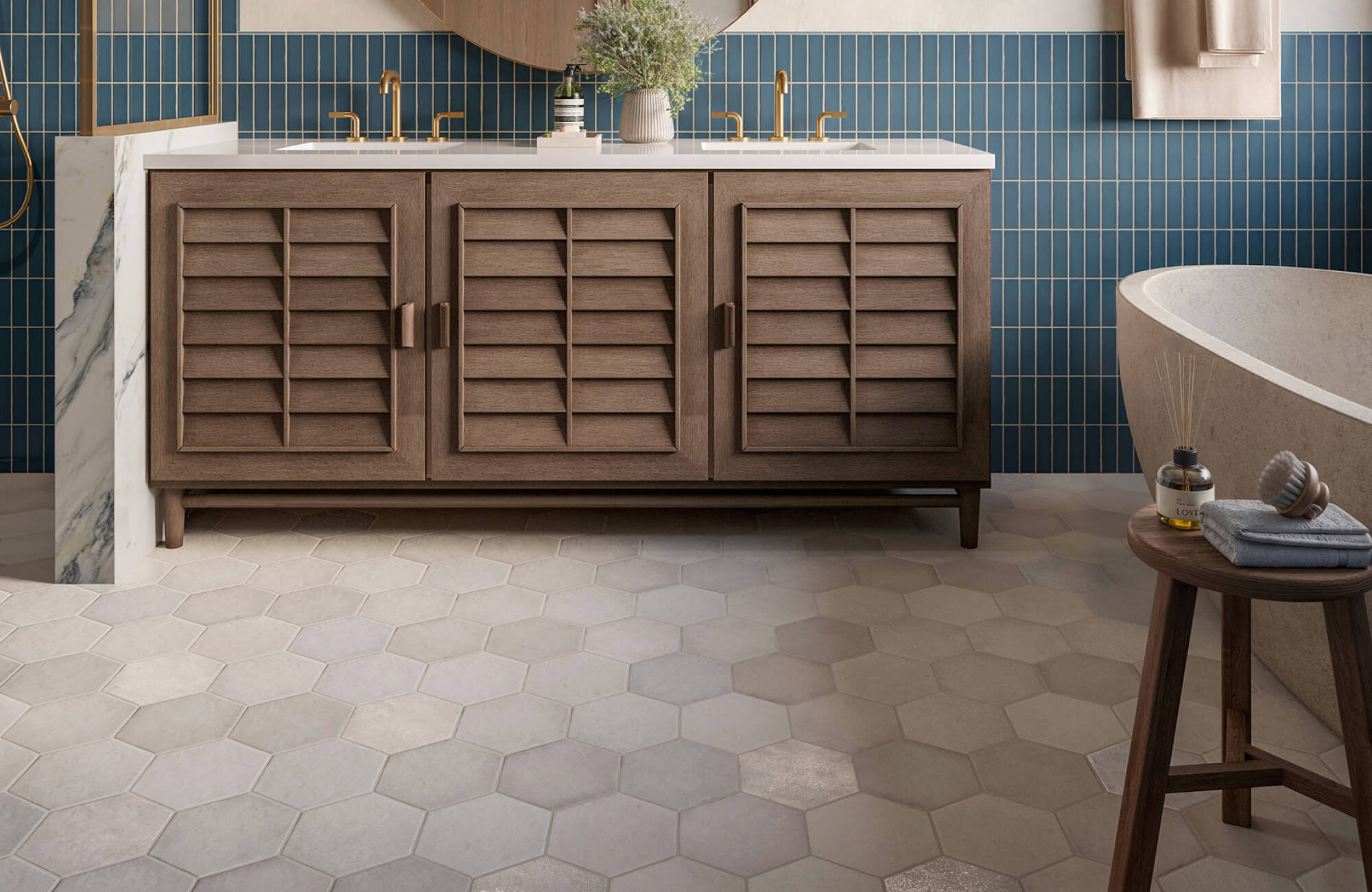
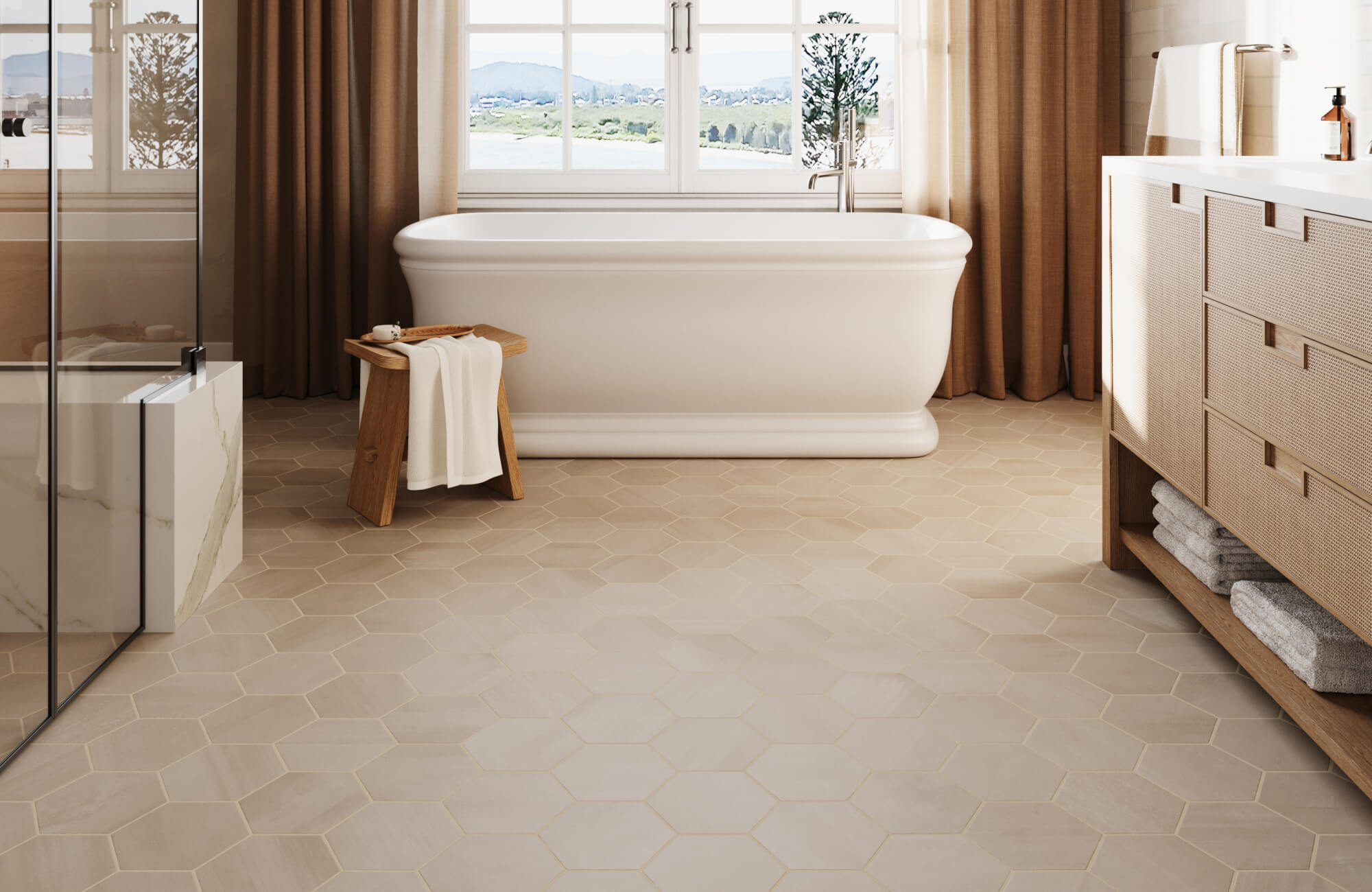
Today, when you incorporate hexagon floor tiles into your space, especially in wellness-focused areas like bathrooms or spas, you’re not just making a style choice. You’re also carrying forward a tradition rooted in both utility and artistry. The bathroom photo shown above, for instance, showcases the Juliet 7x8 Hexagon Matte Porcelain Tile in Pearl, a zellige-style with soft, light-gray tone that harmonizes with both warm wood and cool blue accents. This shade is a modern nod to the timeless neutrals of historic bathhouses, bringing a sense of calm and continuity to contemporary interiors.
Functionality That Goes Beyond Visual Appeal
Although hexagon floor tiles are undeniably stylish, their appeal extends well beyond looks. Their unique structure and material qualities contribute to performance advantages that make them a smart, long-term investment for your space.
Slip Resistance and Safety
Hexagon floor tiles stand out for their built-in safety features, especially in areas prone to moisture. Because of their smaller size compared to large format tiles, they naturally create more grout lines across the surface. These grout lines act as subtle traction points, offering more grip underfoot. This also becomes particularly valuable in wet environments such as bathrooms, laundry rooms, or kitchens, where slips can happen easily. If you're trying to make a space both attractive and secure, especially for children or older adults, the added friction from hex tiles becomes an essential benefit.
Additionally, modern hex floor tiles often come in textured or unglazed finishes, which amplify their slip resistance without sacrificing aesthetic appeal. These matte surfaces don’t just feel grounded underfoot. They reduce glare and provide a more natural tactile experience. So while you’re admiring your floors, you’re also walking on a surface designed with your safety in mind.
High Customization Potential
One of the most exciting aspects of working with hex tiles is their incredible flexibility in layout and design. The six-sided shape lends itself to unique visual compositions that would be difficult to achieve with standard rectangles or squares. You can also use them to create seamless ombré fades, mimic natural honeycomb patterns, or even stage a gradual transition from tile to hardwood for a dynamic floor design.
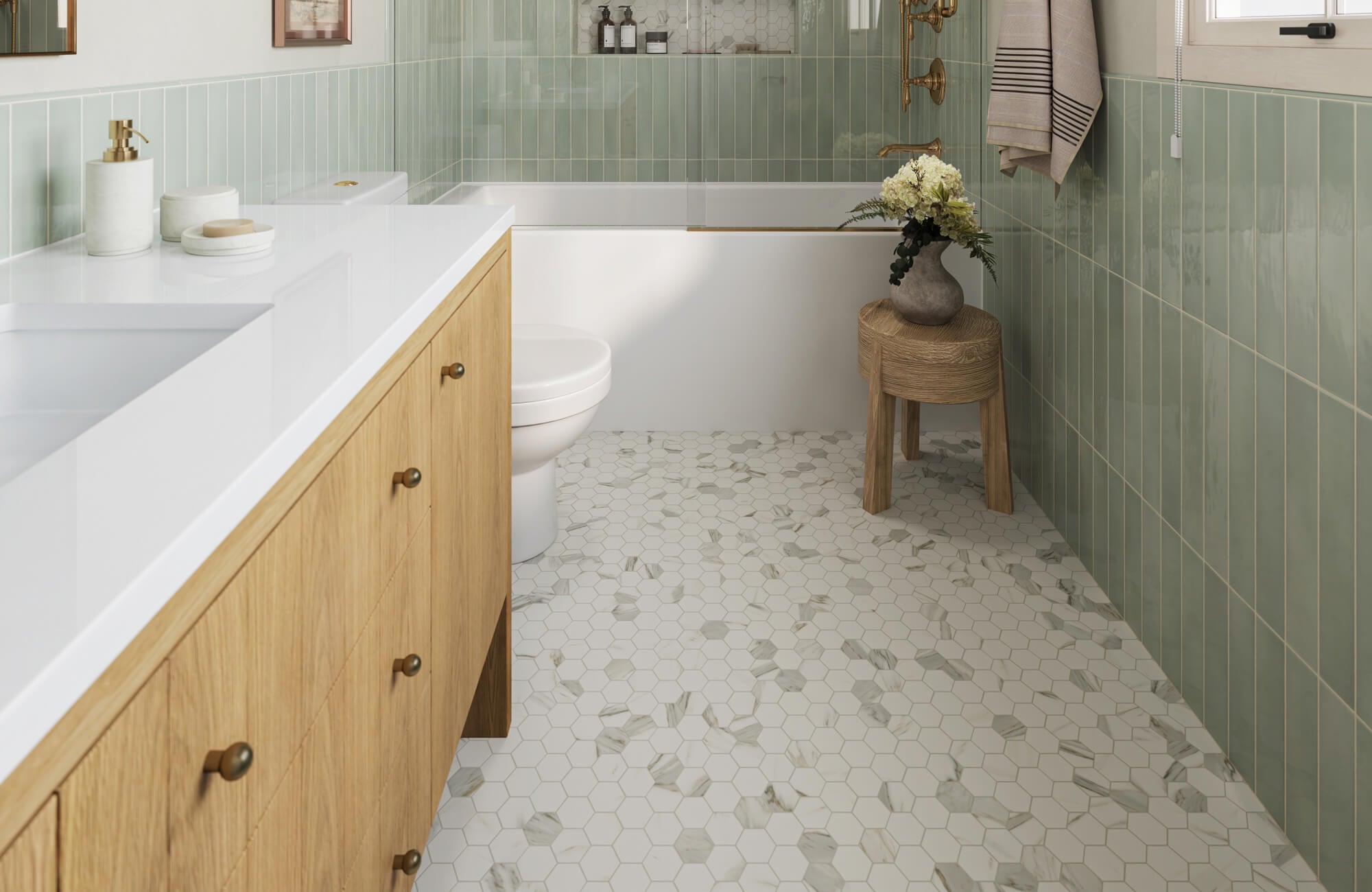
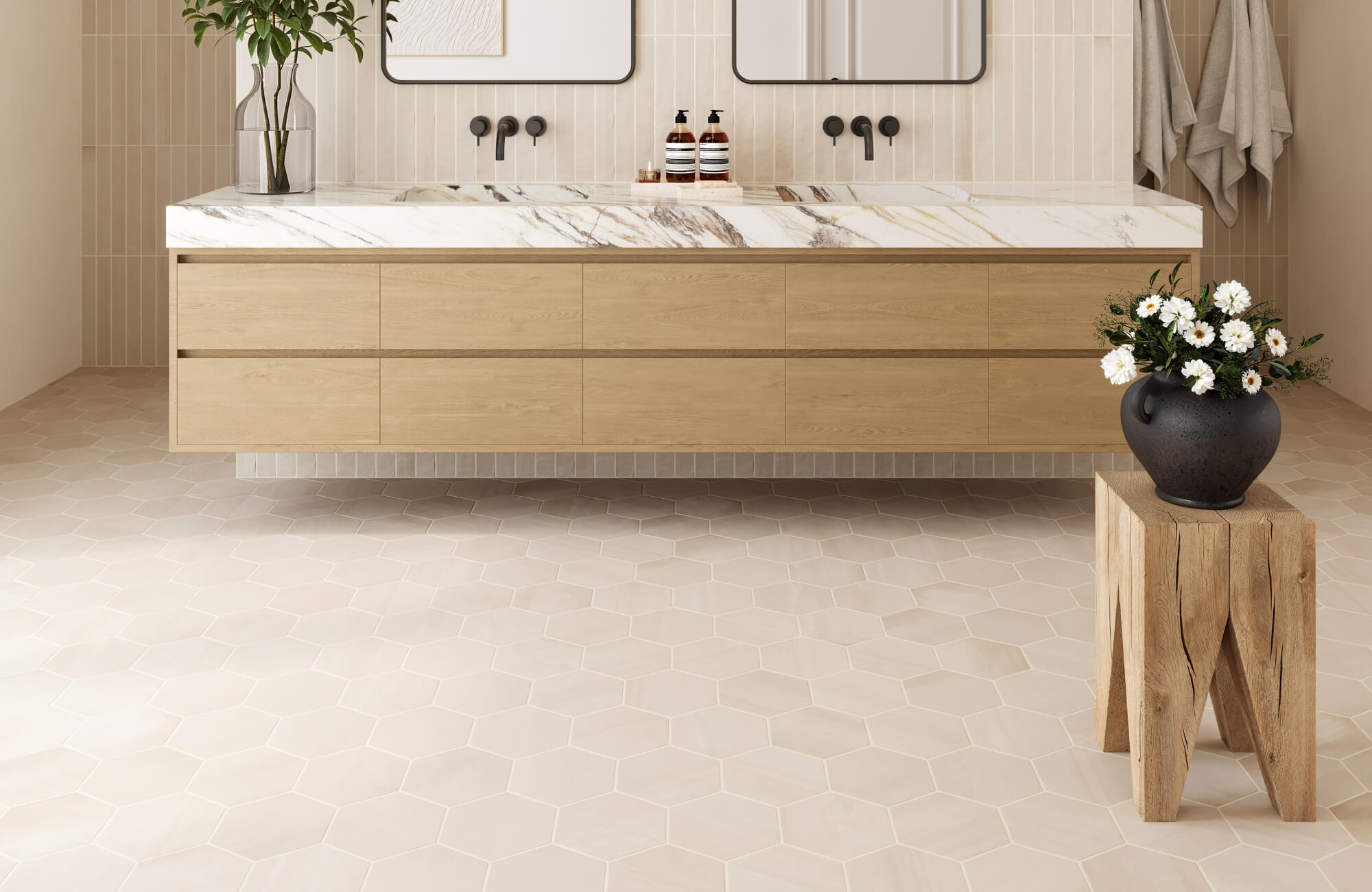
In the image shown above, the floor uses the Aniston 2x2 Matte Porcelain Hexagon Mosaic Tile in Calacatta Top, whose marble-inspired veining adds gentle movement and depth. The mix of soft white and warm gray tones provides just enough variation to keep the pattern interesting while still reading as a cohesive surface. This balance also allows the tile to complement the vertical green wall tile and natural wood vanity without competing for attention, showing how hexagon tiles can unify diverse materials into one harmonious design.
Because they fit together in such visually compelling ways, hexagon floor tiles allow you to take creative risks while still maintaining a sense of cohesion. Whether you're framing a specific zone in an open-concept layout or designing a bold focal point underfoot, these tiles can be arranged to reflect your personal style without feeling chaotic. They also offer the rare ability to feel both structured and artistic, giving you total control over how subtle or dramatic the effect becomes.
Maintenance and Durability Considerations
Although beauty often comes at the expense of practicality, hex floor tiles are an exception. Many are made from robust materials like porcelain, which is known for its density and resistance to stains, moisture, and wear. If you're choosing flooring for a busy area, porcelain hexagon floor tiles can handle daily use without showing signs of stress. Even natural stone options, when properly sealed, can offer long-lasting durability with a more organic feel.
These tiles are even more appealing due to their compatibility with modern grouts. Today’s grout formulas are designed to resist mold, mildew, and discoloration, reducing the time and effort needed for upkeep. If you keep up with basic maintenance like sweeping and the occasional mopping, you’ll find that hex tiles retain their integrity and appearance for years. So while they may look delicate or intricate, they’re also surprisingly resilient, offering a dependable flooring solution that doesn’t demand constant attention. For best results, always follow the manufacturer’s recommended maintenance guidelines to ensure long-term performance and appearance.
Aesthetic Value and Timeless Appeal
The geometric precision of hexagon tiles offers a rare balance between structure and style. Their shape invites visual interest without overwhelming a space, allowing you to incorporate them into a wide spectrum of design aesthetics, from calm and understated to bold and expressive.
Scandinavian and Minimalist Interiors
In both Scandinavian and minimalist interiors, every detail counts, and hexagon floor tiles rise to the challenge with quiet elegance. Scandinavian design shares minimalism’s love of clean lines and neutral tones but adds warmth through natural textures and an emphasis on light. Hexagon tiles, especially in soft, matte finishes, create a gentle rhythm across the floor, offering visual depth without overwhelming the simplicity of the space. When used in shades like warm grays, off-whites, or muted taupes, they also subtly enhance the ambiance while supporting the airy, grounded feeling both styles aim to achieve..
If you’re designing a space with a focus on calm, clarity, and natural light, matte-finished hexagon floor tiles fit in effortlessly. Their soft texture diffuses light rather than reflecting it harshly, contributing to that signature Nordic serenity. Whether you choose them for a kitchen, hallway, or bathroom, hexagon tiles provide just enough visual variation to keep a minimalist space from feeling sterile, all while preserving the clean lines and openness that define this style.
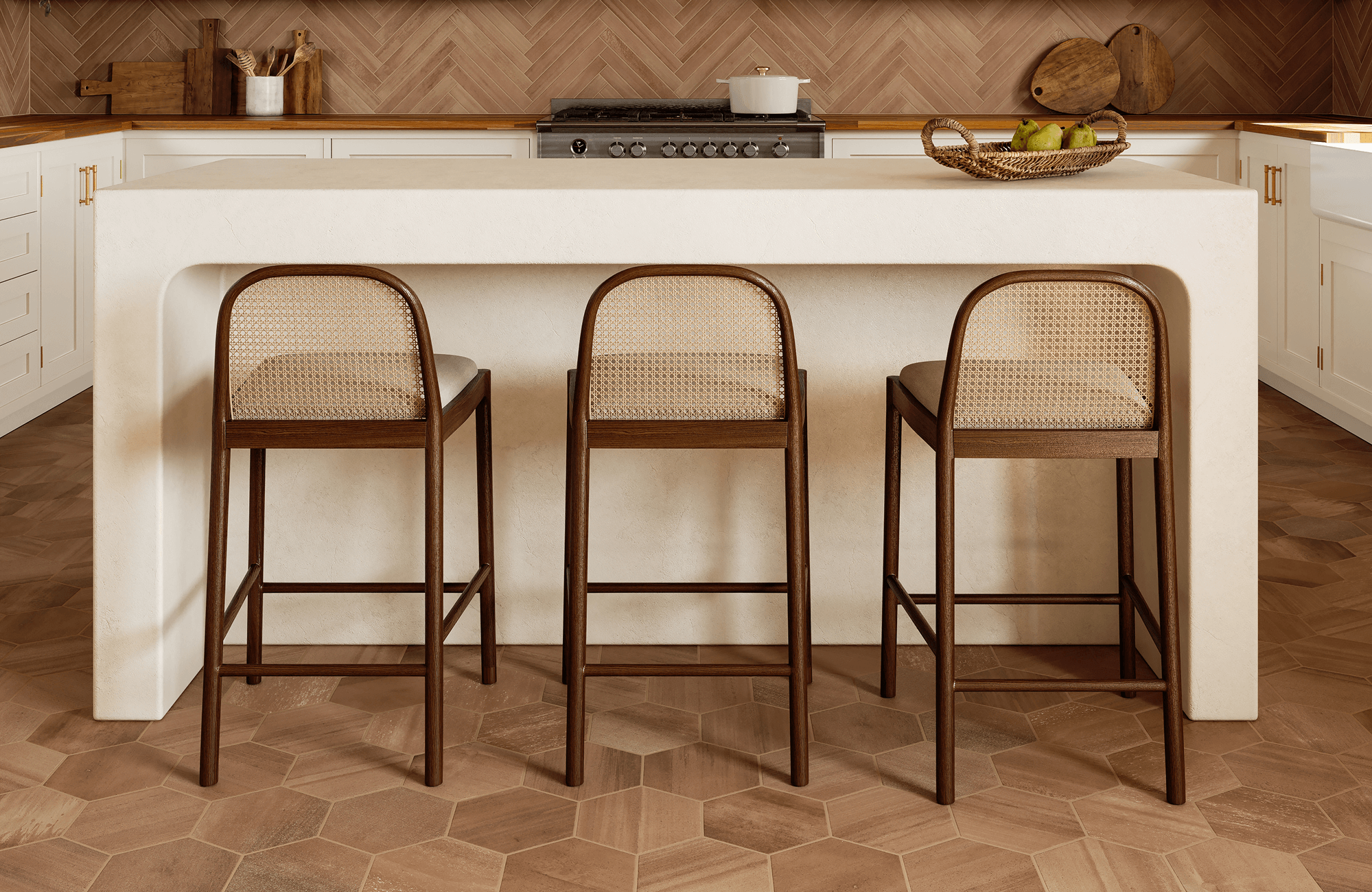
In the kitchen photo above, that balance is achieved through the Catalina 7x8 Hexagon Matte Porcelain Tile in Clay. Its warm, brown tone complements the woven texture of the stools, and the matte finish pairs effortlessly with the soft, organic pattern of the backsplash, creating a cohesive backdrop where floor and wall surfaces work together to enhance the airy, understated aesthetic. Additionally, the larger hexagon format introduces just enough geometric rhythm underfoot to ground the space without disturbing its serene flow.
Industrial and Urban Lofts
In contrast to minimalist environments, industrial interiors embrace the unfinished and raw. Hexagon floor tiles offer an opportunity to introduce structure and sophistication without compromising the room’s gritty charm. Specifically, large format hexagon tiles in darker shades such as graphite, slate, or deep olive deliver a sense of weight and stability. When placed against exposed brick, steel beams, or concrete surfaces, the clean geometry of the hex shape becomes a strong visual anchor.
The balance between rugged and refined is also what makes hexagon floor tiles such a powerful choice in urban lofts. Their orderly layout can help organize open-concept spaces without the need for walls or dividers. If you want to highlight a kitchen zone or bathroom area within a larger industrial-style layout, hex tiles provide definition and contrast in a way that feels completely integrated with the space’s modern, urban energy.
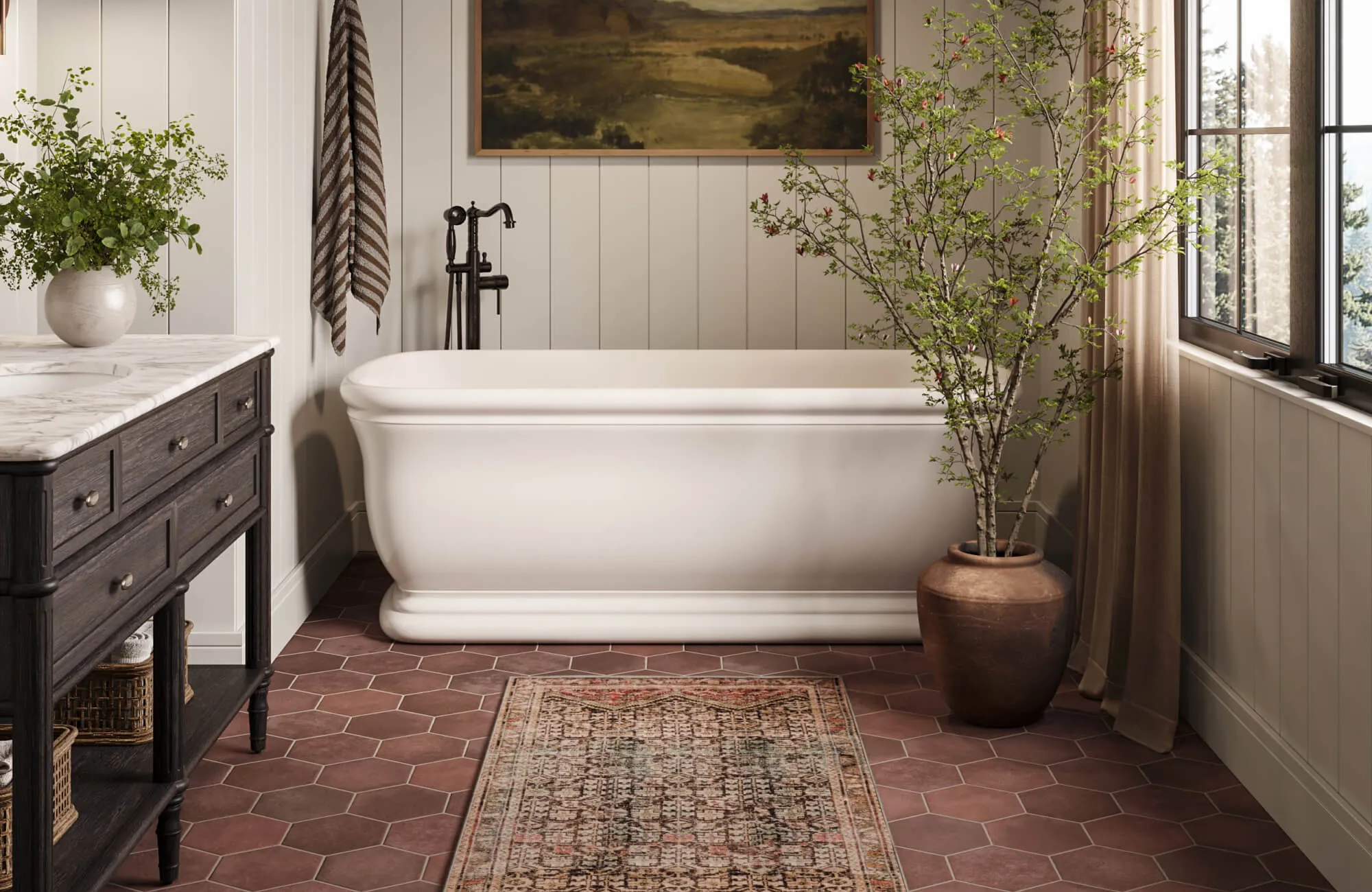
A perfect example is the Catalina 7x8 Hexagon Matte Porcelain Tile in Cotto, which brings a warm, clay-red tone reminiscent of aged brick and sunbaked terracotta, making it a natural fit for industrial settings. Its matte finish softens the intensity of the color, allowing it to complement metal accents and concrete textures while still standing out as a statement floor.
Eclectic and Maximalist Spaces
If you gravitate toward an eclectic space full of personality, texture, and color, hexagon floor tiles give you the perfect platform to express that creativity. Their structured form allows for vibrant experimentation without losing cohesion. You can also mix bold hues, choose richly glazed finishes, or even add metallic or colored grout for extra flair, each choice adding to the visual tapestry without tipping into visual chaos.
Because hex tiles inherently form a pattern, they ground even the most expressive designs. You could pair them with patterned wallpaper, layered textiles, and vintage decor, and the hexagon floor would still offer a sense of organization beneath it all. In maximalist spaces, where more is more, this subtle order makes a big difference. If you want your space to reflect bold individuality while still feeling composed, hexagon floor tiles provide the perfect balance of freedom and form.
A small-scale option like the Leona 3x3 Matte Porcelain Hexagon Mosaic Tile in Calacatta works beautifully in these layered environments. Its marble-inspired white base with soft gray veining adds a refined, timeless note that tempers bolder design choices. The compact hexagon format also creates a rhythmic, intricate floor pattern that can stand up to vibrant colors, rich textiles, and statement walls, offering just the right amount of order within a space designed to delight the senses.
Technology and Manufacturing Trends Shaping Tile Design
One of the most transformative innovations in recent years is digital inkjet printing. This technique allows manufacturers to replicate the natural veining of marble, the warmth of aged wood, or even intricate textile patterns with stunning accuracy. The result is a surface that looks authentically organic but is actually crafted from durable porcelain or ceramic. Each tile can also feature a slightly different print, giving your floor a natural variation that avoids the flat, repetitive look of earlier tile generations. You now have the opportunity to achieve a luxurious, high-end aesthetic without the cost or upkeep of natural materials, offering the best of both worlds.
Equally important is the rise of sustainability in tile production. Many manufacturers are now prioritizing eco-friendly practices, such as using recycled materials and minimizing waste through closed-loop water systems. Energy-efficient kilns, biodegradable packaging, and low-VOC adhesives are also becoming more commonplace as environmental standards tighten. If you’re looking to make sustainable choices in your renovation, modern hexagon floor tiles make it easier than ever to do so without compromising style. Furthermore, certifications like Green Squared Certified® offer assurance that the tiles you select meet rigorous environmental and ethical benchmarks. In this way, hex tiles are evolving with the times, becoming not just design statements, but also reflections of your values.
Limitations and Considerations Before Choosing Hex Tiles
Hexagon floor tiles offer both visual charm and practical benefits, but they also come with unique challenges worth weighing before committing. Their geometric shape demands precise installation, especially in intricate layouts or when transitioning to other materials. Even slight misalignments can become noticeable across a large surface, which is why professional installation is often recommended. Although mesh-mounted sheets can help simplify the process, the alignment still requires skill and attention to detail, making DIY attempts more complex, time-consuming, and potentially costly if mistakes occur.
From a design perspective, hexagon floor tiles can make a strong visual statement, but that impact can sometimes feel overwhelming in smaller or already busy spaces. Bold color contrasts or dense mosaic patterns amplify their presence, which can lead to visual fatigue over time. To keep the look balanced, you may choose to use them strategically, such as for statement floors, defined zones, or entryway accents. Opting for larger tile formats or softer, tonal palettes can also help maintain their distinctive shape while softening their overall effect.
Material choice plays a key role in both cost and upkeep as well. Porcelain, specifically, is durable, versatile, and often budget-friendly, offering the look of natural stone or other finishes with minimal maintenance. In contrast, higher-end materials like marble or encaustic tiles deliver authenticity and rich texture but require more care, such as sealing, gentle cleaning products, and ongoing upkeep, to preserve their beauty. Balancing aesthetic goals with practical considerations also ensures that hexagon tiles enhance your space in both form and function for years to come.
Hexagon Floor Tiles Are More Than a Moment
Hexagon floor tiles are not just in style; they are reshaping how style itself is defined. With a rich historical background, broad functional benefits, and a versatility that spans nearly every design aesthetic, these tiles offer more than a fleeting trend. Because of the advances in technology and eco-conscious manufacturing, they have also evolved into smart, sustainable choices for today’s interiors. From their emotional appeal to their practicality and enduring beauty, hexagon floor tiles have secured a permanent place in modern design. Rather than passing through, they’re setting the stage for what’s next.
To help bring your design vision to life, our design services team can guide you through selecting the perfect hexagon floor tile for your space. Whether you're navigating color palettes, materials, or layout possibilities, having expert support ensures your final result is both beautiful and functional. And with the ability to view tiles in augmented reality (AR), you can visualize how a hexagon tile will look in your own environment before making a decision, eliminating guesswork and helping you move forward with confidence. These resources make it easier than ever to turn timeless style into a space that truly feels like yours.
Follow us on Instagram
@EDWARD.MARTIN
)
)
)
)
)
)
)
)
)
)
)
)
)
)
)
)