For decades, double sinks have stood as a symbol of convenience and luxury in residential bathroom design. As architectural and lifestyle trends evolve, so too do our expectations for what a bathroom should offer. Today’s homeowners are thoughtfully weighing the practicality of double vanities against considerations like space efficiency, sustainability, and cost, without ruling them out entirely.
This article offers a comprehensive look at how the double vanity rose to prominence, how modern preferences are expanding to include a wider range of solutions, and what technical and aesthetic factors are influencing bathroom design today. From historical relevance to modern alternatives, we’ll explore whether this enduring feature still belongs in the modern home, and why, in the right setting, it may remain a smart and stylish choice.

The Evolution of Double Vanities in Residential Design
Double sinks became popular during a time when symmetry, size, and clearly defined routines shaped the ideal master suite. Revisiting this trend reveals why it may be evolving today, and how, in the right context, it can still hold value.
Cultural Shift Toward Personalized Spaces
As domestic life evolved, so did the desire for personal autonomy within shared spaces, especially among dual-income couples navigating busy, overlapping routines. This shift toward individualized comfort reshaped how bathrooms were used, leading to a stronger emphasis on convenience, equality, and efficiency.
It was in this cultural moment that the double vanity gained traction, offering a practical solution that allowed both users to prepare simultaneously without interruption. Placing two sinks side-by-side became a way to respect personal boundaries while visually reinforcing balance and routine. Over time, this setup came to symbolize both independence and partnership within the home.
Today, as daily life becomes less rigid and more fluid, some homeowners are moving away from strictly symmetrical layouts in favor of flexible, lifestyle-driven designs. Still, for many, a thoughtfully designed double vanity remains a valuable feature, supporting both personalization and shared comfort in equal measure.
Influence of Mass Housing and Real Estate Norms
During the housing booms of the late 20th century, the double vanity became a go-to feature in suburban homes, often included not because of necessity but because of marketing appeal. Builders, aiming to check every perceived "luxury" box, standardized these installations across model homes. Buyers came to associate dual sinks with higher-end living, even in cases where space was limited or usage uneven.
While this strategy sometimes led to underused space, it also introduced homeowners to the concept of spatial personalization. Today, as buyer preferences become more discerning, many are prioritizing utility and flow over symmetry, but double vanities remain a welcome feature in homes with ample space and shared use needs.

Buyer Preferences and Market Trends in 2025
The modern homeowner is more focused on efficient layouts, aesthetic simplicity, and long-term value. As a result, the appeal of double sinks is being refined, not dismissed, as new priorities value intentional design over tradition. When done thoughtfully, dual vanities continue to enhance function and beauty in many homes.
Minimalism and the Rise of Compact Living
The shift toward smaller, more efficient living spaces has placed renewed importance on maximizing every square inch. In many modern homes, particularly in dense urban areas, bathroom real estate is at a premium. A double vanity may feel oversized in such settings, prompting designers to favor clean, open lines and single vanities with integrated storage. Yet in homes with more generous dimensions, a streamlined double vanity can still deliver efficiency without visual or spatial compromise.
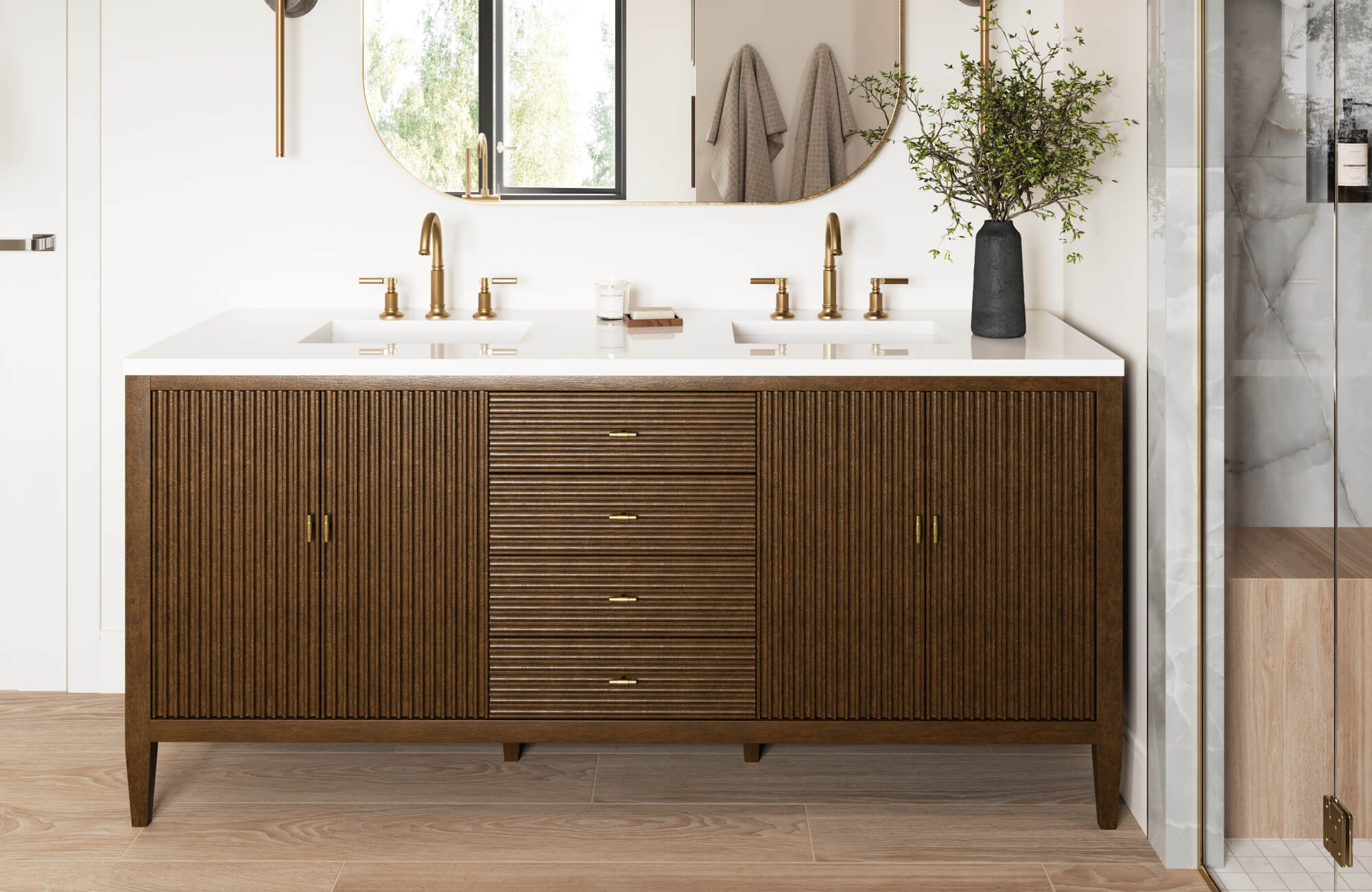
Edward Martin’s Elodie 72" Double Vanity in Light Natural Oak with 3 cm White Zeus Quartz Top, as displayed in the photo above, exemplifies this balance, offering generous dual functionality while embracing the clean lines and restrained materials associated with minimalist design. Its natural oak finish and wide proportions also provide both aesthetic calm and practical separation, making it a perfect choice for those who value minimalism without sacrificing shared use.
Generational Preferences and Lifestyle Design
Younger homeowners are less influenced by traditional notions of luxury and more guided by lifestyle alignment and design cohesion. Instead of defaulting to duplicated fixtures, they prioritize bathrooms that feel serene, integrated, and smartly designed. Features like dimmable lighting, smart mirrors, and sustainable materials often take priority. However, when crafted with wellness and minimalism in mind, a modern double vanity can offer both shared utility and aesthetic appeal, providing that “better” experience through thoughtful design.
Real Estate Staging and Resale Dynamics
While a double sink remains a desirable selling point in high-end or family-oriented homes, it’s no longer seen as a universal upgrade. Buyers today are more attuned to how a space feels and functions. Real estate professionals increasingly report that well-staged bathrooms with ample light, thoughtful material choices, and clean layouts can make a stronger impression than sheer fixture count. In smaller homes, smart design may outshine quantity, but in spacious settings, a beautifully styled double vanity can elevate the entire experience.

Psychological and Behavioral Impacts of Bathroom Layout Design
Bathroom design influences not only functionality but also the emotional and behavioral dynamics of daily routines. The choice to include or omit double sinks can subtly affect how users experience comfort, privacy, and shared space. For couples with synchronized schedules or families with busy mornings, a double vanity can make daily routines feel smoother and less rushed.
Morning Routine Synchronization and Relationship Dynamics
Double sinks are often seen as a practical solution for couples preparing for the day at the same time. While many design tensions stem from lighting, mirror placement, or limited storage, not necessarily fixture count, a thoughtfully designed double vanity can eliminate the need to coordinate time and space altogether. When flow and accessibility are matched with dedicated areas, users benefit from uninterrupted routines. For households with consistent shared usage, a double vanity offers a harmonious blend of convenience and privacy.
Perceived Ownership and Spatial Psychology
Assigning each person their own sink may seem like a practical way to respect personal space, but it can sometimes unintentionally reinforce division within a shared environment. In contrast, collaborative layouts, such as vanities with modular or designated storage zones, promote mutual respect and shared responsibility. When personalization is built into the design through elements like drawer organizers, lighting preferences, or curated product placement, users can express individuality within a cohesive space.
This balance between shared and personal zones encourages a more flexible, cooperative dynamic, reducing tension and supporting a sense of equilibrium. In this context, a double vanity doesn’t have to represent separation—it can serve as a shared platform for harmony. Especially in larger bathrooms, a thoughtfully designed double vanity offers each user their own defined area while maintaining an overall sense of connection and intentional unity.
Impact on Ritual and Wellness
Modern bathrooms are increasingly seen as sanctuaries for self-care and mental clarity. In these spaces, every design decision, from lighting and finishes to layout, shapes the emotional rhythm of daily life. While it's often assumed that simplicity and calm are best achieved through minimal fixtures, it’s the intention behind the design that determines whether a space supports wellness.
A single vanity with streamlined features, soft lighting, and tactile surfaces can naturally encourage a slower, more mindful pace. This design approach fosters a deeper connection to rituals like skincare, grooming, or winding down before bed, helping transform daily habits into grounding experiences. Rather than encouraging multitasking, these spaces invite presence and reflection, forming the emotional core of wellness-driven design.
Yet thoughtful simplicity isn’t limited to single vanities alone. That same sense of serenity and functionality can exist within a double-sink format when done with care. This balance is beautifully demonstrated by the Abigail 60" Double Vanity in Light Natural Oak with a 3 cm White Zeus Quartz Top, as shown in the photo above. Though it features dual sinks, its clean lines, warm oak tones, and spacious cabinetry maintain a light, uncluttered atmosphere. The layout also supports parallel use without visual noise, helping both users feel relaxed and unrushed. It’s a refined take on the double vanity—proof that form, function, and emotional wellness can align in even the most practical fixtures.

Plumbing Challenges, Space Planning, and Budgetary Impacts
Behind the visual appeal of any vanity, whether single or double, lies a series of practical considerations. Plumbing complexity, spatial demands, and cost-efficiency all affect how valuable a layout truly is. While double vanities can require more planning, their dual functionality often justifies the investment for homes with shared usage. With professional installation, homeowners can enjoy added convenience without compromising code or comfort.
Plumbing Infrastructure and Installation Complexity
Installing a double vanity is far from a plug-and-play upgrade. Each sink requires its own water supply and drain lines, along with proper venting and shut-off valves. In new builds, this can also be accounted for in the planning stage, but in renovations, it often involves cutting into walls or floors, which can quickly escalate costs. Homes with slab foundations or tight wall cavities face additional challenges, as re-routing plumbing in such conditions is labor-intensive and requires precision. Despite these technical demands, the practical benefits of a double vanity, such as accommodating simultaneous use and reducing morning congestion, can make the investment worthwhile in shared or busy bathrooms.
Spatial Efficiency and Countertop Utility
While the idea of “his and hers” sinks suggests harmony, the reality often involves trade-offs, such as reduced counter space and constrained movement. The standard 60-inch width required for two basins can limit layout flexibility, making closets harder to access or diminishing surface area for daily essentials. In smaller bathrooms, this can create congestion rather than convenience.
However, these challenges are not inherent to the concept of double vanities; they’re the result of poor planning or inflexible layouts. Today’s designers are rethinking how to optimize space through smart cabinetry, integrated storage, and proportionally scaled fixtures. With these innovations, it’s entirely possible to enjoy the comfort of dual access without sacrificing openness or utility. When executed thoughtfully, modern double vanities strike a beautiful balance, offering the ease of shared use alongside elegant, uncluttered design.
Budget Allocation and Renovation ROI
The cost difference between a single and double sink extends well beyond the fixture itself. Additional cabinetry, extended countertops, increased plumbing complexity, and extra hardware all contribute to a steeper renovation bill. For homeowners working within a defined budget, each dollar must be weighed carefully, since spending on duplicated features may mean sacrificing upgrades that offer broader impact, such as heated floors, frameless glass showers, or enhanced ventilation systems.
However, renovation value isn’t just about what looks impressive on paper. It’s about how the space supports everyday life. In households with multiple users or overlapping routines, a double vanity can significantly reduce congestion and improve morning flow. When the investment supports comfort, harmony, and long-term usability, it becomes more than a convenience; it’s a design decision that pays dividends over time. Choosing features that enhance daily functionality, whether it’s dual sinks or spa-inspired lighting, also ensures your renovation aligns with how you live, not just how a space should look.

Modern Alternatives and Space-Saving Solutions
Contemporary bathroom design has moved beyond the binary choice of one sink versus two. A wide range of innovative solutions now offer multi-user functionality without compromising space, flow, or aesthetics. While the double vanity remains stylish and functional in many homes, those seeking alternatives will find options like trough sinks, split configurations, and modular systems that deliver comparable utility with a more tailored footprint.
Trough Sinks and Shared Basins
Trough sinks offer a streamlined alternative that balances shared access with minimal visual bulk. These elongated basins, often paired with dual faucets, allow two users to operate comfortably without the need for two separate plumbing connections. Designers can choose from materials such as cast concrete, solid surface, or natural stone to create a sleek, customized look.
Trough sinks also provide more continuous counter space, enhancing usability for both storage and daily routines. This format works especially well in modern or industrial-style bathrooms, where clean lines and understated functionality are key. However, for those who value clearly defined personal zones, a traditional double vanity still offers a more familiar and structured solution.
Split Vanity Configurations
Separating vanities into distinct areas within the same bathroom can effectively resolve issues of congestion and clutter without defaulting to the traditional side-by-side double sink layout. Placing individual vanities on opposite walls, or flanking a central element like a tub or window, enhances privacy and foot flow. Each user gains their dedicated zone, with lighting and storage tailored to personal habits, height, and routine.
This setup supports a more customized experience and helps visually lighten the room, especially in bathrooms with irregular layouts or generous square footage. By distributing function across the space rather than consolidating it, split vanities offer a thoughtful alternative that prioritizes both individuality and usability.
That said, these same benefits can often be achieved through a well-designed double vanity, especially one that carefully balances symmetry with separation. With distinct storage zones, dual lighting configurations, and proportional spacing, a single double vanity can offer the feel of individualized stations while maintaining a unified, space-efficient footprint. For many households, it strikes the ideal balance between personalization and visual cohesion.
Floating Vanities and Modular Systems
Floating vanities, mounted off the floor, create a feeling of openness while also facilitating easier cleaning and under-cabinet lighting. Their minimal footprint makes them ideal for smaller bathrooms or those designed with a modern or spa-like aesthetic. Modular systems take this flexibility further by offering customizable combinations of drawers, sink placements, and counter lengths.
This also enables homeowners to create a tailored solution based on actual usage patterns, rather than adhering to conventional layouts. Whether designed for solo use or dual access, these systems support efficient planning and evolve with changing household needs. Their adaptability makes them increasingly favored in both new builds and remodels.
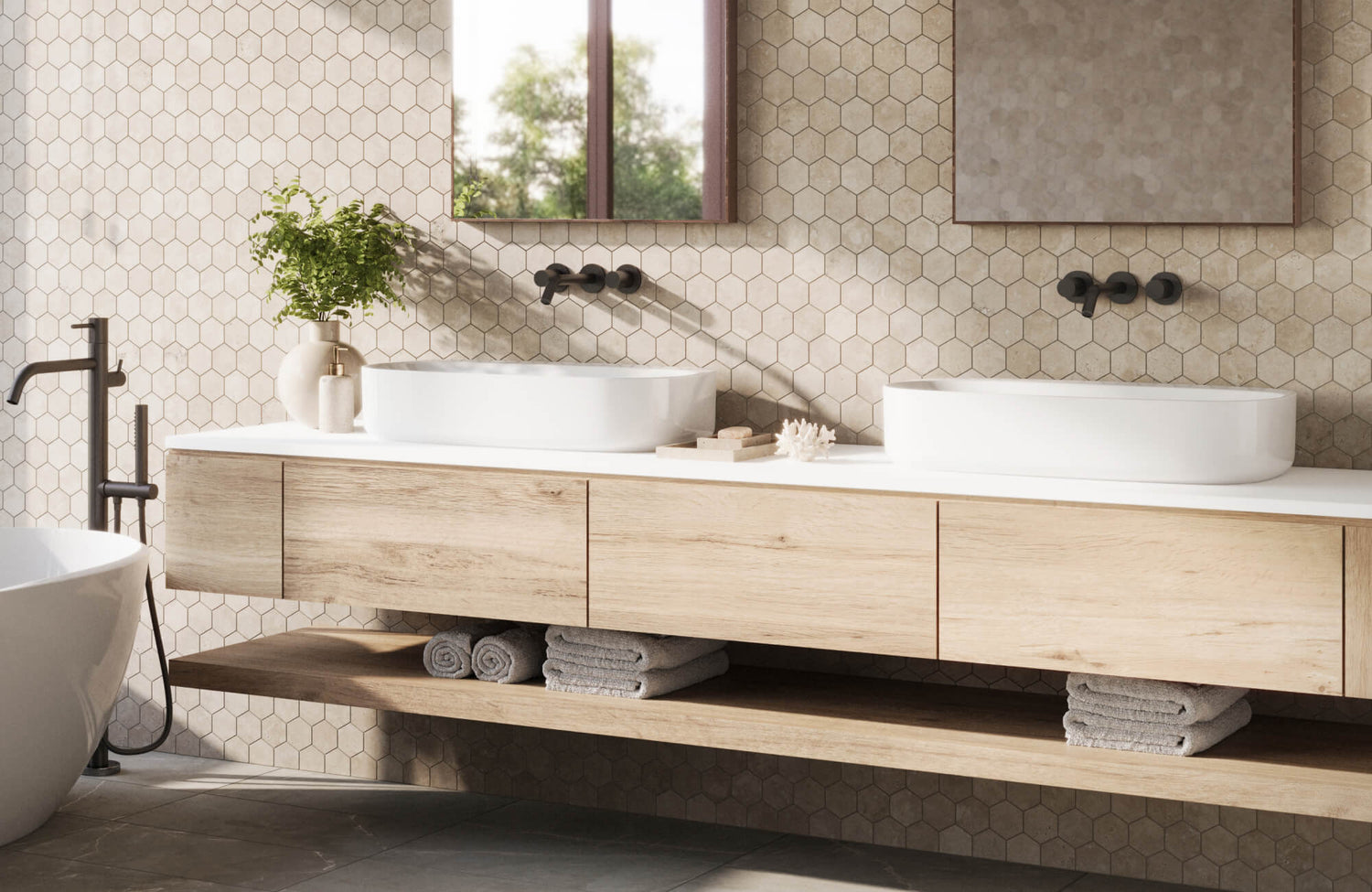
One example that reflects this adaptability is our Royce 36" Single Vanity in Chestnut with a 3 cm White Zeus Quartz Top, as depicted in the photo above. Its compact size and refined materials make it well-suited for floating or modular applications. This makes it ideal for smaller layouts or pairing in a split configuration where flexibility and a minimalist footprint are prioritized. And for those seeking the same floating aesthetic with the convenience of dual sinks, the Royce 72" Double Vanity in Chestnut delivers spacious functionality without compromising visual lightness, making it a strong choice for modern shared bathrooms.

Sustainability, Hygiene, and the Future of Bathroom Design
The future of bathroom design is being shaped by deeper concerns around sustainability, health, and intelligent systems. These considerations are prompting a shift from duplication to optimization, redefining what modern bathrooms look like and how they function. Yet, when constructed with efficient materials and eco-conscious fixtures, a double vanity can still align with sustainability goals while providing added utility.
Water Conservation and Environmental Footprint
Each additional sink doesn’t just use more water. It also introduces more materials, more plumbing, and more long-term energy demand. Even with efficient fixtures like low-flow faucets, the broader environmental cost includes heating extra water, supporting dual pipe systems, and sourcing additional cabinetry and countertop materials. Over time, these factors can increase a home’s carbon footprint and utility load.
As a result, many eco-conscious homeowners are embracing streamlined layouts that emphasize shared fixtures and reduced infrastructure. A well-designed single vanity can comfortably support two users while promoting conservation and simplicity, key tenets of sustainable living.
That said, double vanities aren’t inherently at odds with sustainability. When constructed using renewable materials, high-efficiency faucets, and locally sourced components, they can serve as part of a broader green strategy, especially in homes where shared use would otherwise cause congestion or inefficiency. In these cases, it's not the number of sinks that matters, but the thoughtfulness of the materials, systems, and design behind them. Today’s smartest bathrooms aren’t just smaller; they’re better designed for the way people live and the planet they live on.
Hygiene Realities Versus Perceived Cleanliness
It’s often assumed that separate sinks offer a more hygienic experience, but actual cleanliness depends more on materials, habits, and maintenance than fixture count. A single sink made from non-porous, antimicrobial materials can be easier to sanitize than two smaller, harder-to-clean basins.
That said, well-designed double vanities made from seamless, easy-to-clean surfaces can also promote hygiene while minimizing crowding. With thoughtful materials and features like touchless faucets, dual setups can offer both sanitary function and spatial clarity. Additionally, touchless faucet technology and integrated UV disinfection are proving more effective at reducing germ transmission than physical separation.
Smart and Sustainable Design
Looking ahead, bathrooms are expected to become more adaptive, efficient, and responsive to user behavior. Integrated technologies, such as leak detection systems, personalized temperature presets, and usage analytics, are setting a new standard for what a bathroom can be. These features thrive in streamlined layouts, but that doesn't preclude dual sinks when implemented with purpose. Modern double vanities designed with smart faucets, LED lighting, and modular storage are keeping pace with innovation, offering both convenience and intelligent design.
The Future Role of Double Sinks
While design trends have moved away from one-size-fits-all solutions, double sinks continue to play a valuable role in bathrooms where shared use, convenience, and spatial balance are priorities. Rather than being seen as outdated, they are now chosen with greater intention and integrated into layouts that support daily routines without compromising flow or sustainability. When crafted with efficient materials and thoughtful proportions, modern double vanities can elevate both functionality and aesthetics, offering a timeless solution that aligns with today’s demand for smarter, more personalized design.
If you're rethinking your bathroom layout, Edward Martin’s design services can help you find the right balance between style, space, and function. Whether you're leaning toward a single or double vanity, contact us to get expert guidance tailored to your space!