Checkered tiles are widely recognized for their bold pattern and classic appearance, often used to create visually striking floors in both residential and commercial interiors. The alternating colors can bring rhythm and contrast to a space, which is why this pattern has remained popular across many design styles and decades. However, when selecting flooring, appearance is only one part of the decision. Practical considerations such as safety and stability underfoot often become just as important.
If you are exploring checkered tiles for a kitchen, entryway, or bathroom, it is natural to wonder how they perform in everyday conditions. Floors in these areas frequently encounter moisture, spills, and regular foot movement, so understanding how tile surfaces respond to these conditions can help you make more informed choices. The pattern itself may catch your attention first, but the materials and finishes used in the tiles play a significant role in how the floor behaves.
To better understand this topic, it helps to look beyond the visual design and examine the factors that influence slip resistance. This includes the tile material, surface finish, measured friction ratings, and installation method. By exploring these aspects step by step, you can gain a clearer understanding of what contributes to a safer tile floor and what to consider when evaluating checkered tile options for different spaces.

What Determines the Slip Resistance of Checkered Tiles?
Aside from visual patterns, several technical characteristics influence how a tile grips underfoot. Factors such as the tile’s material, surface finish, and measurable friction rating all contribute to how stable and reliable the flooring feels over time.
Tile Material (Porcelain vs. Ceramic)
The material used to produce a tile plays an important role in how it performs underfoot. Ceramic and porcelain tiles are known for their low-porosity structure compared with many other flooring materials, making them resistant to heat, moisture, and surface wear. Because of these qualities, they are often selected for spaces where durability and stable flooring performance are important.
Porcelain tiles are manufactured at higher temperatures and pressures, resulting in a denser composition. This density allows porcelain to absorb very little moisture, helping it perform consistently even in spills or humidity-prone spaces. Because of this, porcelain is commonly used in areas where flooring needs to withstand moisture while still providing a stable footing.
Ceramic tiles offer many of the same practical benefits, although their composition is slightly less dense than porcelain. For this reason, the surface finish becomes especially important when selecting ceramic tiles for kitchens, bathrooms, or entry areas. Choosing a matte or lightly textured finish can also help create a more stable surface in spaces where moisture may occasionally be present.
Surface Finish and Texture
The finish on a tile surface plays an important role in how much grip the floor provides underfoot. Smooth, polished finishes can create a refined appearance; however, they offer less surface friction. As a result, the floor may feel more slippery when moisture or dust is present.
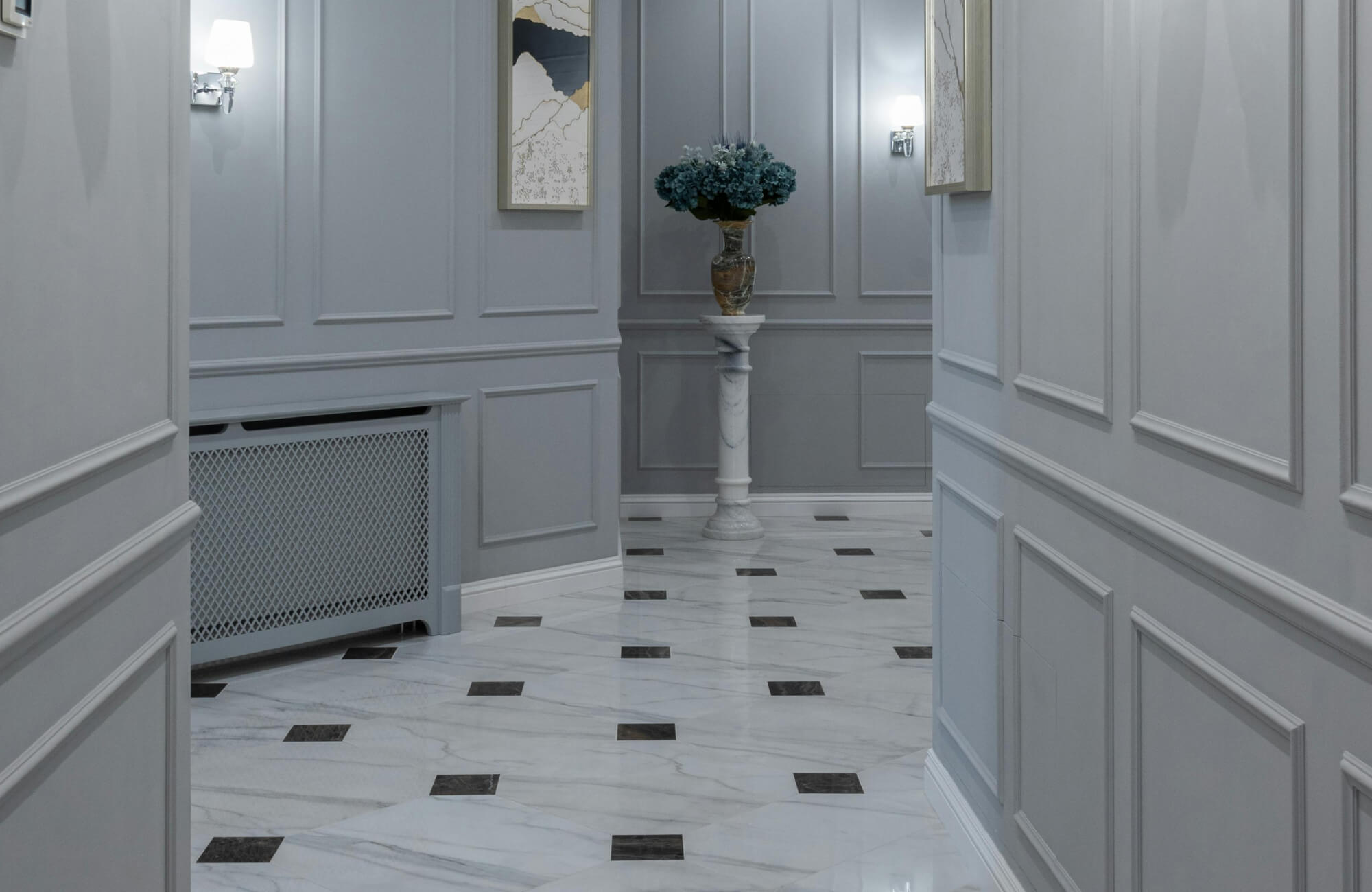
In contrast, matte finishes behave differently. Instead of a glossy, reflective surface, matte tiles feature a subtle texture that increases contact between the tile and your footwear. This added contact can improve grip and help the floor feel more stable, particularly when the surface is slightly damp. A clear example is Edward Martin’s Leona 12x12 Checkerboard Matte Porcelain Tile in Marfil and Amani Bronze, featured in the photo above, which shows how a matte finish can create a steadier surface while preserving the classic checkered look.
Additionally, textured finishes introduce gentle surface variations that further enhance traction. These small details help improve grip and can make the floor feel more secure underfoot. In spaces where stability is especially important, finishes with subtle texture often provide a more dependable walking surface.
Coefficient of Friction (COF) Ratings
In addition to material and surface finish, slip resistance can also be evaluated through a measurement known as the coefficient of friction, or COF. This rating shows how much grip a surface provides when moving across it. In general, a higher COF value means the tile provides better grip underfoot.
When reviewing tile options, looking at the COF rating can help you understand how the flooring may perform in different environments. For example, residential floors typically meet certain friction benchmarks that support safe everyday use. In comparison, frequently used spaces often require tiles with higher COF values to maintain stable footing.
Keeping this in mind can help you better understand how the tile may perform once installed. In this way, COF turns the concept of slip resistance into a measurable factor that helps guide more informed flooring choices.

How Moisture Affects Checkered Tile Slip Resistance
Even carefully selected checkered tiles can perform differently once moisture is present. Understanding how water interacts with tile surfaces helps explain how slip resistance can change and why certain finishes are better suited for damp environments.
Why Wet Surfaces Reduce Traction
When water spreads across a checkered tile floor, it forms a thin layer between the tile surface and your footwear. This layer reduces direct contact with the floor, minimizes grip, and makes it easier for your foot to slide than it would on a dry surface. This happens because water creates a temporary barrier that reduces the grip normally formed between the shoe and the tile surface. Even materials that feel stable when dry can lose some traction when moisture is present.
Understanding this interaction between water and checkered tile surfaces helps explain why slip resistance is often evaluated in both dry and wet conditions. It also highlights the importance of selecting finishes that can maintain grip when the floor becomes damp.
Best Tile Finishes for Wet Areas
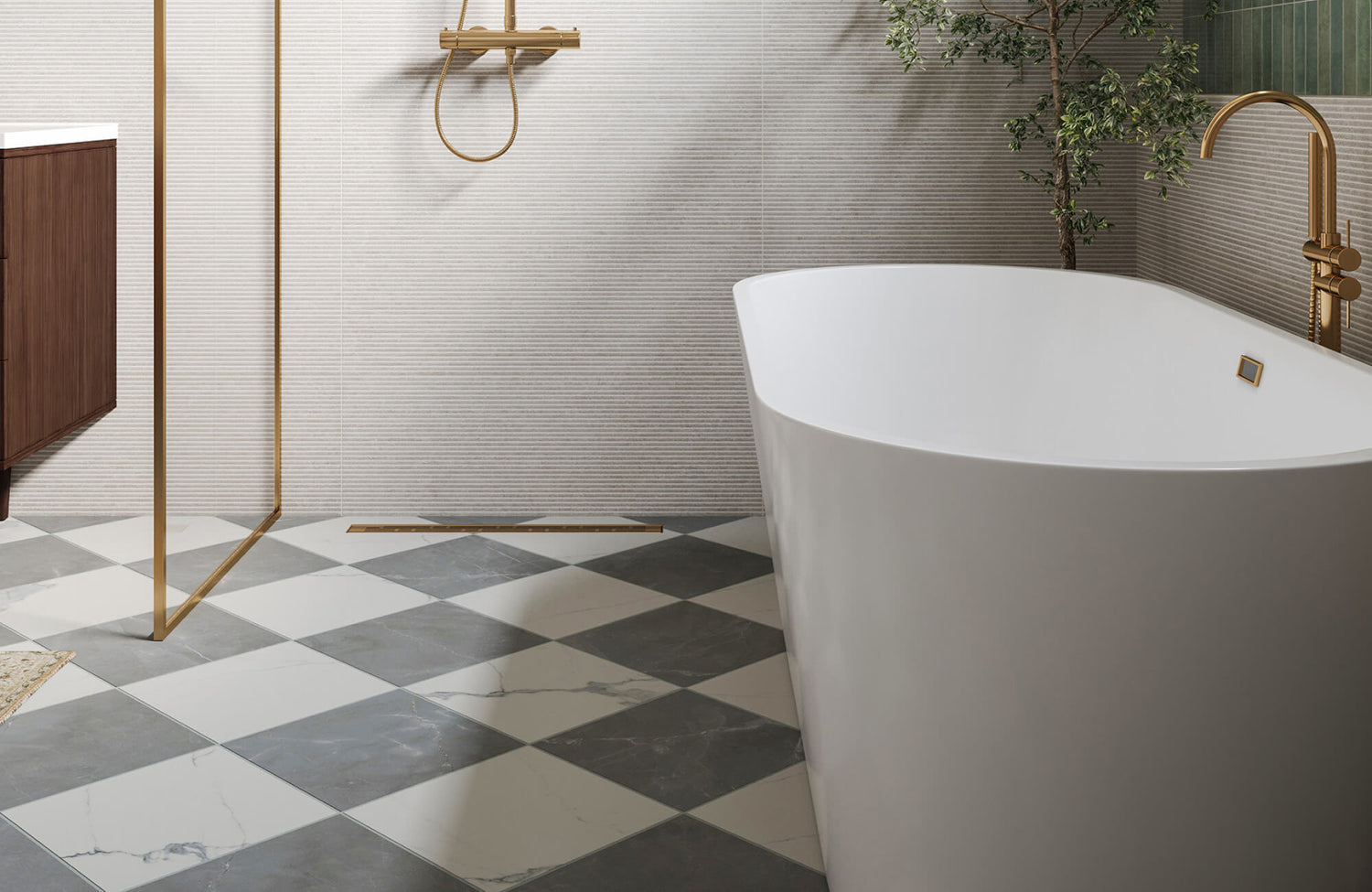
In areas where water is present more often, tile finishes with subtle texture tend to perform more reliably. Matte surfaces and lightly textured checkered tiles allow moisture to disperse more easily while maintaining better contact between the tile and footwear. This improved contact helps preserve traction even when the floor becomes slightly damp. The bathroom shown in the photo featured above highlights this approach, where Edward Martin’s Leona 24x24 Checkerboard Matte Porcelain Tile in Calacatta and Amani Grey demonstrates how a matte checkered finish can help support steadier footing in moisture-prone spaces.
These finishes often feel more stable underfoot because their subtle surface variations create additional friction. While they may appear smooth at first glance, this surface structure helps reduce the chance of sliding in spaces where moisture is occasionally present. For spaces such as kitchens, bathrooms, or entryways, selecting checkered tiles with matte or lightly textured finishes can support safer footing while maintaining the visual appeal of a checkered floor.
Areas Where Slip Resistance Is Most Important
Certain areas of a home or building require closer attention to slip resistance. Kitchens may experience occasional spills during daily use, while bathrooms often deal with humidity and splashes from sinks or showers. Similarly, entryways may be exposed to rainwater or moisture carried in on shoes, making surface traction an important consideration. Given these conditions, the tile finish becomes an important factor to consider. Choosing surfaces that maintain good traction in these environments can help support safer footing while still allowing the checkered pattern to contribute to the overall design of the space.
When the flooring’s performance aligns with the space’s practical needs, the result is a surface that remains both visually appealing and reliable for everyday use.

Does Tile Size and Layout Affect Floor Safety?
In addition to material and surface finish, the size and layout of checkered tiles can also influence how secure a floor feels underfoot. The spacing between tiles and the number of grout joints affect how your feet interact with the surface, which can play a supporting role in overall slip resistance.
The Role of Grout Lines in Slip Resistance
Grout lines create small gaps between tiles, and these joints can help improve traction. As you walk across the floor, they introduce subtle friction points that help reduce the likelihood of slipping. In layouts with more frequent grout joints, this effect becomes even more noticeable. The slight texture of the grout, along with the tile edges, adds small variations to the surface that can help the floor feel steadier as you walk. While grout is not the main factor in slip resistance, it works together with the tile’s finish and material to help make the floor feel more secure underfoot.
How Large-Format Checkered Tiles Influence Traction
Large-format checkered tiles create fewer grout lines across the floor, resulting in a cleaner and more continuous surface. Because there are fewer joints, the overall traction depends more heavily on the tile’s material and surface finish rather than the number of grout intersections. A clear example appears in the photo featured above, where Edward Martin’s Leona 24x24 Checkerboard Matte Porcelain Tile in Calacatta and Nero Marquina demonstrates how large-format tiles can maintain stability while creating a bold checkerboard layout. Its matte surface helps reduce glare and improve slip resistance, making the floor feel more secure underfoot even with fewer grout lines.
Despite having fewer grout joints, large-format tiles can still perform well when paired with finishes that provide adequate grip, such as matte or lightly textured surfaces. In checkerboard layouts, these larger tiles create a striking visual pattern while maintaining a smooth, open appearance across the floor.
When planning a checkered tile layout, considering tile size along with the surface finish can help balance visual appeal with practical performance. Large-format tiles can achieve the classic checkerboard look while still supporting a stable footing when the appropriate finish and material are selected.

Safety Standards for Slip-Resistant Tile Flooring
In addition to material and design choices, tile flooring performance is also influenced by established safety standards. These guidelines help ensure that tiles used in different environments provide enough traction to support safe, steady movement.
Recommended COF Ratings for Flooring
Industry and building guidelines often recommend COF ranges to determine whether a tile offers adequate traction for a specific environment. These reference values serve as practical benchmarks for selecting flooring that supports stable movement in everyday spaces.
For interior residential floors that remain mostly dry, a COF of 0.42 or higher is generally recommended. In areas where moisture may occasionally occur, such as kitchens, bathrooms, or entryways, tiles with a COF of 0.50 or higher are often preferred to help maintain a better grip when the surface becomes damp.
Keeping these recommended values in mind can help you determine whether a tile is suitable for a particular space. Using these benchmarks during the selection process helps ensure the flooring provides sufficient traction for safe and comfortable use.
Accessibility and Building Safety Standards
Public and shared environments often follow accessibility guidelines that aim to support safe movement for a wide range of users. These standards encourage flooring choices that provide a stable footing and help accommodate people with different mobility needs. When tiles meet these expectations, they contribute to spaces that are easier to navigate and more comfortable to use. While these guidelines are often applied in commercial or public settings, the same principles can also be useful in residential environments where stability and ease of movement are important. By understanding how these accessibility and safety standards influence flooring choices, it becomes easier to select materials that support both safety and everyday comfort.

Where Slip-Resistant Checkered Tiles Work Best
Checkered tiles bring a distinct visual rhythm to a space while also offering practical flooring performance. When paired with suitable materials and surface finishes, they can work well in several areas of the home where both design and stable footing are important.
Kitchens
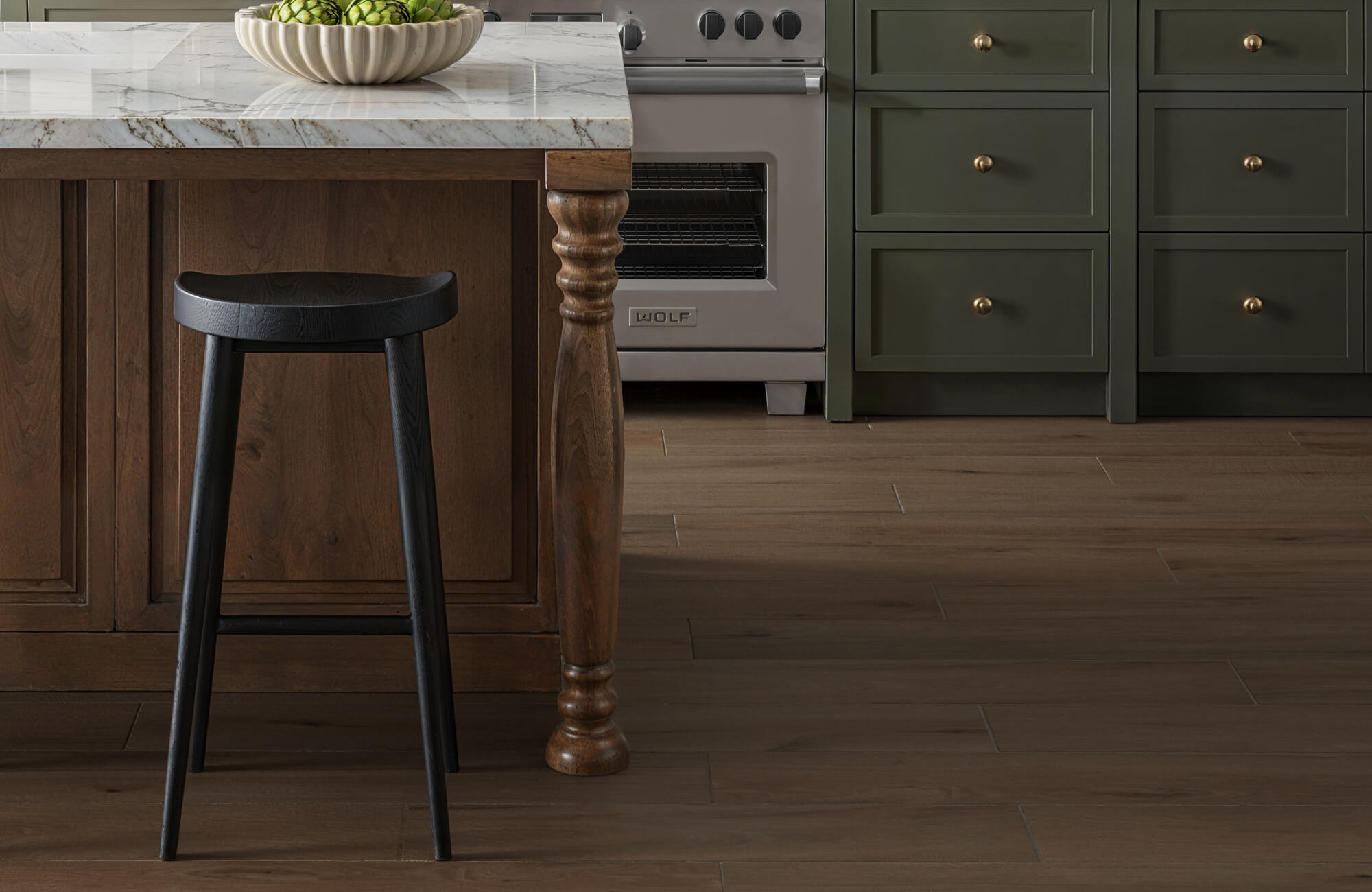
Kitchens are among the most common spaces where checkered tiles are used. This area often experiences cooking spills, water near the sink, and daily use, so the flooring needs to stay stable under these changing conditions. Choosing tiles with a matte or lightly textured surface can help improve grip while still maintaining the classic checkerboard look. A good example can be seen in the photo featured above, where Edward Martin’s Palmer 12x12 Checkerboard Matte Porcelain Tile in White and Grey illustrates how a matte finish can support steadier footing while complementing the kitchen’s overall design.
Beyond safety, kitchens also benefit from the durability of tile flooring. A checkered layout can help visually define the space, while the tile surface remains easy to clean and maintain, making it a practical choice for a busy household environment.
Living Rooms
Although living rooms typically experience less moisture than kitchens or bathrooms, the flooring should still feel stable and comfortable for everyday movement. Checkered tiles can introduce a classic or vintage character to the space while offering a durable surface that performs well over time. In this setting, slip resistance is largely influenced by the tile finish and the overall environment. Matte finishes often provide a steadier feel underfoot, helping create a floor that is both visually appealing and comfortable for daily use.
Entryways and Hallways
Entryways and hallways often encounter moisture from outdoor conditions, such as rainwater carried in on shoes. For this reason, flooring in these areas benefits from materials that can maintain traction even when the surface becomes slightly damp. Checkered tiles can work well in these spaces because their durable structure and textured finishes help provide a more reliable footing. A good example is Edward Martin’s Brody 24x24 Checkerboard Matte Porcelain Tile in Sand and Smoke, which combines a large-format checkerboard layout with a matte surface that supports steadier footing in transitional areas. At the same time, the bold pattern naturally defines entryways and hallways, helping these spaces feel more intentional while still supporting practical, everyday performance.
Choosing Checkered Tiles for Safer Flooring
Checkered tiles can be slip-resistant when the right material, surface finish, and installation are considered. The checkerboard pattern itself does not determine how safe the floor will feel underfoot. Instead, slip resistance depends on factors such as the tile’s texture, its coefficient of friction rating, and how the tiles are arranged in the space. When these elements are selected carefully, checkered tiles can provide a stable and dependable surface for everyday movement.
By paying attention to material choice, finish, and layout, it becomes possible to enjoy the visual appeal of a checkered floor while supporting safer footing in areas where stability matters. To explore how different checkered tiles may look in your space, you can try our AR tool or connect with our design services for personalized guidance.