Ceramic tiles are a common sight in kitchens, such as on walls and backsplashes. Their widespread use is no coincidence. For decades, they’ve been a popular choice in homes for their durability and ease of maintenance. But are they the best option for your kitchen? This article explores the pros and cons of ceramic tiles, helping you understand whether they’re a practical fit for your space.

The Resilient Nature of Ceramic
Kitchens face frequent activity, moisture, heat, and the occasional dropped item. In this busy environment, surfaces must be both strong and low maintenance. Ceramic tiles perform well in many of these areas and have long been used for kitchen walls, backsplashes, and in some cases, floors.
Durability and Longevity
Ceramic tiles are made from a mixture of clay, sand, and other natural materials, then fired at high temperatures to create a dense surface. This gives them good resistance to everyday wear, scratches, and moisture. However, ceramic is slightly more brittle than some other tile types, such as porcelain, making it more likely to chip under heavy impact, especially on floors that experience frequent use.
For this reason, ceramic tiles are most commonly used for walls, backsplashes, and decorative accents. While some ceramic tiles are rated for flooring, they are better suited for spaces with minimal activity. In kitchens that see constant use, a more durable option like porcelain may be a better choice for floors.
Water and Stain Resistance
Ceramic tiles often feature a glazed finish that creates a non-porous surface. This glaze makes them highly resistant to water and stains, which is ideal for kitchen backsplashes and wall coverings. Liquids stay on the surface and can be wiped away easily, keeping the space hygienic and easy to maintain. Their resistance to moisture makes ceramic tiles a smart and attractive option for surfaces exposed to splashes and spills.

Design and Aesthetic Flexibility
Kitchens are no longer seen as purely functional; they have become an important part of a home's overall design. This shift places greater value on materials that offer both visual appeal and practicality. Ceramic tiles meet this need well, offering a wide variety of styles and applications that suit many design preferences.
A Range of Styles from Classic to Modern
Ceramic tiles come in a wide array of colors, from soft neutrals to rich hues, and are available in numerous patterns, including geometric designs, stone imitations, wood looks, and artistic prints. Surface finishes also vary, from smooth and glossy to matte and textured.
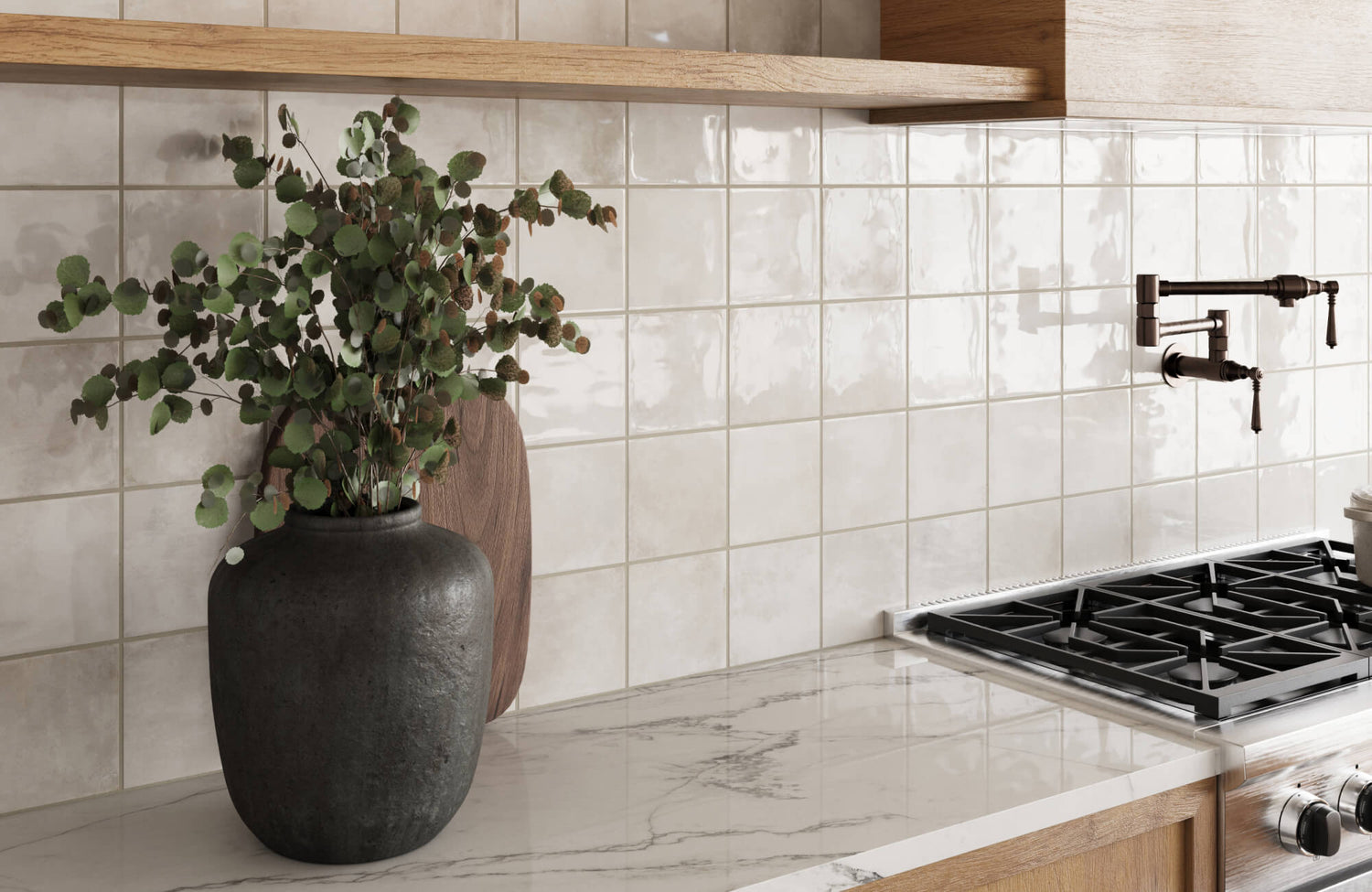
For example, the Maisie 4x4 Glossy Ceramic Tile in Canvas from Edward Martin, as displayed in the photo above, brings a timeless, artisanal charm to backsplashes and accent walls with its warm neutral tone and luminous finish, perfect for those seeking subtle elegance in both classic and contemporary spaces. Tile sizes also range from small mosaics for backsplashes to larger tiles that can visually expand floor space. Classic kitchens might use white subway tiles, while modern designs often favor sleek, large tiles in darker shades. This flexibility allows homeowners to create a kitchen that fits their preferred aesthetic.
Best Suited for Walls and Accents
Ceramic, however, truly excels in wall applications. Backsplashes benefit from ceramic’s design variety, with mosaic details or bold layouts adding texture and color. For instance, Edward Martin’s Mikayla 5x5 Glossy Ceramic Tile in Espresso delivers a deep, rich tone and reflective surface that can create dramatic contrast behind open shelving or along a kitchen backsplash. When sealed properly, ceramic tiles can also be used on countertops for a heat- and spill-resistant surface. Additionally, ceramic is a favorite for accent walls, such as behind a dining area or lining a pantry, where its texture and pattern introduce both style and character to a space.

Everyday Practicality
Ceramic tiles are known for their durability and style, but how do they perform in the daily routine of a busy kitchen? Let’s take a look at how they handle cleaning, comfort, and installation—key factors in deciding if they’re right for your home.
Easy to Clean
Ceramic tiles are simple to maintain. Their glazed surface resists stains and repels moisture, allowing spills to be wiped away with minimal effort. For routine cleaning, a damp mop and mild cleaner are usually sufficient. Tougher messes may need occasional scrubbing, but overall upkeep is straightforward.
Grout lines may also require extra care to avoid discoloration, though they can be cleaned effectively with the right tools. Additionally, ceramic does not trap allergens or bacteria, which supports a cleaner and more hygienic kitchen environment. This ease of maintenance is a major benefit for busy households.
Comfort and Surface Feel
While ceramic tiles are stable and resistant to wear, they offer little flexibility underfoot. Their hard surface can feel uncomfortable during extended periods of standing, such as when preparing meals. They also tend to stay cool, which may be a drawback in colder seasons.
To offset this, homeowners often place rugs or mats in work zones like the sink or stove. Radiant heating systems installed beneath the tiles are another way to improve comfort. Although ceramic is not the softest material, its firm surface offers solid footing, which can aid balance during kitchen tasks.
Installation Overview
Installing ceramic tiles requires careful preparation to ensure a long-lasting and visually consistent result. While ceramic is relatively easy to handle for walls and backsplashes, it is more fragile compared to materials like porcelain, making proper technique essential during installation.
The surface where the tile will be applied must be flat, dry, and stable. For wall applications such as backsplashes, lightweight ceramic tiles are easy to cut and position, and their thinner profile makes them well-suited for vertical surfaces. A level substrate and quality adhesive are key to preventing shifting or uneven lines over time.
When used for flooring, ceramic demands even greater precision. Because it is more prone to chipping under pressure or impact, selecting the appropriate tile rating for floor use is important. Even so, these tiles are best reserved for areas with occasional use rather than active zones like main walkways or cooking spaces.
Professional installation is then often recommended, particularly for large areas or detailed layouts. Ensuring consistent grout spacing, proper sealing, and smooth transitions will enhance both the durability and appearance of the final surface. Whether applied to a backsplash or accent wall, ceramic tiles deliver excellent results when installed with attention to detail.

Limitations of Ceramic Tiles
Despite their visual appeal and practicality, ceramic tiles have limitations that should be carefully considered. Understanding these drawbacks will help determine if ceramic is the right fit for your kitchen or if another material might be better suited for your needs.
Firmness and Sound
Ceramic’s hardness can cause discomfort when standing for long periods on a rigid surface can lead to foot, leg, and back fatigue, particularly for those who spend a lot of time cooking or preparing meals. Unlike resilient flooring materials like vinyl or cork, ceramic offers no give or shock absorption. This lack of flexibility can make the kitchen experience less comfortable for some individuals. Beyond physical comfort, the hardness of ceramic tiles also affects sound. Hard surfaces reflect noise, so kitchens with ceramic tile can become louder, especially when pots, pans, and appliances are in use. In open-concept homes, this extra noise may carry into nearby living or dining spaces, reducing overall tranquility.
Slippery When Wet
Glazed ceramic tiles are water-resistant but can become slippery when wet. A minor spill of water or oil can quickly create a slipping hazard. To address this, many manufacturers produce ceramic tiles with textured or matte finishes that offer better grip. Some are specifically rated for slip resistance (often indicated by a Coefficient of Friction, or COF, rating), which is especially important in busy kitchens.
Even with these features, using rugs or mats in key work areas like near the sink and stove is a smart way to improve safety. For households with young children or older adults, this added precaution becomes even more important.
Risk of Breakage
Ceramic tiles are more prone to chipping or cracking when subjected to heavy impact. As previously discussed, while they can handle routine wear on walls and light-use surfaces, they are more vulnerable when installed on floors that experience frequent activity. A dropped pan or heavy dish can damage both the tile and the item, making ceramic a less forgiving option in areas that are used often. When used on floors, it is best suited for spaces with minimal daily movement. In kitchens with constant activity, porcelain tiles offer a stronger, more impact-resistant alternative.
Replacement of damaged ceramic tiles is possible, but it involves time and effort. Having extra tiles from the original batch can help simplify the repair process, but frequent breakage may still pose long-term concerns.

Making the Right Choice
Choosing the best tile for your kitchen involves considering your daily routine, design goals, and overall budget. Both ceramic and porcelain tiles offer a strong combination of durability, style, and easy maintenance. While each material has its unique strengths, selecting the right one depends on how well it fits the functional and visual needs of your space.
To help guide your decision, consider the following questions:
1. Is your kitchen a busy area?
If your kitchen sees frequent activity from family, pets, or guests, ceramic tiles hold up well to daily wear. However, porcelain tiles may offer even greater durability due to their denser composition, making them especially suitable for kitchens with constant foot movement or heavy appliance use.
2. Do spills happen often?
Both ceramic and porcelain tiles resist water and moisture, making them a practical choice for kitchens where spills are common. Their non-porous surfaces prevent liquids from seeping in, so cleanup is simple and fast. While both materials offer reliable protection, porcelain’s lower absorption rate gives it a slight advantage in areas with frequent or prolonged moisture exposure, such as near sinks or dishwashers.
3. How important is comfort underfoot?
Both materials are firm and can feel cold. If comfort is a concern, consider placing rugs in high-use areas or installing radiant floor heating for a warmer, more cushioned experience.
4. Does the style suit your design vision?
Ceramic and porcelain tiles are available in a wide range of colors, textures, and patterns. Both materials can replicate the appearance of natural stone or wood more convincingly, making them suitable for traditional, rustic, or modern kitchens. Whether you prefer a clean minimalist look or a more decorative aesthetic, there are options in both categories to match your style.
5. What is your budget?
Ceramic tiles are typically more budget-friendly. Porcelain tiles may cost more upfront and can be more challenging to cut during installation, which could increase labor costs. However, their added durability may lead to long-term savings.
By weighing these factors, you can decide whether ceramic or porcelain tiles better align with your kitchen’s needs, helping you choose a surface that offers lasting function and style.
Final Thoughts
Ceramic tiles offer a reliable blend of durability, easy maintenance, and visual versatility, making them a popular option in many kitchens. Their stain resistance and wide range of design choices allow homeowners to create both practical and attractive spaces. However, while ceramic performs well on vertical surfaces like backsplashes and walls, it is more prone to chipping when used underfoot in busy areas.
For flooring in high-use kitchens, porcelain may be a better alternative due to its enhanced strength and resistance to impact. Choosing the right material ultimately depends on your kitchen’s layout, usage patterns, and design goals. By considering both the strengths and limitations of ceramic, you can make a confident decision that balances style, function, and long-term durability.