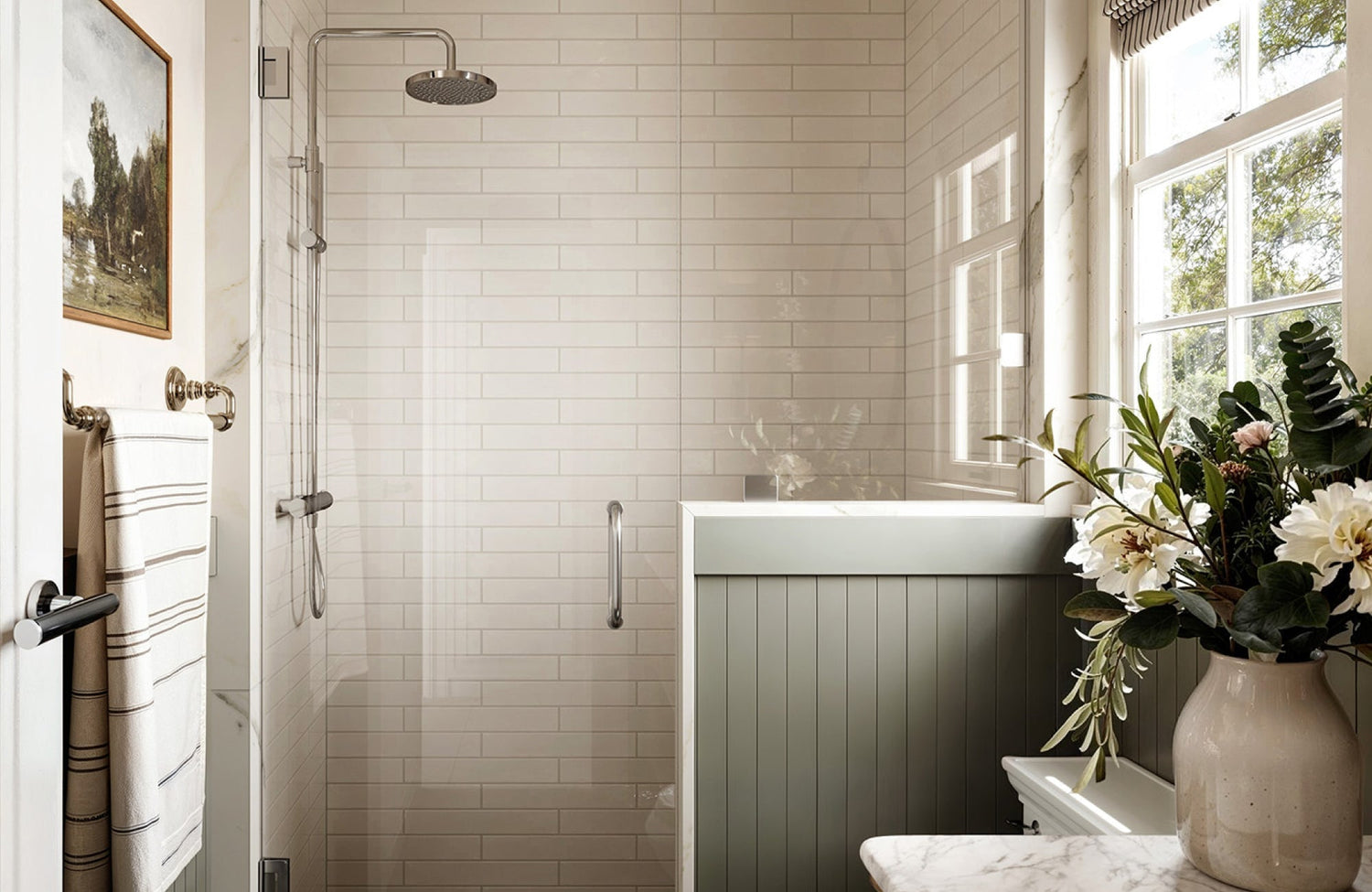
We know you want a shower that feels fresh today and still looks timeless years from now. White subway tile delivers exactly that, offering a classic foundation that complements a wide range of styles. Whether you prefer something simple and traditional or bold and contemporary, this versatile tile can transform the look of your shower. In this article, we’ll walk you through fifteen distinct design approaches, explain how each one changes the space, and share practical tips to help you choose confidently.

1. Classic Horizontal Brick Pattern
This is the layout most people picture when they think of subway tile. The staggered joints create a steady rhythm that feels just as natural in a compact stall as it does in a larger walk-in shower. In the photo shown above, the classic arrangement provides a timeless backdrop, allowing the brass fixtures and soft finishes to stand out. Here, the look is achieved using 2.5x8 white subway tiles, which add a slightly elongated feel. Another option is to use a standard 3x6 subway tile with a medium grout joint, to keep the design balanced and approachable without appearing overly rigid.

2. Stacked Horizontal Grid
For a look that’s all about order, the stacked grid lines up each joint with precision. In the photo shown above, you can see how the straight rows create a crisp, structured backdrop that complements the brass fixtures and glass enclosure. This layout also makes it easier to align niches and shelves because every row works as a natural guide. Keeping the grout color close to the tile further helps the grid feel calm and continuous rather than busy.

3. Vertical Subway Tile Layout
A vertical stack amplifies height even more than the offset version. The straight lines feel clean and architectural, making them a natural fit for contemporary fixtures. In this design, the effect is achieved with Edward Martin’s Jaden 2.5x16 Glossy Ceramic Tile in Eggshell, as displayed in the photo above, which stretches the walls upward and brings a subtle sheen to the space. This approach is especially effective in narrow enclosures, where vertical movement visually opens up the room. It does call for careful planning around valves and showerheads, as the straight columns make even the slightest misalignment noticeable.

4. Elongated Subway Tiles
A longer format, such as 3x12 or 4x16, reduces grout lines and stretches the size of the tile. If you want a quieter wall that still carries the character of subway tile, this layout is a smart choice. In the shower above, the look is achieved with Edward Martin’s Jaxson 4x21 Glossy Ceramic Tile in Cloud, where the extended length emphasizes clean lines and makes the space feel more open. Elongated tiles also help mask small framing inconsistencies and cut neatly around larger niches. For the best finish, it’s worth dry-laying a few rows first to see how the seams align at corners.

5. Diagonal Subway Tile Layout
Angling subway tiles at 45 degrees creates a sense of movement, drawing the eye across the wall and making the space feel more dynamic. In the photo displayed above, the diagonal layout brings subtle energy to a compact bathroom, adding interest without relying on bold color and striking a balance between classic and modern. Since this pattern involves more cutting, edges need careful trimming and a sharp blade for clean miters. The result is a neat, tailored finish that feels polished and enduring.

6. Herringbone Layout
Herringbone takes simple rectangles and turns them into a striking zigzag weave. In the photo shown above, the pattern works as an accent wall behind the shower fixtures, adding movement without overwhelming the space. Its interlocking geometry helps disguise small surface variations while creating a rhythm that feels lively yet refined. Because the eye naturally follows the angled joints, it’s important to use a leveling system to keep corners flat and crisp for a polished finish.

7. White Subway Tile with Dark Grout
Pairing white subway tile with dark gray grout sharpens the pattern and also makes each piece more distinct. In the photo displayed above, the darker lines emphasize the classic brick layout while adding a graphic edge that contrasts cleanly with the soft gray walls and patterned floor. This contrast works especially well in modern farmhouse, loft, or transitional bathrooms where you want a crisp, structured look. Choosing a slightly wider joint enhances the effect without feeling fussy, and using a high-performance grout further helps maintain that sharp finish over time.

8. White Subway Tile with Matching Grout
Pairing white subway tile with white grout creates a seamless surface where the wall reads as one continuous plane. In the bathroom above, this approach reflects light evenly across the shower, making the space feel brighter and more open. It’s a smart solution for smaller bathrooms or older homes where you want to minimize visual breaks and downplay any surface irregularities. To keep the look fresh, sealing the grout and giving the walls a quick pass with a squeegee after use also helps maintain that clean, uninterrupted finish with minimal effort.

9. Handmade or Textured Subway Tiles
Handmade or textured subway tiles can bring subtle movement to a space, due to their gentle surface variations that catch and reflect light. In the shower above, the uneven finish adds depth and character without relying on bold color, keeping the design clean yet visually engaging. Because edges can differ slightly, it’s best to test a few rows first to find a grout width that feels balanced. Pairing white subway tiles with simple fixtures and a color-matched grout, as shown here, allows the natural beauty of the surface to stand out without overwhelming the space.

10. Subway Tile with Shower Niches
A niche saves shelf space and makes your daily routine more convenient while doubling as a design accent. To make it stand out, change the scale or texture inside the niche so it feels intentional rather than an afterthought. In the photo displayed above, the clean edges are finished with Edward Martin’s Jaden 0.75x16 Glossy Ceramic Bullnose Tile in Eggshell, which pairs seamlessly with the surrounding white subway tiles. This combination not only frames the niche with precision but also protects the corners from chips. For function, a slight slope at the bottom further ensures water drains properly, while the coordinated materials maintain a cohesive, polished look.

11. Subway Tile with Inset Borders
Adding an inset border is a simple way to bring structure and visual rhythm to a white subway tile layout. In the shower above, a band of textured gray tile runs horizontally across the walls, breaking up the expanse of white and drawing the eye to a natural resting point just above mid-height. This contrast not only adds depth but also complements the cool tones of the floor and fixtures. The key is balance; keeping the stripe narrow enough to accent the field without overpowering it, so the look feels refined rather than busy.

12. Framed Subway Tile Showers
A framed enclosure instantly adds definition to a tiled shower, as seen in the photo above. The black trim outlines the white subway tiles, creating crisp contrast and giving the space structure without overwhelming it. When planned thoughtfully, the mullions align with grout joints so the frame feels intentional and balanced. This approach works especially well when the tile design is simple, since the frame becomes a subtle design feature that elevates the whole room.

13. Two-Tone Subway Tile Showers
Pairing white subway tile with a second shade creates a balanced, layered look. In the photo above, the walls transition from crisp white at the top to a softer neutral at the base, adding subtle depth without overpowering the space. This approach works just as well with bolder contrasts, like navy or green, especially on a feature wall. Keeping the grout color consistent and aligning the joints across both tones also ensures the transition feels intentional and polished, not improvised.

14. Subway Tile with Patterned Floors
Keeping the walls quiet lets the floor carry the motif. Hex, mosaic, or checkerboard patterns provide rhythm underfoot while the walls maintain a steady backdrop. In the photo shown above, the shower walls are finished in the soft, understated look of Edward Martin’s Natasha 2x6 Matte Porcelain Tile in Oat, which creates a calm surface that doesn’t compete with the floor. The contrast comes from the bold checkerboard layout of the Leona 12x12 Matte Porcelain Tile in Calacatta and Amani Grey, adding timeless character and a touch of drama to the space underfoot. Together, the pairing achieves balance, proving that subtle walls and patterned floors can complement each other beautifully. For practicality, it’s also recommended to check slip ratings and choose a grout that offers both grip and easy maintenance.

15. Wainscoted Subway Tile in Showers
Wainscoting with subway tile creates a refined balance between function and design. By tiling the lower portion of the wall and finishing the upper section with a water-safe surface, such as plaster, paint, or microcement, you add depth and character without overloading the space with tile. In the photo displayed above, the lower wall is wrapped in subway tile while the upper wall transitions seamlessly to a soft finish, divided by a slim trim detail. This approach not only reduces the amount of tile where heavy spray isn’t an issue but also introduces a layered, tailored look that feels both practical and polished.
The Timeless Appeal of White Subway Tile Showers
These fifteen subway tile shower designs highlight how this classic choice remains both timeless and stylish. With the right mix of layout, proportion, and finish, white subway tile adapts to any space while maintaining a clean, polished look year after year. By factoring in details like room size, ceiling height, and fixture finishes, you can select tile sizes, grout shades, and trim options that make your shower feel both timeless and personal. If you’re ready to plan your own design, contact us for expert guidance and use our AR tool to visualize these looks directly in your space.