



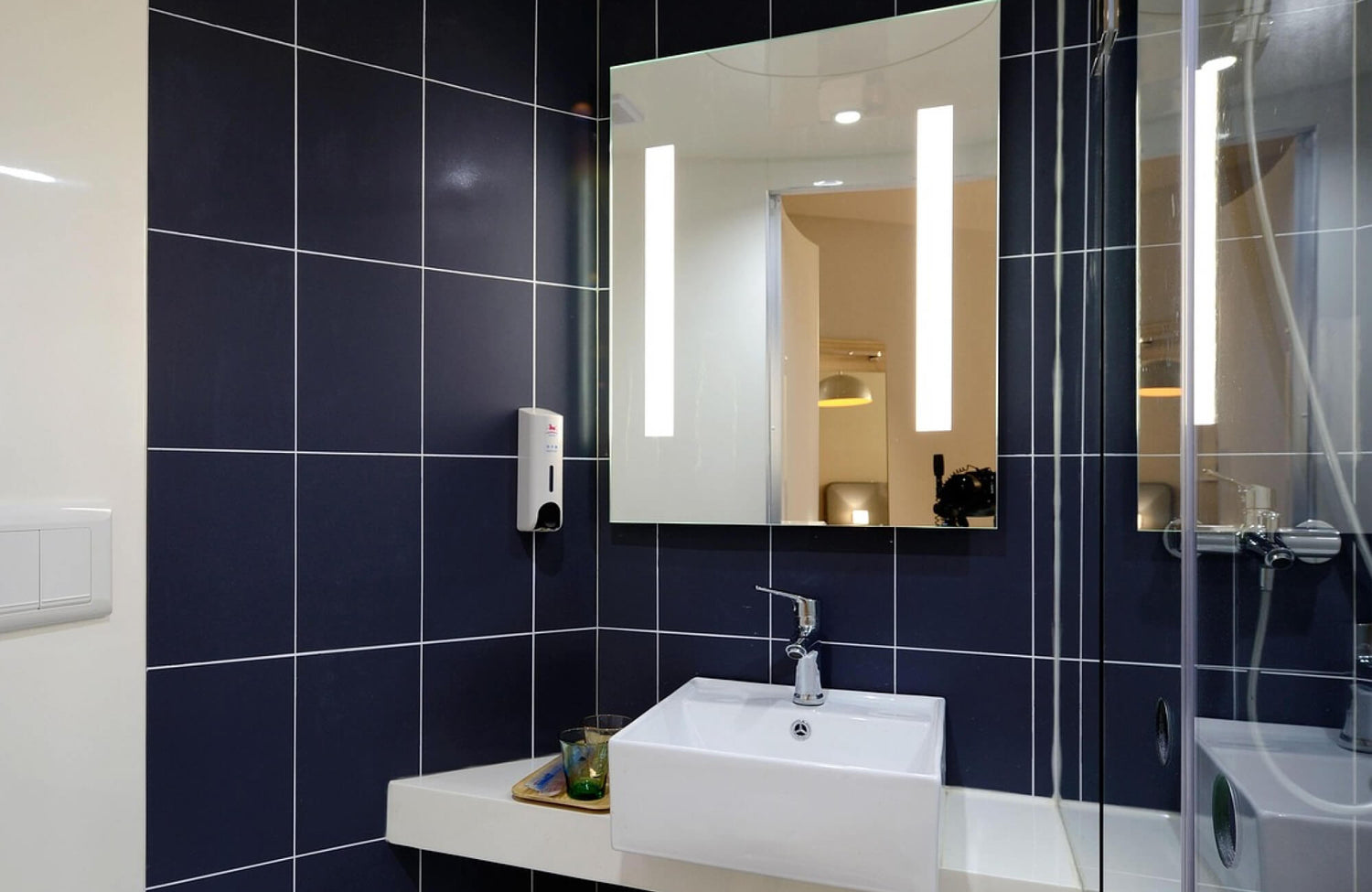
A bathroom mirror is more than a reflective surface—it is a statement of design, proportion, and light. The right mirror shape can redefine how space is perceived, guiding the eye, enhancing illumination, and framing architectural beauty with effortless sophistication. Whether gracefully rounded, elegantly arched, or boldly geometric, each form transforms the balance between structure and softness. Through thoughtful selection, mirrors become sculptural elements that reflect not just light but personality and intent. In today’s modern interiors, choosing the perfect bathroom mirror shape is an artful expression of style, functionality, and refined spatial harmony.

Rectangular Mirrors
Rectangular mirrors establish the foundation of structure and proportion in bathroom design. Their crisp lines and balanced geometry provide a timeless framework that aligns effortlessly with both classic and contemporary aesthetics.
Enhancing Architectural Alignment
Rectangular mirrors mirror the linear geometry of walls, vanities, and tile layouts, reinforcing architectural order and clarity. Their strong horizontal and vertical orientation naturally guides the eye, maintaining structural continuity throughout the space. When installed with precision, they also define the vanity as a focal axis, aligning function with form. In frameless versions, the seamless edges create an uninterrupted reflection that subtly expands depth perception. This balance between utility and symmetry ensures a cohesive flow across surrounding design elements. Altogether, the rectangular form grounds the room in visual precision and order.
Amplifying Light and Visual Clarity
Because of their broad reflective surface, rectangular mirrors efficiently capture and distribute both natural and artificial light. This enhances visibility, making daily grooming tasks more accurate and comfortable. Integrated LED or backlit variants further improve light diffusion, eliminating harsh shadows while maintaining consistent brightness. When placed opposite a window, these mirrors bounce daylight back into the space, contributing to energy-efficient illumination. Their geometry also allows for accurate reflection alignment, which increases visual depth and openness. Through a combination of structure and luminosity, rectangular mirrors elevate both atmosphere and function.
Creating Linear Continuity in Design
Rectangular mirrors reinforce the clean lines of bathroom architecture, tying together vanities, cabinetry, and lighting fixtures. Their shape naturally extends the horizontal visual field, producing a sense of flow that unites multiple design elements. Subtle framing in wood or metal can also introduce warmth or contrast without disrupting overall symmetry. When paired with linear lighting, the repetition of horizontal elements strengthens the visual hierarchy of the room. This relationship between reflection and line creates an organized, modern feel. As a result, rectangular mirrors remain an essential component in achieving design cohesion.

Round Mirrors
Round mirrors introduce curvature and calmness into spaces dominated by angular architecture. Their continuous shape softens edges, promoting balance and serenity while supporting a more organic aesthetic.
Creating a Centered Visual Focal Point
The circular shape of a round mirror anchors the bathroom’s visual composition by naturally drawing attention toward the center. Its symmetry promotes equilibrium and smooths transitions between surrounding materials. The absence of corners also removes visual tension, creating a sense of calm continuity.
A perfect example of this balance is Edward Martin’s Fitz Mirror in Antiqued Iron from Edward Martin, featuring a sleek, thin black frame that defines the reflection without overpowering it. As displayed in the photo above, its minimalist silhouette pairs beautifully with subway tile walls, warm wood vanities, and soft ambient lighting, creating a focal point that feels timeless and harmonious.
When properly scaled, the mirror complements the vanity below without overwhelming the wall. In combination with minimalist fixtures, the shape introduces a refined simplicity that feels both intentional and soothing. Together, these qualities make round mirrors ideal for creating harmony in compact or spa-inspired interiors.
Enhancing Light Diffusion and Depth
A round mirror reflects light in all directions, helping distribute illumination evenly throughout the room. This balanced reflection softens harsh contrasts, lending a more comfortable visual tone. Backlit circular mirrors also extend this effect by casting a diffused glow around their perimeter, which enhances both brightness and depth. When positioned opposite natural light, they amplify spatial openness while preserving warmth. In addition, subtle shadows fall more evenly, producing visual smoothness rather than sharp definition. Through this interplay, round mirrors help transform lighting into a compositional design feature.
Complementing Modern Organic Design Aesthetics
Round mirrors seamlessly integrate into design concepts rooted in natural materials and fluid forms. Their gentle curvature pairs beautifully with rounded sinks, arched faucets, or curved tilework. The shape also contrasts well with linear cabinetry, adding a touch of softness without disrupting structure. Moreover, a brass or black metal frame introduces an element of tactile sophistication while maintaining balance. In minimalist spaces, the circular contour acts as a quiet visual anchor that feels warm and grounded. Overall, round mirrors enhance cohesion in organic and contemporary bathroom settings.

Square Mirrors
Square mirrors embody the harmony of equal proportions, introducing visual stability and refined simplicity into bathroom design. Their balanced symmetry provides both structure and sophistication, making them a versatile choice across modern and traditional interiors.
Establishing Symmetry and Visual Balance
The equal dimensions of a square mirror create a natural sense of equilibrium, reinforcing architectural harmony. This proportional geometry aligns beautifully with centered vanities and compact spaces where balance is key. When placed precisely, it anchors the wall composition, acting as both a focal point and a grounding element. Frameless options also emphasize minimalism and openness, while thin metallic frames introduce subtle definition. The result is a mirror that communicates clarity, order, and poise. Through measured design, square mirrors enhance visual rhythm without overwhelming the space.
Enhancing Light and Spatial Perception
Square mirrors maximize reflection while maintaining controlled structure, dispersing both natural and artificial light evenly. Their consistent proportions help distribute illumination symmetrically across the face and vanity area. A beautiful example of this is Edward Martin’s Tristan Square Mirror in Polished Brass, whose softly rounded edges and slim metallic frame introduce a warm, contemporary glow.
As shown in the picture above, its reflective surface enhances the play of light against the soft green tile and natural wood vanity, creating an atmosphere that feels both grounded and luminous. The brass frame also subtly mirrors surrounding fixtures, harmonizing tone and texture while enriching visual warmth. This balance between light and form expands perceived space while preserving intimacy—making the square mirror a radiant centerpiece in refined bathroom design.
Complementing Modern Minimalist and Transitional Styles
Square mirrors seamlessly adapt to diverse design languages, from the clean restraint of minimalist bathrooms to the subtle ornamentation of transitional styles. Their shape complements linear tiles, geometric fixtures, and structured cabinetry, reinforcing a cohesive aesthetic. Framed in brushed brass, black steel, or natural wood, they can also shift from contemporary chic to timeless sophistication. When arranged in pairs, square mirrors introduce symmetry across double vanities, enhancing visual proportion. Ultimately, their versatility lies in precision—the ability to unify architecture, lighting, and material in one refined, balanced form.

Oval Mirrors
Oval mirrors offer an elegant compromise between the rigidity of rectangles and the softness of circles. Their elongated contour brings verticality and graceful movement, creating a more refined and balanced visual impression.
Accentuating Vertical Dimension
An oval mirror’s elongated orientation naturally guides the gaze upward, visually extending ceiling height. This vertical lift makes smaller bathrooms appear taller and more spacious. The curvature also softens architectural lines, producing gentle transitions that maintain openness. Framed in metallic or wood finishes, oval mirrors introduce textural richness without overwhelming the composition. The combination of curve and length adds rhythm and vertical flow. By visually stretching space, oval mirrors create a quiet sense of elevation and airiness.
Softening Angular Design Elements
The curved sides of an oval mirror introduce movement into spaces dominated by hard geometry. This softening effect reduces rigidity and adds comfort, especially in bathrooms with rectangular tiles or sharp fixtures. Light also behaves differently against an oval surface, gliding along the edges and distributing more evenly. The mirror’s gentle form complements sculptural basins and rounded hardware, reinforcing design balance. Subtle reflections enhance surface interplay between matte and gloss finishes. The result is a space that feels fluid, cohesive, and visually tranquil.
Enhancing Transitional Bathroom Styles
Because of its hybrid form, the oval mirror is perfectly suited to transitional design schemes that combine modern and traditional influences. A bevel-edged or framed version, for instance, brings a classic note, while a frameless model underscores minimalism. Integrated LED options modernize the design further, offering ambient and task illumination. The elongated shape also aligns beautifully with vertical sconces, maintaining proportion and symmetry. Its versatility allows seamless pairing with marble, wood, or painted finishes. In essence, oval mirrors embody the balance of elegance and modern refinement.

Arched Mirrors
Arched mirrors borrow cues from traditional architecture yet adapt effortlessly to contemporary design. Their upward curve adds height, refinement, and a sense of architectural rhythm that enhances spatial grandeur.
Introducing Architectural Dimension
The graceful arch reinterprets classical forms—doorways, windows, and vaults—within a modern context. Its curvature directs the eye upward, emphasizing ceiling height and sculptural composition. When set against a tiled backdrop, the mirror softens grid lines and adds visual lift. Framing it in brushed brass or black steel also reinforces its structural integrity while enhancing contrast. In addition, the reflection interacts with lighting to highlight wall texture and dimension. In doing so, the arched mirror brings architecture and design into harmonious dialogue.
Enhancing Perceived Volume and Balance
An arched mirror can make a modest bathroom appear more expansive by introducing gentle upward movement. The rounded top draws light and reflection vertically, subtly expanding visual depth. When paired with concealed LED lighting, the result is a soft halo that defines form without harshness.
A beautiful embodiment of this effect is the Esmeralda Wide Mirror in Polished Brass from Edward Martin, which radiates understated luxury through its slim brass frame and graceful curvature. As shown in the photo above, its arched silhouette captures natural light from nearby windows, amplifying brightness while maintaining a sense of calm sophistication. The warm metallic finish also reflects soft tones from the surrounding space, creating balance between architectural structure and organic warmth. Because of its vertical pull, it helps unify space across both wall and ceiling planes. This creates an impression of elegance and spatial continuity.
Integrating with Material and Finish Narratives
Arched mirrors interact beautifully with textured finishes such as plaster, terrazzo, or stone. These surfaces provide tactile contrast to the smooth curve of the mirror, enhancing visual richness. Framed in muted metallics or natural wood, the mirror also becomes a bridge between hard and soft materials. Its silhouette harmonizes with layered lighting and curved architectural features. Moreover, the arch reinforces stylistic cohesion between traditional and contemporary design languages. Through this balance of material and form, arched mirrors achieve timeless architectural sophistication.

Geometric Mirrors
Geometric mirrors inject bold personality into the bathroom, emphasizing structure and rhythm through angular contours. Their faceted design adds modern tension that draws the eye and defines spatial energy.
Establishing Visual Structure and Tension
Shapes such as hexagonal or octagonal mirrors introduce structured rhythm while breaking away from predictability. Their crisp edges create visual energy that enlivens minimalist interiors. The interplay of angles also enhances reflection dynamics, making walls appear layered and multidimensional. Framed in metal, they project precision and modern strength. When positioned against neutral backdrops, their geometry becomes the visual centerpiece. This marriage of form and function transforms the mirror into an architectural accent rather than a mere accessory.
Enhancing Light Behavior and Spatial Definition
The angled surfaces of geometric mirrors interact with light differently across planes, refracting brightness for a multidimensional effect. This creates subtle gradients that emphasize surface depth and shadow. When paired with directional lighting, the mirror’s shape produces intricate patterns that heighten visual drama. The structure of each facet also defines spatial boundaries without physical partitions. In addition, reflective symmetry enhances both clarity and perceived space. Through light manipulation and geometry, these mirrors establish dynamic visual architecture.
Integrating Artistic and Industrial Aesthetics
Geometric mirrors adapt beautifully to industrial, modern, and mid-century-inspired spaces. A matte black frame, for example, conveys urban sophistication, while brushed brass softens the overall tone. The angular form also complements exposed materials like concrete and terrazzo, balancing rigidity with refinement. Additionally, integrated LED detailing accentuates their sculptural quality, creating a layered glow that outlines each facet. This fusion of art and structure reflects both craftsmanship and innovation. As a result, geometric mirrors embody contemporary design precision with visual strength.

Asymmetrical Mirrors
Asymmetrical mirrors celebrate imperfection as a hallmark of artistic design. Their fluid, irregular forms introduce creativity, authenticity, and emotional depth to modern bathroom spaces.
Defining Visual Movement and Creativity
Unlike conventional shapes, asymmetrical mirrors invite movement through irregular curves and varied proportions. This unpredictability keeps the eye engaged, lending a sense of spontaneity and artistry. When placed above sculptural basins, the mirror echoes natural flow rather than rigid symmetry. Soft, organic edges also balance structured materials like tile or concrete. With thoughtful placement, the shape transforms blank walls into expressive compositions. Each piece becomes a visual statement, merging creativity with refined practicality.
Enhancing Light Interaction and Spatial Depth
Irregular outlines bend and redirect light in unexpected ways, producing soft gradients and layered reflections. As the light shifts, surfaces appear more dynamic and textured. Subtle LED backlighting also amplifies this fluid effect, giving the mirror a sculptural presence. In addition, the gentle irregularity reduces glare and creates a sense of depth and warmth. In tandem with textured finishes, the reflections gain visual complexity. This interplay of shadow and illumination establishes a poetic connection between light, material, and form.
Complementing Artistic and Natural Design Themes
Asymmetrical mirrors pair beautifully with biophilic and artistic interiors that favor organic rhythm. Their imperfect contours harmonize with natural materials such as wood, stone, and woven fibers. In minimalist spaces, they inject character without disrupting calmness. Soft lighting also enhances their shape, encouraging a tranquil yet expressive atmosphere. The design feels spontaneous yet intentional, adding personality to functional spaces. By blending nature and artistry, asymmetrical mirrors define individuality in modern design.

Selecting the Ideal Mirror Shape for Cohesive Bathroom Design
Choosing the perfect mirror shape requires balancing proportion, light, and visual intent. The mirror should echo the architecture of the space while improving usability and enhancing mood.
Achieving Proportion and Balance
Mirror size and shape must complement vanity dimensions to maintain harmony. A wide rectangular mirror anchors a large vanity, while a round or oval shape softens smaller ones. Proper placement ensures alignment with wall features and lighting fixtures. Balanced proportions prevent visual heaviness and maintain symmetry across the vertical plane.
An excellent example of proportion refined through artistry is our Shirley Large Mirror in Antique Brass Iron. With its softly irregular contour and antique brass frame, it bridges structure and spontaneity, adding sculptural depth to the bathroom. As featured in the picture above, its asymmetrical silhouette also mirrors the natural flow of organic forms—complementing curved fixtures, warm wood cabinetry, and muted blue tilework. This subtle interplay of proportion, color, and material creates a balanced focal point that feels both artistic and grounded. Framed mirrors like this one can introduce gentle contrast to achieve equilibrium, allowing the mirror to integrate naturally with its surroundings.
Coordinating Lighting Integration
Lighting works best when synchronized with the mirror’s geometry. For example, tall ovals and arches benefit from side sconces that accentuate their height, while circular mirrors perform well under pendants or overhead fixtures. Moreover, LED mirrors combine function with aesthetics by evenly diffusing brightness. Matching light color temperature with finishes also ensures consistent visual warmth. In addition, layered illumination helps define the mirror’s form without harsh shadows. This coordination achieves both beauty and practicality in reflective design.
Prioritizing Function and Innovation
Contemporary mirrors blend aesthetic finesse with technological precision, elevating both form and function. Features such as anti-fog surfaces, dimmable lighting, and touch controls enhance daily convenience, while high-quality reflective glass ensures clarity under varying light conditions. Thoughtful details like flush mounting maintain clean lines and reinforce safety and durability. With the integration of smart features, these mirrors introduce a sense of modern luxury without visual clutter—culminating in designs that balance innovation, performance, and refinement.
Refining Space Through the Art of Reflection
A well-chosen mirror shape transforms a bathroom from purely functional to thoughtfully designed, merging elegance with architectural intent. The gentle curve of a round or arched mirror can soften structure, while the precision of geometric or rectangular forms brings modern clarity. When light, proportion, and shape work in harmony, the result is a space that feels both expansive and intimate. Ultimately, mirrors become more than design details—they become the visual language that defines the bathroom’s soul.
At Edward Martin, our design services help translate these reflective principles into cohesive interiors tailored to your personal style. Whether you’re curating a serene minimalist retreat or a bold modern sanctuary, our experts ensure every mirror, finish, and fixture complements your vision with precision and artistry. To begin crafting a bathroom that reflects both your taste and lifestyle, contact us today and discover how thoughtful design transforms reflection into refinement!
